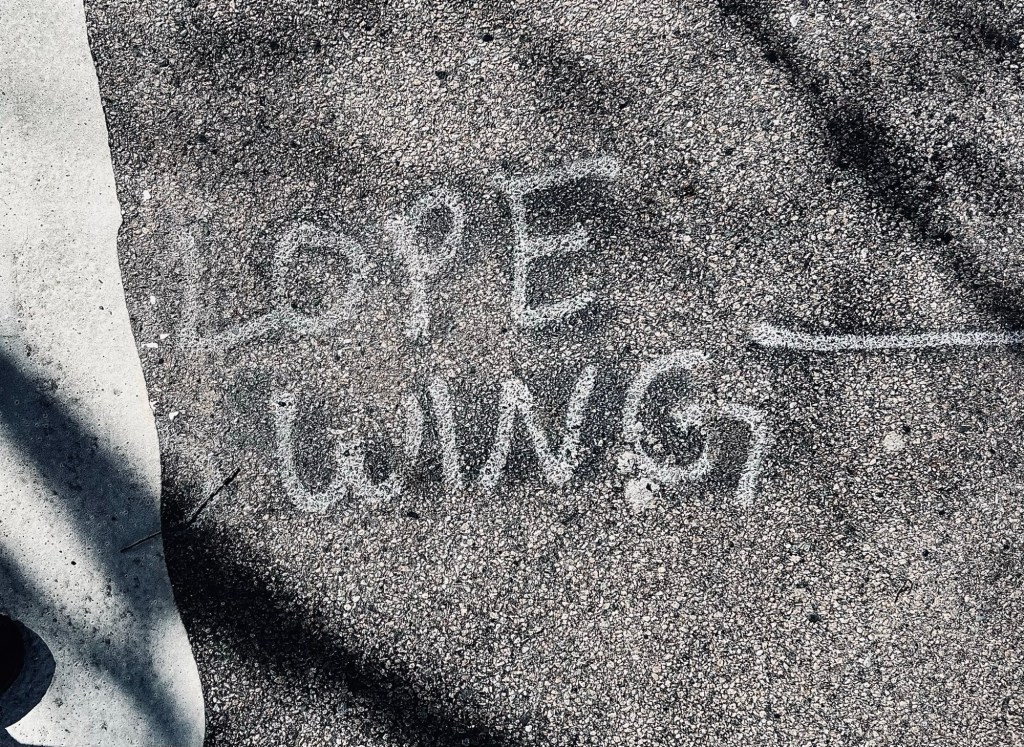
ice caps disappear the earth’s rotation slows down we are losing time
What I’m Reading:
Climate change is starting to alter how humans keep time.
An analysis published in Nature on 27 March has predicted that melting ice caps are slowing Earth’s rotation to such an extent that the next leap second — the mechanism used since 1972 to reconcile official time from atomic clocks with that based on Earth’s unstable speed of rotation — will be delayed by three years.
— Elizabeth Gibney / “Climate change is starting to alter how humans keep time” / Nature
Sanctioned by the Association of Urologic Twee (redux)
(Fade Out / 8 channels of noise : one channel of noise drops out every 30 seconds until there is silence)
Voiceover In Search Of A Film: Soft antennae entertainment turned minds to mush. Mush was the preferred texture of pablum eaters the world over. Overcome with cathexis via parapraxis trying to gauge the thickness of the Foley catheter.
A: Catheter? Did you say catheter?
S: Are we talking about the indwelling and suprapubic type catheters?
A: This isn’t your typical prime time fare, you know. You know it must be.
S: It must be. Isthmus B? Be you choosing Isthmus B? Isthmus of Perekop?
A: Are you insane, man? You can’t get anywhere near that today—mines, errant shells, ravenous drones on the prowl for heat signatures . . . No. New.
S: New world Isthmusesesess. (Did I just neologize?) what about the Isthmus of Panama?
A: Why has this turned into some sort of geography thing? What is this about?
S: What is anything about?
A: About 6 feet 3 inches, 224 pounds—a strapping lad!
S: You, my friend, have lost your yarbles.
A: You mean marbles?
S: What’d I say?
A: Yarbles . . . Maybe that’s the parapraxis, and this is all about quasi-urinary tract issues.
S: Hmm?
A: Where were we?
S: I think we’ve lost the plot.
A: Was there ever one?
S: One is born and then one dies.
A: Dies? What about all the other stuff in between?
S: Indeed.
A: In deed?
S: Indeed.
A: I’m sorry I have to stop here. You’ve put me in a sad state of mind.
Once asked how he maintained his stamina at eighty-seven years old, Noam Chomsky responded, “The bicycle theory. As long as you keep riding, you don’t fall.”
This is a mise en abyme of a mise en abyme in a mise en abyme.
This is historical quicksand.
What of the Inquisition kitchen?
A fungus settled on the heart. The Great Deficiency of 1534 forbade comebacks without the extrapolation of the repellence of nearly thirty years loveless marriages. Why not go into pop singing?
And what of this skittering mise en scene?
I found a hermetically sealed heart — deprived of voltage, loving fingertips and Hollywood endings.
I preferred faith and superstition and widely distributed distractions on Bergman’s Fårö. Courtesan portmanteaus denied to local fishmongers.
I had to have the book.
I explored these motherless quintuplets.
I’m here. I’m here. And I’m here.
Speculate.
What I’m Reading:
I have walked out in rain—and back in rain. I have outwalked the furthest city light.
The bicycle wheel is one of the strongest of all human contrivances, capable of supporting approximately four hundred times its own weight. In theory, a buffalo could pedal a bike without the wheels buckling under the load.
— Jody Rosen / Two Wheels Good: The History and Mystery of the Bicycle
Now you see me, now you don’t. I’m lost to myself. Even I can’t see me. These are the places I lived. This is the art I made.
What I’m Reading:
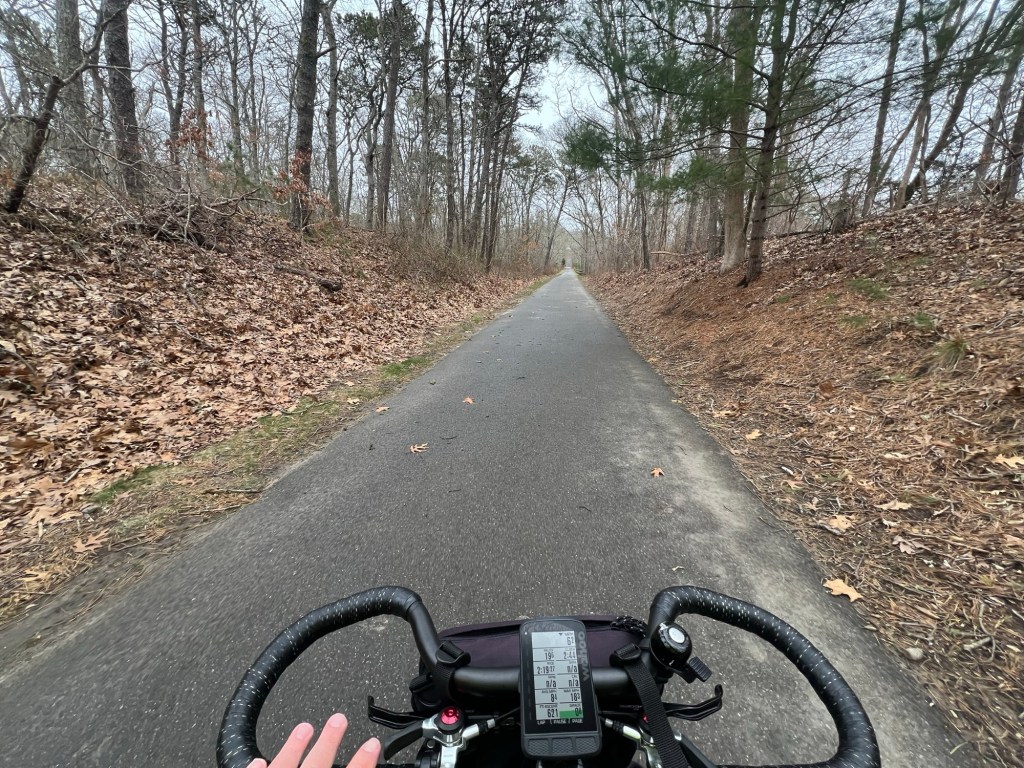
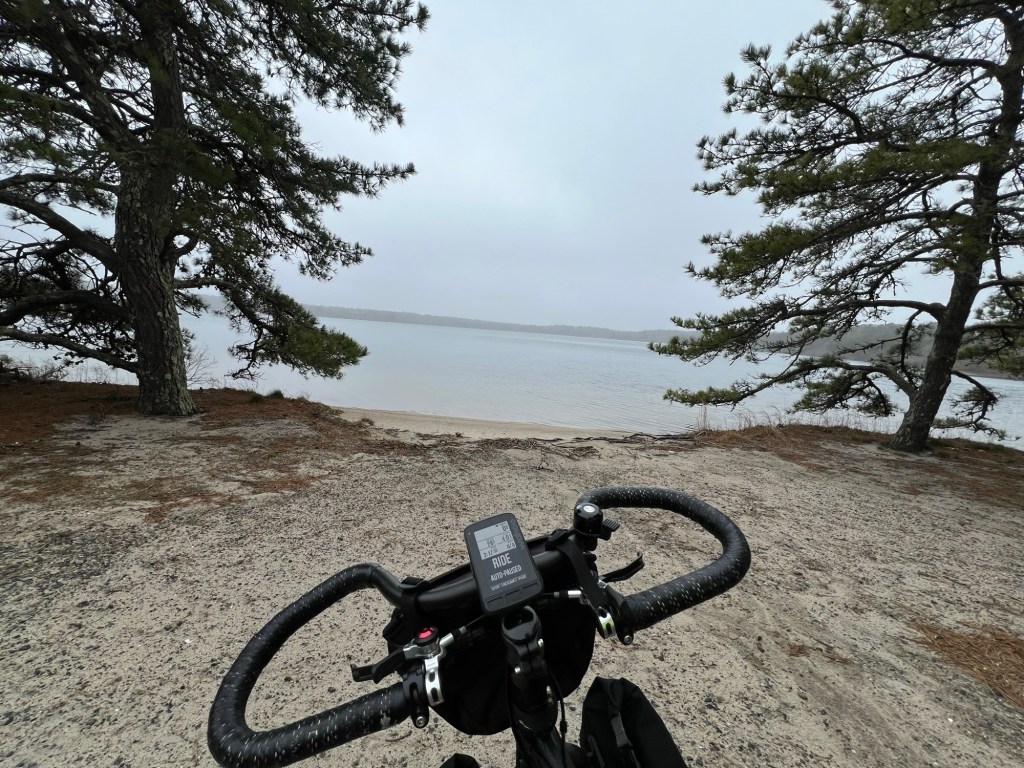
Some beauty is visible only when abutted by banality. Spots beautiful in a specific time, direction, and angle viewed from bike-height that couldn’t be replicated.
broaster chicken on speed dial fans oscillating from every corner dust devils gyring in the living room the fridge texts — low on oat milk
house heaves a sigh of desperation wants to set upon squarely on a witch but they’re far and few
seventeen year cicadas unleash the chainsaw torrent at once the air is electrified a sharp tang on the tongue-tip
welcome home
What I’m Reading:
I’d been looking for the “right” place to sleep each night, as if not finding it would leave us stranded. But now I thought, wherever we are at the end of the day, we’ll be somewhere, and we can sleep there. It might not be comfortable and safe, but it will still be somewhere.
— Emily Buehler / Somewhere & Nowhere: A Bicycle Journey Across America
If God is a man, he could never understand the mundane threats women experience every single day of our lives.
— Bora Chung / “Maria, Gratia Plena” / Your Utopia
When the warming ocean does not allow for sea ice, ice we need for hunting ugruk, I wonder about her mood. When the waves, loud, high, and strong, eat at our shores—even in winter—I wonder what Papa would tell us. When it rains and rains and rains in July and the air is too muggy to dry salmon, I feel the shift. When in the fall, after the ground freezes, the mice have not yet put masru away in their caches, I wonder. About her signals. Her abrupt change. Her unpredictability.
— Laureli Ivanoff / “Weather Report” / Orion
. . . we in the United States are part of a global system in which our comfort and privilege are based on the exploitation of people and nature. And part of our privilege is that we don’t even have to know about it.
We think we can use our privileged position to “help” people who are “less fortunate” than ourselves, but we are blind to the workings of the system that creates our fortune and their misfortune, and how the two are mutually dependent. In a way, it was the same argument that the Mothers of Matagalpa were making.
— Aviva Chomsky / Central America’s Forgotten History: Revolution, Violence, and the Roots of Migration
Anyhow, Makina had neither been naive nor lost any sleep blaming herself for the invention of politics; carrying messages was her way of having a hand in the world.
— Yuri Herrera / Signs Preceding the End of the World
Recent science has shown how trauma can change our brain chemistry and our DNA. I wonder now if my lifelong obsession with stories of mass murder is tied to my father’s memory of that moment, and others that exposed him to the violence of empire, poverty, and dictatorship in the years before I was born. The brain stores information for its own survival, and it finds a way to pass on its lessons from generation to generation. Perhaps my curiosity about organized, official violence is a biological signal sent by the survivors and the perpetrators of atrocities from a distant and unwritten history. From the Spanish Inquisition, the Middle Passage, the conquest of the Americas. Unremembered for many generations, those horrors may still be alive, in me, and in many people like me, in our instinctual desire to stare into, and to understand, the dark and bloody recesses of human history.
— Héctor Tobar / Our Migrant Souls: A Meditation on Race and the Meanings and Myths of “Latino”
Come, let us be friends, you and I, / E’en though the world doth hate at this hour . . . Come, let us be friends, you and I, / The world hath her surplus of hatred today . . .
— Sarah Lee Brown Fleming / “Come Let Us Be Friends”
Maybe hope exists just because we think it to existence, and meaning is something you create on your own. But that’s just an individual’s subjective experience of faith. There’s no guarantee that such subjective faith will be supported by the objective situation. Why should the myriad ways of the universe conspire to realize the will of a mere individual?
I’m not trying to be cynical. I’m simply saying, by pointing out how small and insignificant I am, that whatever I do is also small and insignificant and makes no difference in this universe.
— Bora Chung / “The End of the Voyage” / Your Utopia
What I’m Listening To:
I don’t miss my mind Doctors and nurses, tingling eye Bleeding inside, touch me there (That’s a modern pose)
Cold in my tent last night— Moved away from the creek Closer to the fire. I heated up the plastic Jesus— Placed it soft and hot On my abdomen. Cold again this morning— I bit into the messiah— No sign of life.
What I’m Reading:
mothers of lost habitats, mothers of fallout, mothers of extinction — pray for us — because even tomorrow will be haunted
— Craig Santos Perez / “Halloween in the Anthropocene, 2015”
Deception became an instructor. I’ve an iconic hare that stands sentinel and immediately cups my hair as it sheds. I shed often.
I’ve a silky laconic manner about me. I once subcontracted a zoo and turned it into a pop-up delicatessen. Bactrian camel and mozzarella sub, anyone? Crispy pan-fried capybara on ciabatta? No?
I’ve turned largely nocturnal. I’m wound tightly. I’m short on straitjackets and spending late nights on deathbeds—and even though I’m young at heart, I drowse during every family homily.
Homonculi melancholia . . . I’m set to stare straight into the eclipse for the duration. I’m going coronal!
I’m full of desolate masterworks in the potential and praying for a sequined dictator to institute austerity measures from above.
You might say I’m distilled from the epiglottis up.
I’ve got the dada poofa proofs to prove it!
What I’m Reading:
Behind her, the sun is going out fighting with all its rays. We are sitting in the dining room and she is cutting a fat round loaf of bread. Absently, she puts a slice onto my plate. I tear it apart with my fingers, gently. A human ear drops out. Her look cuts her finger on the bread knife and the rain seethes.
i am a conclave of addictions in for a nipper of revival
i am a theremin player from obscurity counting my rosary adjournments
i am a respite of ill repute cycling through the burbs of burblements
here’s a blurb — siphon your securities expeditiously
and call your mutilation theologian i’ll be here all week
What I’m Reading:
Here, streets lined with fresh refugees, straggler homeless, cardboard box men, prostitutes, pimps, beautiful neighborhood people who teach me you can get a great meal for $2 on this block. How to eat with chopsticks, which store gives free bread if you don’t have $.