

What I’m Reading:
Cycling was a way of staying in motion and coming home to myself. When nothing else made sense, I could go—dissolving into breath and sky—and let the wind rearrange me.
— Laura Killingbreck / “Into the Wind” / Bicycling
What I’m Reading:
Cycling was a way of staying in motion and coming home to myself. When nothing else made sense, I could go—dissolving into breath and sky—and let the wind rearrange me.
— Laura Killingbreck / “Into the Wind” / Bicycling

. . . “Dogs become dogs again and snap at your raincoat; potholes become personal.” It might also be said that a city becomes extra-cityish, more seething and carnivalesque, from the vantage point of a bicycle. Danger is a sensory intensifier, supercharging the scenery, making everything appear volatile and alive.
— Jody Rosen / Two Wheels Good: The History and Mystery of the Bicycle
Jan.22.2022
The sky is crooked at my feet. I’m tired
of someone else’s dying. I’ve lost two
pounds because I’ve been chewing rain instead
of swallowing it.
— Victoria Chang / “Today”
. . . and perhaps most importantly, our impending doom leaves us feeling paralysed. If we’re already screwed, then what’s the point in trying? Far from making us more effective in driving change, it robs us of any motivation to do so. I recognise this from my own dark period when I nearly walked away from the field entirely. I can assure you that after reframing how I saw the world, I have had a much, much bigger impact on changing things. When it comes down to it, doomsday attitudes are often no better than denial.
— Hannah Ritchie / Not the End of the World: How We Can Be the First Generation to Build a Sustainable Planet
I understand:
for years, perhaps, you have lived
underground. Handling only
darkness, you have not become
accustomed to it. You want to get out.
— Everette Maddox / “Welcome Home”
A bicycle in traffic must be predictive to the point of clairvoyance, must know the cars better than the cars know themselves, must understand their motivations and their common blunders. Cars don’t always signal their intentions. And cars aren’t always nice to each other, though they usually show each other some respect in deference to the damage they can do to each other. They are like important men in conversation with other important men. Bicycles are sometimes kindly accommodated by cars, often ignored, occasionally respected, sometimes nervously followed, and frequently not even seen. In this sense, riding in traffic is not unlike being a woman among men.
— Eula Biss / Having and Being Had
But in spite of these riders who prize the utility of two wheels above its art, riding a bicycle is one of the few street activities that can still be thought of as an end in itself. The person who distinguishes himself from that purposeful crowd by conceiving of it as such should be call a cycleur. And that person – who has discovered cycling to be an occupation with no interest in ultimate outcomes – knows he possesses a strange freedom which can only be compared with that of thinking or writing.
— Valeria Luiselli / Sidewalks
But for those of us who have bicycling in our bones, the arguments against it are worse. Bike riding can kill you, but to trudge through your days without biking-that’s no way to live.
— Jody Rosen / Two Wheels Good: The History and Mystery of the Bicycle
What I’m Listening To:
Send in the clowns
Send in the army
You want to be American
Get your gun
You’re so free
You can shoot me
— Kim Gordon / “It’s Dark Inside”


What I’m Reading:
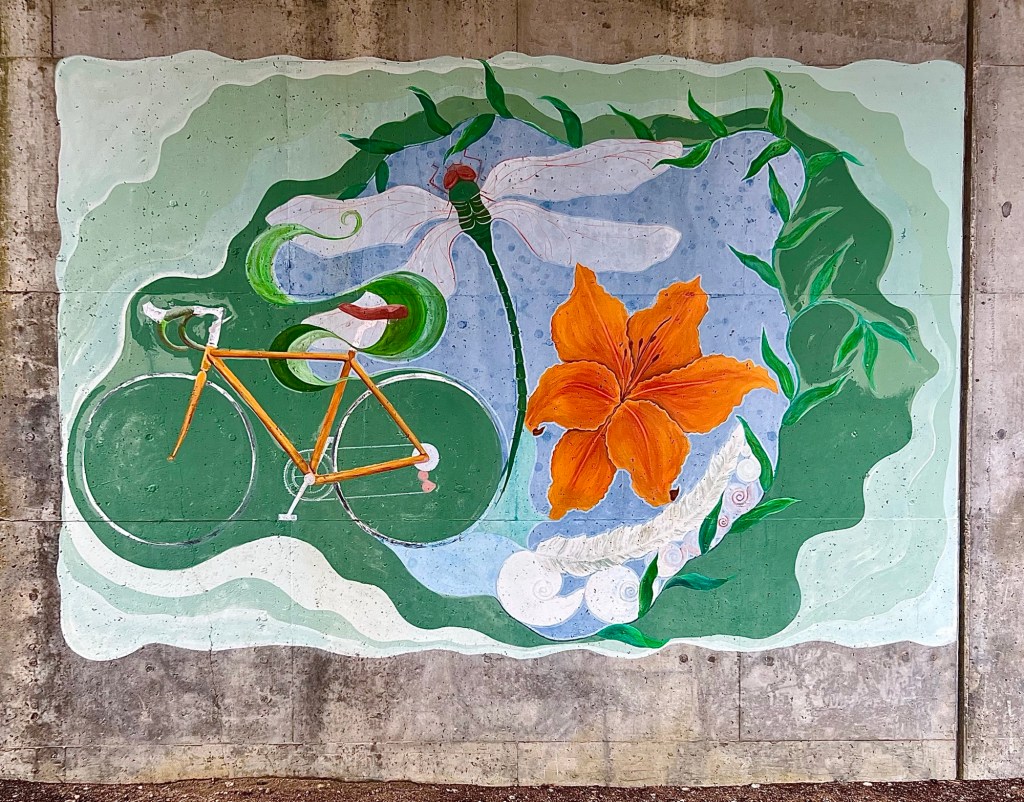
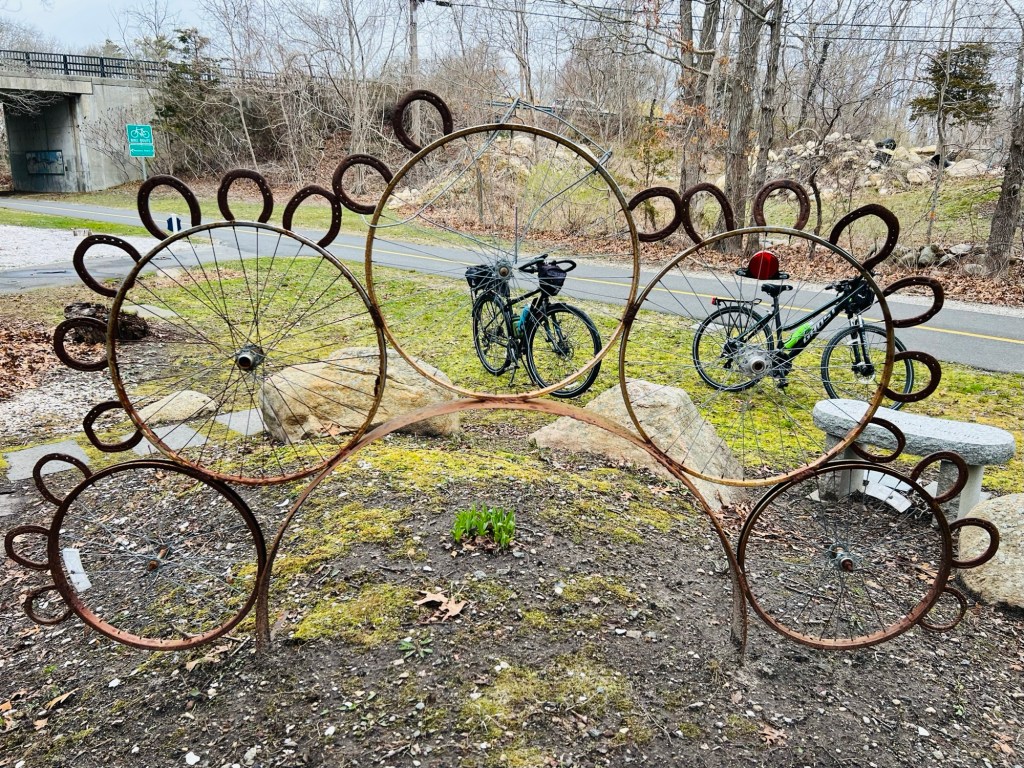
A cycling life begins in a blaze of glory.
For hours or days or weeks, you still don’t know how to ride a bicycle. You wobble and lurch and wipe out, locked in a pitiful struggle with the pull of gravity and the weight and waywardness of the obstreperous metal machine. Then, suddenly, you are breezing along a road that stretches toward a limitless horizon.
— Jody Rosen / Two Wheels Good: The History and Mystery of the Bicycle
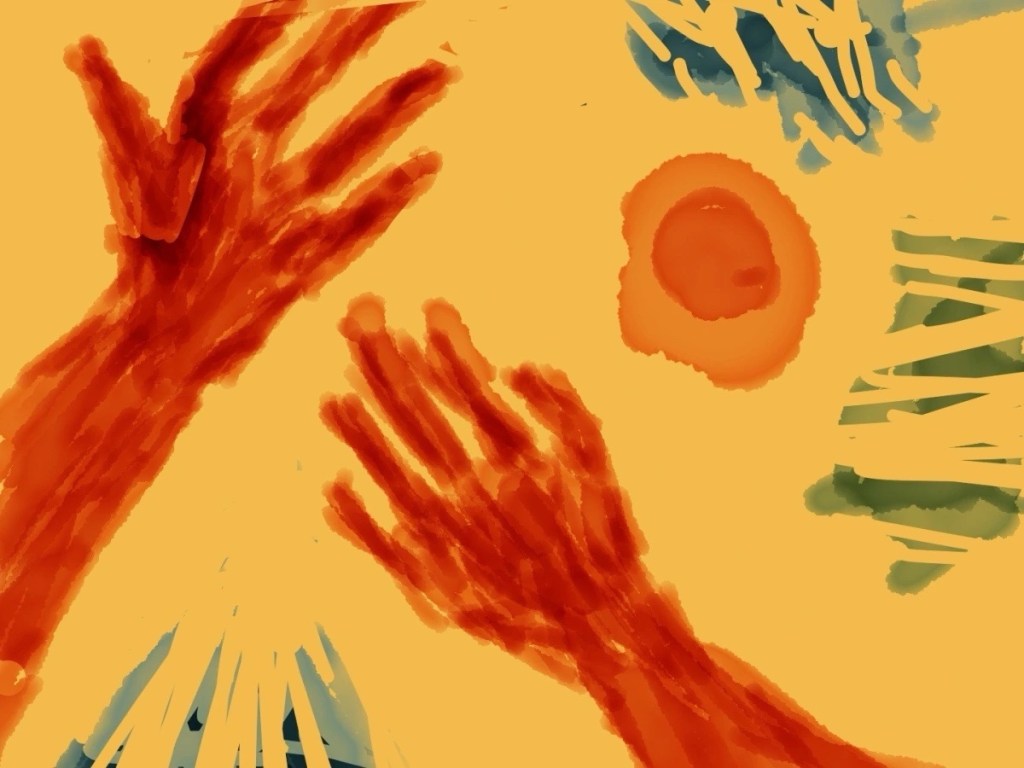
I’m not really hungry just now… she wrote longhand, the first time in weeks, in her journal.
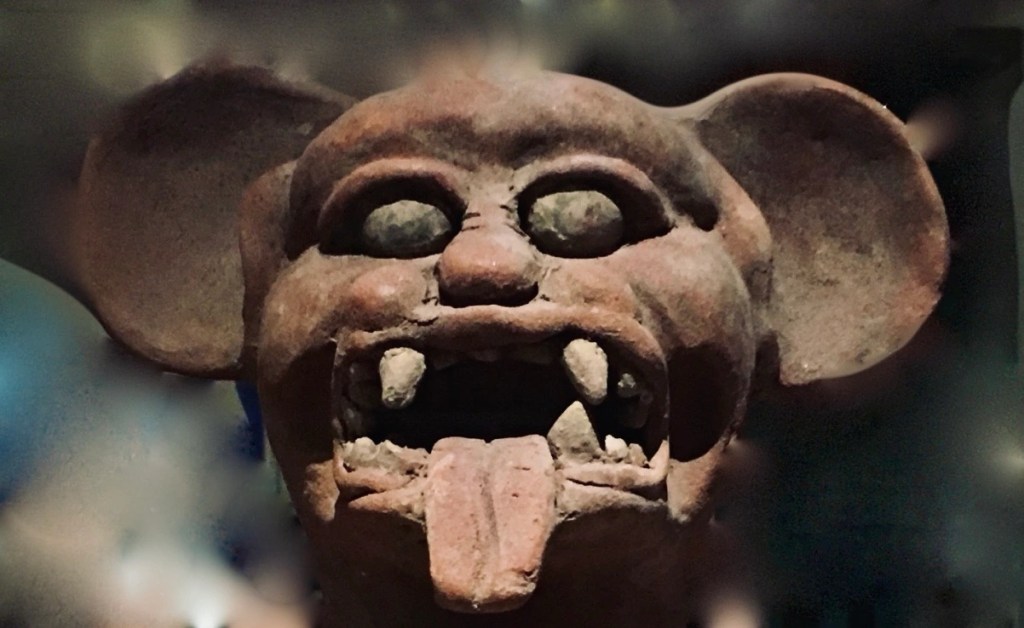
And she thought that odd because she’d been ravenous all throughout her illness, and hadn’t written a thing, but now she felt a shift. She didn’t necessarily like what she intuited lay ahead, but on her life unspooled. A shrunken head, lifeless and truncated, appeared before her again. It floated and shimmered — a self-contained Fata Morgana, hovering above the ottoman in a slow pulsating light. The heavy odor of ammonia filled the room.
“I am the shrunken head,” she said, “and the shrunken head is me.”
She tried to suppress a cough but it scratched its way up her throat, and in a paroxysm she expelled a smaller shrunken head — golf ball sized — which rolled end over end down the marble hallway and eddied below a gilded full length mirror.
The sound of a theremin swelled from beyond the living room and a small red spot of light framed the smaller shrunken head.
This would be her pivot point in life. The one moment by which she would measure the rest of her life. There would be her life after this shrunken head moment, and all the other inconsequential living she’d done up until this singular moment.
A ululation came from the smaller shrunken head — at first like a sweet distant trill, as if she were looking for scarlet tanagers in a clearing at the edge of dark woods — but the sound became shrill as it grew louder. And the bird broke out of a thicket and headed for her, with every flap it transfigured itself: first flap, from scarlet tanager to a pileated woodpecker, with its second flap it became a crow, and with its third flap (making up the distance to her with great speed) it became a red shouldered hawk, and as the shrill ululation began to sound like a fire alarm the bird transmogrified into a turkey vulture lancing at her eyes with its talons.
In this manner she awoke to the original, larger, shrunken head hovering above her bathed in a golden light. She swatted at it, but it was just beyond her range. She let out a meek, “fuck you,” and placed the pillow over her face.
“Today you’ll find and bring me the most beautiful starfish in the world,” the shrunken head said. “I demand it of you. Go!”
After her long illness, it’s what she felt compelled to do…
What I’m Reading:
“It’s confusing. It’s an absurdity. But hardly the only one: We fall in love. We know we are going to die. We do strange things like make art, and dream, and put each other in prison, and cut ourselves when were depressed. And try to be kind when we can.”
— Andrew Boyd / I Want a Better Catastrophe: Navigating the Climate Crisis with Grief, Hope, and Gallows Humor
watch how i go blind
on glassless coronal bliss
i stare at the flares
regale the mass ejections
eyeless pinhole dejection
What I’m Reading:
This option of ‘giving up’ is only possible from a place of privilege. Let’s say we stop trying and temperatures climb by another degree or two, taking us well past our climate targets. If you live in a wealthy country, you’ll probably be okay. It won’t be plain sailing, but you can buy your way out of serious danger. That’s not true for many less fortunate people, though. Those in poorer countries cannot afford to protect themselves. Accepting defeat on climate change is an indefensibly selfish position to take.
— Hannah Ritchie / Not the End of the World: How We Can Be the First Generation to Build a Sustainable Planet
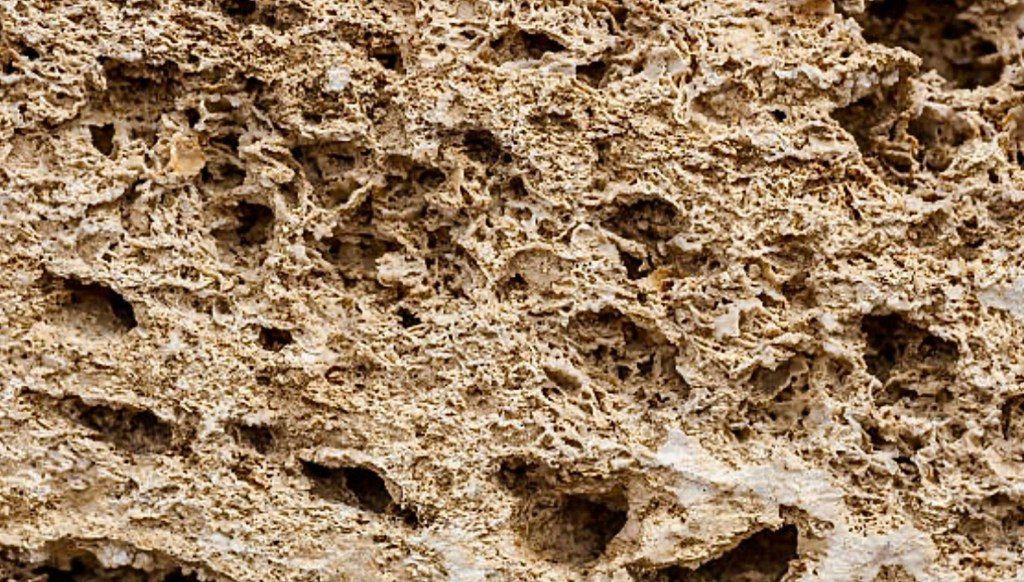
It’s like coquina rock
It’s like Barbara wrote
It’s all ridges and teeth
Waiting
Waiting
Waiting to take a layer of skin
Like a slice of oblongata
Like other lower brain sections
Like the Shell sign superimposed
Over the Chevron chevron
Like the freedom tower building
Cubans called cielito lindo
Like nothing truly beautiful under the sky
Not for you in 2024
It’s roiling
It’s a tempest
And you’re just getting used to it
But you’ll never get over it

What I’m Reading:
Bikeless days are a bummer. They do happen. Rain drowns the city, or snow dumps down. You have appointments to keep, and you have to show up looking more presentable than you would after an eighty-block bike ride. Maybe your bicycle is in the shop. Maybe your bicycle has been stolen. When you’re used to traveling by bike, the condition of bikelessness is disorienting and debilitating.
— Jody Rosen / Two Wheels Good: The History and Mystery of the Bicycle

Like a van garde avant. Like drinking tea filtered through a Russian soldier’s underwear. Like speaking through saxophone skronk. Like drying your back with nettles and swallowing a chaw of thistles. Like bored sawing through panel board. Like watching Window Water Baby Moving backwards. Like finding a nubbin of your desiccated umbilical cord pressed between two cotton balls thirty years later. Like finding a random head in your Tupperware Cake Taker. Like coming of age at 37. Like throat singing in Spanglish. Like pressing your ear close to an ambulance siren. Like walking off a pier because you hear the mermaids singing. Like, why would they be singing to you? Like, huh?

What I’m Reading:
Across the lawn, in the morning the chickens move rocks around like crushed ice, the cat watches through the window soda fountain, the movies where we don’t go any longer.
— Molly Schaeffer / “Soda”


What I’m Reading:
It is by riding a bicycle that you learn the contours of a country best, since you have to sweat up the hills and coast down them.
— Ernest Hemingway / By-Line: Selected Articles and Dispatches of Four Decades

I need to speak about living room
where the land is not bullied and beaten to
a tombstone
— June Jordan / “Moving towards Home”
In The Origins of Totalitarianism, Hannah Arendt remarked that we repeat propaganda not because we are persuaded by such ideas but because we are organized by them. I think myths about poverty in America work the same way. When people express a familiar cliché about poverty—Those who remain poor haven’t tried hard enough. Discrimination is rare. Welfare creates long-term dependency. Expanding opportunity through government programs leads to socialism.—I don’t necessarily think it’s because they believe these things but because in saying them, they feel a bit safer. (How reassuring it can be to tell ourselves that poverty is the result of individual failings; how comforting to assume hardship can be avoided if only we stay on the straight and narrow.)
— Matthew Desmond / “14 Notes from Poverty in America” / Goodreads
What will you do without me, Moscow?
What can you do—I have to be in the south.
I’m leaving you my fiery word.
You will be needier without me . . .
— Yuri Andrukhovych / “Letters to Ukraine”
“I think the real test will be what happens in the next twelve months,” Wijffels said. “If temperatures remain very high, then I would say more people in the community will be really alarmed and say ‘O.K., this is outside of what we can explain.’ ”
In 2023, which was by far the warmest year on record on land, as well as in the oceans, many countries experienced record-breaking heat waves or record-breaking wildfires or record-breaking rainstorms or some combination of these. (Last year, in the United States, there were twenty-eight weather-related disasters that caused more than a billion dollars’ worth of damage—another record.) If the climate projections are accurate, then the year was a preview of things to come, which is scary enough. But, if the projections are missing something, that’s potentially even more terrifying, though scientists tend to use more measured terms.
— Elizabeth Kolbert / “Why Is the Sea So Hot” / The New Yorker
How big would the swimming pool have to be
to hold all the red salty stuff spilled the last week?
Who will recline in the fresh blood bath?
What swimmers will adjust their goggles
and freestyle the miles of blood?
— Jeffrey McDaniel / “The Jesus Fridge”
Dengue (pronounced DEN-gay), a mosquito-borne illness that has circulated to a limited degree for centuries, is now spreading with unprecedented speed around the world. It’s a worrying example of how a changing climate and 21st-century demographic trends can quickly turn a public health nuisance into a daunting global health crisis.
— Dylan Scott / “The tropical disease that’s suddenly everywhere” / Vox
I know grief and you may know it too,
but I have reached the age where it
is perpetual—I didn’t know it would be
like this so I’m telling you, who still have
a whole lifetime to forget your grief . . .
— Maxine Scates / “To You”
What I’m Listening To:
He was a wild god searching for what all old wild gods are searching for
And he flew through the dying city like a prehistoric bird
— Nick Cave / “Wild God”

ice caps disappear
the earth’s rotation slows down
we are losing time
What I’m Reading:
Climate change is starting to alter how humans keep time.
An analysis published in Nature on 27 March has predicted that melting ice caps are slowing Earth’s rotation to such an extent that the next leap second — the mechanism used since 1972 to reconcile official time from atomic clocks with that based on Earth’s unstable speed of rotation — will be delayed by three years.
— Elizabeth Gibney / “Climate change is starting to alter how humans keep time” / Nature
 thee istsfor manity reader