chaw of thistles

Like Glossolalia (redux)

Like a van garde avant. Like drinking tea filtered through a Russian soldier’s underwear. Like speaking through saxophone skronk. Like drying your back with nettles and swallowing a chaw of thistles. Like bored sawing through panel board. Like watching Window Water Baby Moving backwards. Like finding a nubbin of your desiccated umbilical cord pressed between two cotton balls thirty years later. Like finding a random head in your Tupperware Cake Taker. Like coming of age at 37. Like throat singing in Spanglish. Like pressing your ear close to an ambulance siren. Like walking off a pier because you hear the mermaids singing. Like, why would they be singing to you? Like, huh?

What I’m Reading:

Across the lawn, in the morning the chickens move rocks around like crushed ice, the cat watches through the window soda fountain, the movies where we don’t go any longer.

— Molly Schaeffer / “Soda”

Posted in Writing | Tagged , , , , , , , , , , , , | Leave a comment

want to help

When Your Watch Eavesdrops on Your Conversation, Unbeckoned, and Intrudes with Pronouncements

What I’m Reading:

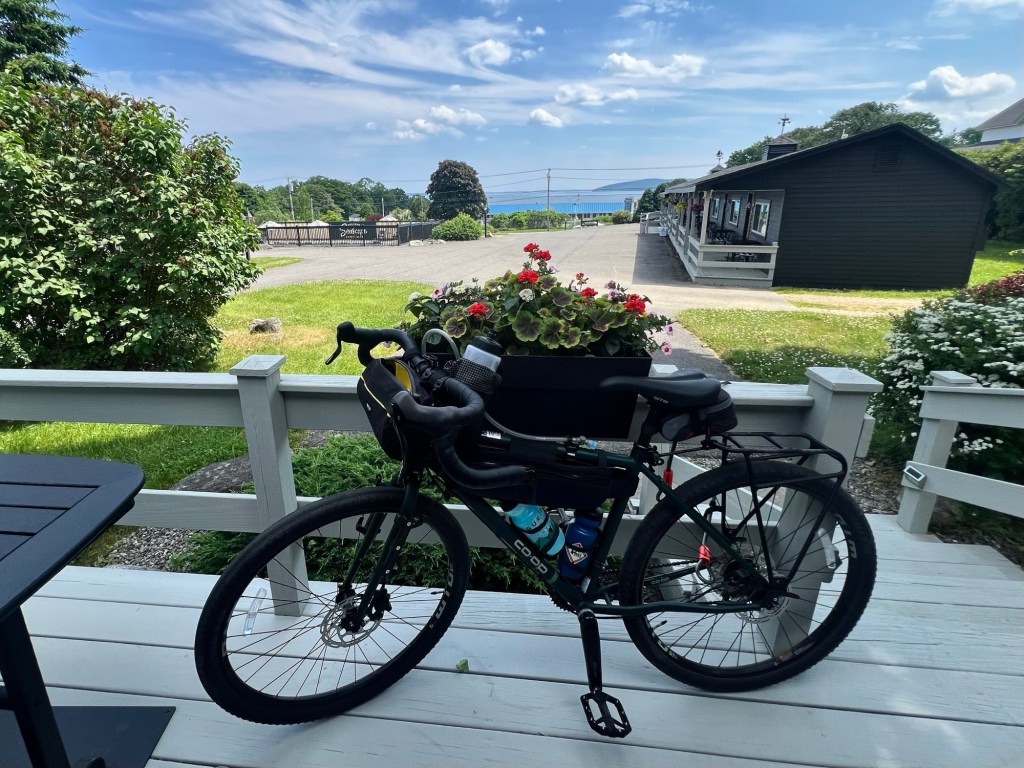
It is by riding a bicycle that you learn the contours of a country best, since you have to sweat up the hills and coast down them.

— Ernest Hemingway / By-Line: Selected Articles and Dispatches of Four Decades

Posted in Writing | Tagged , , , , , , , , , , , , | Leave a comment

i know grief

Memorable Stuff I Read This Week

I need to speak about living room
where the land is not bullied and beaten to
a tombstone

— June Jordan / “Moving towards Home”


In The Origins of Totalitarianism, Hannah Arendt remarked that we repeat propaganda not because we are persuaded by such ideas but because we are organized by them. I think myths about poverty in America work the same way. When people express a familiar cliché about poverty—Those who remain poor haven’t tried hard enough. Discrimination is rare. Welfare creates long-term dependency. Expanding opportunity through government programs leads to socialism.—I don’t necessarily think it’s because they believe these things but because in saying them, they feel a bit safer. (How reassuring it can be to tell ourselves that poverty is the result of individual failings; how comforting to assume hardship can be avoided if only we stay on the straight and narrow.)

— Matthew Desmond / “14 Notes from Poverty in America” / Goodreads


What will you do without me, Moscow?
What can you do—I have to be in the south.
I’m leaving you my fiery word.
You will be needier without me . . .

— Yuri Andrukhovych / “Letters to Ukraine”


“I think the real test will be what happens in the next twelve months,” Wijffels said. “If temperatures remain very high, then I would say more people in the community will be really alarmed and say ‘O.K., this is outside of what we can explain.’ ”

In 2023, which was by far the warmest year on record on land, as well as in the oceans, many countries experienced record-breaking heat waves or record-breaking wildfires or record-breaking rainstorms or some combination of these. (Last year, in the United States, there were twenty-eight weather-related disasters that caused more than a billion dollars’ worth of damage—another record.) If the climate projections are accurate, then the year was a preview of things to come, which is scary enough. But, if the projections are missing something, that’s potentially even more terrifying, though scientists tend to use more measured terms.

— Elizabeth Kolbert / “Why Is the Sea So Hot” / The New Yorker


How big would the swimming pool have to be
to hold all the red salty stuff spilled the last week?
Who will recline in the fresh blood bath?
What swimmers will adjust their goggles
and freestyle the miles of blood?

— Jeffrey McDaniel / “The Jesus Fridge”


Dengue (pronounced DEN-gay), a mosquito-borne illness that has circulated to a limited degree for centuries, is now spreading with unprecedented speed around the world. It’s a worrying example of how a changing climate and 21st-century demographic trends can quickly turn a public health nuisance into a daunting global health crisis.

— Dylan Scott / “The tropical disease that’s suddenly everywhere” / Vox


I know grief and you may know it too,
but I have reached the age where it
is perpetual—I didn’t know it would be
like this so I’m telling you, who still have
a whole lifetime to forget your grief . . .

— Maxine Scates / “To You”

What I’m Listening To:

He was a wild god searching for what all old wild gods are searching for
And he flew through the dying city like a prehistoric bird

— Nick Cave / “Wild God”

Posted in Writing | Tagged , , , , , , , , , , , , | Leave a comment

are losing time

patho-cronismos haiku

ice caps disappear
the earth’s rotation slows down
we are losing time

What I’m Reading:

Climate change is starting to alter how humans keep time.

An analysis published in Nature on 27 March has predicted that melting ice caps are slowing Earth’s rotation to such an extent that the next leap second — the mechanism used since 1972 to reconcile official time from atomic clocks with that based on Earth’s unstable speed of rotation — will be delayed by three years.

— Elizabeth Gibney / “Climate change is starting to alter how humans keep time” / Nature

Posted in Writing | Tagged , , , , , , , , , , , , , , , | Leave a comment

lost the plot

Sanctioned by the Association of Urologic Twee (redux)

(Fade Out / 8 channels of noise : one channel of noise drops out every 30 seconds until there is silence)

Voiceover In Search Of A Film: Soft antennae entertainment turned minds to mush. Mush was the preferred texture of pablum eaters the world over. Overcome with cathexis via parapraxis trying to gauge the thickness of the Foley catheter.

A: Catheter? Did you say catheter?

S: Are we talking about the indwelling and suprapubic type catheters?

A: This isn’t your typical prime time fare, you know. You know it must be.

S: It must be. Isthmus B? Be you choosing Isthmus B? Isthmus of Perekop?

A: Are you insane, man? You can’t get anywhere near that today—mines, errant shells, ravenous drones on the prowl for heat signatures . . . No. New.

S: New world Isthmusesesess. (Did I just neologize?) what about the Isthmus of Panama?

A: Why has this turned into some sort of geography thing? What is this about?

S: What is anything about?

A: About 6 feet 3 inches, 224 pounds—a strapping lad!

S: You, my friend, have lost your yarbles.

A: You mean marbles?

S: What’d I say?

A: Yarbles . . . Maybe that’s the parapraxis, and this is all about quasi-urinary tract issues.

S: Hmm?

A: Where were we?

S: I think we’ve lost the plot.

A: Was there ever one?

S: One is born and then one dies.

A: Dies? What about all the other stuff in between?

S: Indeed.

A: In deed?

S: Indeed.

A: I’m sorry I have to stop here. You’ve put me in a sad state of mind.

S: Mind you, pal. Go on with your bad self. Scat.

A: Scat?

S: Scat!

A: Boop-be-boop. Wada, wada, wap, doo, wah. Wee, do, do—

S: What the fuh— What are you doing?

A: I’m scatting.

S: Not that. Not that scat!

A: Well, why didn’t you say. (Drops his pants)

(Rimshot heard off stage / Silence / Fade In)

What I’m Reading:

Once asked how he maintained his stamina at eighty-seven years old, Noam Chomsky responded, “The bicycle theory. As long as you keep riding, you don’t fall.”

— Tree Abraham / Cyclettes

Posted in Writing | Tagged , , , , , , , , , , , , | Leave a comment

on the heart

Mise en Squalor + Plagues

This is a mise en abyme of a mise en abyme in a mise en abyme.

This is historical quicksand.

What of the Inquisition kitchen?

A fungus settled on the heart. The Great Deficiency of 1534 forbade comebacks without the extrapolation of the repellence of nearly thirty years loveless marriages. Why not go into pop singing?

And what of this skittering mise en scene?

I found a hermetically sealed heart — deprived of voltage, loving fingertips and Hollywood endings.

I preferred faith and superstition and widely distributed distractions on Bergman’s Fårö. Courtesan portmanteaus denied to local fishmongers.

I had to have the book.

I explored these motherless quintuplets.

I’m here. I’m here. And I’m here.

Speculate.

What I’m Reading:

I have walked out in rain—and back in rain.
I have outwalked the furthest city light.

I have looked down the saddest city lane.

— Robert Frost / “Acquainted with the Night”

Posted in Writing | Tagged , , , , , , , , , , , , | Leave a comment

in this (my) neighborhood pt. 57

What I’m Reading:

The bicycle wheel is one of the strongest of all human contrivances, capable of supporting approximately four hundred times its own weight. In theory, a buffalo could pedal a bike without the wheels buckling under the load.

— Jody Rosen / Two Wheels Good: The History and Mystery of the Bicycle

Posted in Writing | Tagged , , , , , , , , , , , , , | Leave a comment

can’t see me

Identity Reconstruction Tanka

Now you see me, now
you don’t. I’m lost to myself.
Even I can’t see
me. These are the places I
lived. This is the art I made.

What I’m Reading:

Some beauty is visible only when abutted by banality. Spots beautiful in a specific time, direction, and angle viewed from bike-height that couldn’t be replicated.

— Tree Abraham / Cyclettes

Posted in Writing | Tagged , , , , , , , , , , , , , , , | Leave a comment

air is electrified

harvest

broaster chicken on speed dial
fans oscillating from every corner
dust devils gyring in the living room
the fridge texts — low on oat milk

house heaves a sigh of desperation
wants to set upon squarely on a witch
but they’re far and few

seventeen year cicadas unleash the chainsaw torrent
at once the air is electrified
a sharp tang on the tongue-tip

welcome home

What I’m Reading:

I’d been looking for the “right” place to sleep each night, as if not finding it would leave us stranded. But now I thought, wherever we are at the end of the day, we’ll be somewhere, and we can sleep there. It might not be comfortable and safe, but it will still be somewhere.

— Emily Buehler / Somewhere & Nowhere: A Bicycle Journey Across America

Posted in Writing | Tagged , , , , , , , , , , , , | Leave a comment

makes no difference

Memorable Stuff I Read This Week

If God is a man, he could never understand the mundane threats women experience every single day of our lives.

— Bora Chung / “Maria, Gratia Plena” / Your Utopia


When the warming ocean does not allow for sea ice, ice we need for hunting ugruk, I wonder about her mood. When the waves, loud, high, and strong, eat at our shores—even in winter—I wonder what Papa would tell us. When it rains and rains and rains in July and the air is too muggy to dry salmon, I feel the shift. When in the fall, after the ground freezes, the mice have not yet put masru away in their caches, I wonder. About her signals. Her abrupt change. Her unpredictability.

— Laureli Ivanoff / “Weather Report” / Orion


. . . we in the United States are part of a global system in which our comfort and privilege are based on the exploitation of people and nature. And part of our privilege is that we don’t even have to know about it.

We think we can use our privileged position to “help” people who are “less fortunate” than ourselves, but we are blind to the workings of the system that creates our fortune and their misfortune, and how the two are mutually dependent. In a way, it was the same argument that the Mothers of Matagalpa were making.

— Aviva Chomsky / Central America’s Forgotten History: Revolution, Violence, and the Roots of Migration


Anyhow, Makina had neither been naive nor lost any sleep blaming herself for the invention of politics; carrying messages was her way of having a hand in the world.

— Yuri Herrera / Signs Preceding the End of the World


Recent science has shown how trauma can change our brain chemistry and our DNA. I wonder now if my lifelong obsession with stories of mass murder is tied to my father’s memory of that moment, and others that exposed him to the violence of empire, poverty, and dictatorship in the years before I was born. The brain stores information for its own survival, and it finds a way to pass on its lessons from generation to generation. Perhaps my curiosity about organized, official violence is a biological signal sent by the survivors and the perpetrators of atrocities from a distant and unwritten history. From the Spanish Inquisition, the Middle Passage, the conquest of the Americas. Unremembered for many generations, those horrors may still be alive, in me, and in many people like me, in our instinctual desire to stare into, and to understand, the dark and bloody recesses of human history.

— Héctor Tobar / Our Migrant Souls: A Meditation on Race and the Meanings and Myths of “Latino”


Come, let us be friends, you and I, / E’en though the world doth hate at this hour . . . Come, let us be friends, you and I, / The world hath her surplus of hatred today . . .

— Sarah Lee Brown Fleming / “Come Let Us Be Friends”


Maybe hope exists just because we think it to existence, and meaning is something you create on your own. But that’s just an individual’s subjective experience of faith. There’s no guarantee that such subjective faith will be supported by the objective situation. Why should the myriad ways of the universe conspire to realize the will of a mere individual?

I’m not trying to be cynical. I’m simply saying, by pointing out how small and insignificant I am, that whatever I do is also small and insignificant and makes no difference in this universe.

— Bora Chung / “The End of the Voyage” / Your Utopia

What I’m Listening To:

I don’t miss my mind
Doctors and nurses, tingling eye
Bleeding inside, touch me there
(That’s a modern pose)

— Kim Gordon / “I Don’t Miss My Mind”

Posted in Writing | Tagged , , , , , , , , , , , | Leave a comment