the menu incarnate

Ready to Order

With the waiter largely offscreen, none of the cheeses are what they seem . . . 

Absorbing his friend’s accident—a taciturn stoicism gone limitless and flagrant—growing increasingly unsettling as midnight strikes and the Gouda appears.

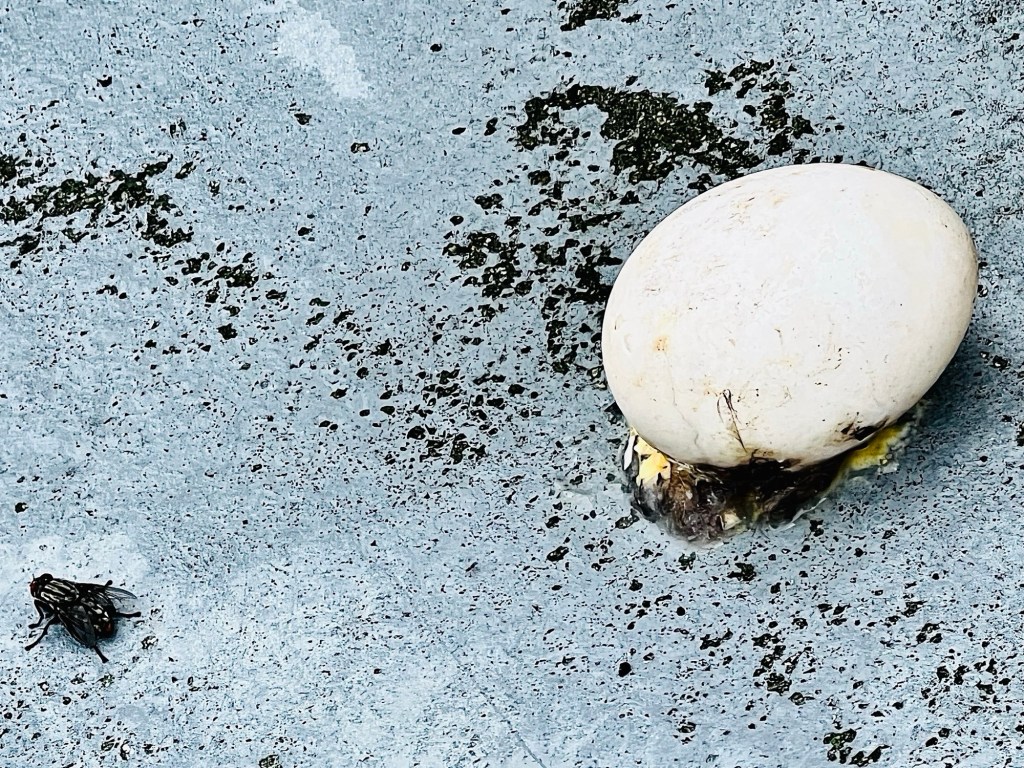
Bystanders switch perspectives as the rubbish becomes the menu incarnate. Mold elementary.

Windscreen marks on his forehead and rinds on his cheeks . . . 

The crash of canned Spam ever-shifting into an unexpected perversion with the Camembert. 

Are you ready to order?

What I’m Reading:

The solipsism of low self-esteem is one of the wonders of the human psyche. So inexplicable is its grip, so binding its influence, it can feel almost mythic. And why not? Myths are what we invent to accommodate the mysteries of nature: our own if not those of our surroundings. Scientists can explain daylight and darkness, gravity and rainfall, but who, after all, can explain why we are born with a need to think well of ourselves, and why, when we don’t, life becomes an exercise in humiliation?

— Vivian Gornick / “Always Inadequate” / The New Yorker

Posted in Writing | Tagged , , , , , , , , , , , , , | Leave a comment

implore the dishes 

make a flat about me

implore the dishes
as an ill-fated magazine might
after a few tumultuous departures
spent amiably among the geraniums

she wheels an epilogue of desires
words pale in sequence
misericordia perhaps
a sugar narration for certain
cut along the arthouse seam

it rains all day here
episodic and flat
the haze of woodsmoke
disintegrating on a sugary cloud
beggaring at the sunset
elliptic and amorphous

he omits knocks
along the charnel house doors
counting on the spectator to dot the i’s
and cut the t’s
taking stabs at the cult of the inflatable earth

fingers the absurd artistic crown
he’ll never wear

What I’m Reading:

Evil has no alternate plan. It is simply incapable of assuming failure.

— Cormac McCarthy / The Passenger

Posted in Writing | Tagged , , , , , , , , , , , , , | Leave a comment

sea is drained

These Were a Few of the Dreams

These were a few of the images retained:

The final scene is all she remembers.

Massive black horses in water—a marsh, blue sky, angry cumulus darkness roiling in the distance.

They need this, a disembodied voice says. They stand in this water to take the weight off their veiny haunches. It’s therapeutic.

Instantly, she and her horse are a mile out at sea in deep swelling water. The horses swim as if a maelstrom wasn’t upon them—they’re enjoying it—the ocean breaking over their heads.

She isn’t enjoying this—briny fear and seafoam in her nostrils.

And in another instant the sea is drained, there is no tumult, but she is suspended two feet above the seabed, just feet from the old beach line. The marsh is now reedy savanna.

Someone is screaming—bear, bear—in the reeds behind a tall chain-link fence. She has to start her long hike, but she can’t get out of her frozen hover. She can’t move.

These were a few of the dreams. Then she remembers her Shelley. She mutters: 

We rest.—A dream has power to poison sleep;
We rise.—One wandering thought pollutes the day…

This is a bit of the wreckage.

What I’m Reading:

Quite often I talk about being a pacifist, and about how important non-violence is to me, but by virtue of where my tax dollars are being spent, I’m one of the most violent people on earth.

— Omar El Alkad, to Dan Sheehan /“Omar El Akkad on Genocide, Complicit Liberals, and the Terrible Wrath of the West“/ Lithub

Posted in Writing | Tagged , , , , , , , , , , , , , | Leave a comment

his own reincarnation

Memorable Stuff I Read This Week

The dead are carried away in tote bags.
Because they got carried away, they are borne away.
Only some of those borne away got carried away.
Some of the others borne away were newly born or else had borne
them.
They got borne away from home. Or was it to home.

— Eugene Ostashevsky / “Falling Sonnet XI”


If you had to point to one continuous theme in all of Pynchon’s work, it is a silver Christian fish bumper sticker turned right-side up to look like a rocket. Our science worship has usurped the God worship of previous centuries, but ultimately points to Old Testament outcomes: Apocalypse, holocaust, and the fascistic desire to dominate. The phallic sex-death drive of the 00000 V2 rocket—produced using concentration camp labor—ends the world of Gravity’s Rainbow, but also begins the nightmare with a horror; you will never hear that screaming which comes across the sky, because the impact of a supersonic rocket outpaces the noise of the explosion.

— Devin Thomas O’Shea / “Why Thomas Pynchon’s Vineland—a Disappointment When It Was Published—is the Novel We Need Right Now” / Lithub


You think there is someone there, standing in your skin, but there isn’t. Accept it. If you would like for there to be someone where you are, albeit briefly, you must choose who to be and be that person. 

— Jesse Ball / The Repeat Room


wordless, but not quite silent
unless to say love, unless not to speak
—there is leftover gunpowder in this line
becoming a simplified beginning

— Duo Duo / “If No Echo, No Monologue”


Scientists think sleep is the brain’s rinse cycle, when fluid percolating through the organ flushes out chemical waste that accumulated while we were awake . . . cerebrospinal fluid, the liquid bathing the brain, seeps through the organ via tiny passages alongside blood vessels, sweeping away metabolic refuse and other unwanted molecules. Fluid flow through this so-called glymphatic system ramps up during sleep . . . vigorous glymphatic clearance is beneficial: Circulation falters in Alzheimer’s disease and other neurodegenerative illnesses.

— Mitch Leslie / “Scientists uncover how the brain washes itself during sleep” / Science


Sometimes, you say, I wear
an abstracted look that drives you
up the wall, as though it signified
distress or disaffection.
Don’t take it so to heart.
Maybe I enjoy not-being as much
as being who I am. Maybe
it’s time for me to practice
growing old.

— Stanley Kunitz / “Passing Through”


He looked up. His pale hair looked white. He looked fourteen going on some age that never was. He looked as if he’d been sitting there and God had made the trees and rocks around him. He looked like his own reincarnation and then his own again. Above all else he looked to be filled with a terrible sadness. As if he harbored news of some horrendous loss that no one else had heard of yet. Some vast tragedy not of fact or incident or event but of the way the world was.

— Cormac McCarthy / The Crossing

What I’m Listening To:

Gotta keep moving from a life of losing, reading news by the sea
Sentences are ending me
Even from the water, the deepest things are talking
By only going further into it

— Ty Segall / “Buildings”

Posted in Writing | Tagged , , , , , , , , , , , , , | Leave a comment

going for him

stained pink rayon

first responders were able to get him out
the stained pink rayon nightgown beneath
his torn clothes was unexpected

no one says a word
he was not in the water but he was taken
by the 8-foot wave nonetheless

rough surf justifies
a rough serf
higher and higher
both he and the waves

he had plenty of sunscreen
slathered on slippery as a forlorn right whale
the right whale for harpooning
back in the day

humidity is up
but it’s only monday

im bleeding
he says

so he’s got that going for him

What I’m Reading:

one hears a hymn to killing
a hymn to lead bullets
piercing through the human flesh
like angels

— Tomica Bajsić / “Hymn to Killing”

Posted in Writing | Tagged , , , , , , , , , , , , , | Leave a comment

deep purple refrain

Queen Travis Meets Whit Fictions (redux)

Queen Travis declaims that feculence has nothing to do in this affair. She says:

“I was bequeathed a third rate hand me down in consignment and inquisitiveness—a loan from dog. I’ve got the scrabble tiles blues—a compulsion to put handfuls of tiles in my mouth, and store them there until we stop clear cutting the world’s forests. There’s a depth to the sky that terrifies me—there’s something biding its time behind that quaint cerulean facade. So keep calm, but get ready for love, because the blackness of space is manifest in our every gesture.”

She tilts her head up from her privy papers, sniffs at the air, flares a nostril, continues:

“I’ve got stockyard pictographs of trestle beam investitures. Get all of these words out of my head, Doctor Ambassador—my thoughts no longer serve me but trip me up at difficult moments. Platitudes will get you everywhere—speak in riddles and baffles. If you, my subjects, dig trenches in cement—it’s hard work—I’ll extract the juice of yet grown fruit from the air. But don’t ask me to be clear for clarity’s sake, it doesn’t become me.”

Fanfare. Gentle applause. Fanfare.

In strides Whit Fictions, fresh from America. He bullhorns, apropos of nothing, without invitation:

“What dribble! Talk about disjunction and linearity. I want my plastic rat, and I want to put an end to Sunday morning pleasantness. It’s all sound and drury until someone gets hurt. It’s dribble in the middle of each waking hour—and let’s take it outside because the making of treaties is provincial. You, your excellence, at the top of the great chain of being, think it’s too quaint for a bully type like me? Why are you asking for a ride? You think this is Lennon-McCartney territory, sister? Well, sis, it’s not. This is it, this is mythical shit. I pray twice hourly for the day of eagles and hegemony. You, there, singing your Deep Purple refrain from “Hush”— sweet jeez, do I hate that song! For the time being take thy ferrules and place them round your pinky fingers, and chop off the slag ends. Stay calm. As you were, and all that. I am lord of the swill bucket!”

One could say there was much rejoicing—but why lie? Decrees, treaties, agreements and promises were broken. Rationalizations were stoked, and everyone walked away to their corners promising to tend their gardens. Naked and afraid.

What I’m Reading:

I believe in death, in death’s eternal pulse, and I believe our
moment will come again when the sea regains its color and the
sphere lights up, emblazons the hilltop, and celebrates the
dignity—this time—of the sick at heart.

— Ennio Moltedo / “86”

Posted in Writing | Tagged , , , , , , , , , , , , , | Leave a comment

back in treachery 

excessive levity

markets are drafted
into stock fists on actual horseback

see ya in alaska now that 90 degree days
are common + we float away on glacier melt

wildfire smoke flood tornado broad
applications of anthropogenic love for ma earth

physical comedy with the grim
red of precariousness of starvation + unemployment

higher than ever prices + fewer than ever benefits
die of neglect if u aint got ur own private rockets

voodoo economics without the gipper
frippery + witchery + cheap 19th century tactics

put the jacksonian back in treachery
bark loudly + carry a brownshirt in a backpocket

gimme dat ol time derision + white supremacy
look at da world weve made / look ma we made it

peacelove+happiness
aint we da sweetest animaloids going

goose stepping like a paradoxical network of birds
nesting in dat frayed nest on ya head

aint good for nuthin else anyway
never was

the future aint as good as it used to be
bittersweet + bowdlerized as it is

wartime astonishment / genuflection in da genocide
weve exploited ourselves for cheap

or for reasons of excessive levity

What I’m Reading:

Appeals to homogeneous nationalism had to be constructed against non-Caucasians. Of course, the concept or category of “whiteness” is itself an ever-evolving category. So non-Caucasian was a moving target, and the unifying animosity eventually had to be directed against outside others. Historian Richard Hofstadter has characterized this ongoing feature of US politics as the paranoid style, the perennial fear of outside others. 

— Noam Chomsky and Marv Waterstone / Consequences of Capitalism

Posted in Writing | Tagged , , , , , , , , , , , , , | Leave a comment

sonic youth stickers

Muted Video Feed Fugue (redux)

No need to look at me while I write, she thinks—and what’s this mass of entropy floating next to me? It seems most people go off-camera for the writing bits, then so shall I, she said to the muted cohort. In that instant of muting her video feed, the jingle for Sears Junior Bazaar hit her consciousness: 

Jesus! I haven’t thought of Sears since … what 1999? Much less Sears Junior Bazaar, I’d have to go back to childhood—the late 1980’s for that! The air thick with popcorn and candy—intense—when you walked into that Sears on Coral Way. The candy shop was situated at the center of the first floor as you walked in through any of the doors—unless you walked in through the Auto Department annex—then you were assaulted by the smell of industrial rubber used for the tires on display near the washers and dryers. Walking into that Sears on the Miami-Coral Gables line was something altogether different than walking into any other suburban South Florida Sears store—it was a synesthetic experience: smells, sounds and the promise of something novel. 

What brings that to mind, 20 years later in Boston while interfacing with folks across the country in my pandemic sanitized living room? This ain’t no Proustian fugue—is it? 

Or is it the virus-driven imperative of meeting other writers via Zoom? What about the curious desire of not wanting to be the object of someone else’s gaze through these pixillated distances? Is it the nebulous sack of entropy that constantly accompanies me at the peripheries of objective focus—it’s always there with me, but just beyond my ability to manipulate it in any manner.

Just what the hell was I doing on this date in 1999? I’d know instantly if I cracked the storage closet by the entryway and went into the top Rubbermaid bin, but that’s too facile; and anyway, I’m supposed to be writing in the virtual company of 25 strangers, not rummaging through my closets. But who would know in the world of muted video feeds—and we’re on audio mute all the time. Imagine the glossolalia, the cross-distortion babble, the static ambient noise—the off-camera whispers, the squelched farts, the crunching if we weren’t muted. Better this. I guess. 

I guess around this time in August of 1999 I was getting ready to go back for sophomore year at Tulane … Jeez, I hated those two years in New Orleans: total disinterest in—let’s see, what was that progression in two short years—journalism, political science, communications, history. That must be some sort of record-tying feat—four majors in four semesters. If it wouldn’t have for the two years at the radio station, and the film department screenings at Loyola University next door, I might have just wandered off and hiked the Appalachian Trail for years on end—oh wait, I did that anyway. In ’99 I was at the height of my Sonic Youth intoxication. I saw them four times on the A Thousand Leaves tour. Typical me to drive both 700 and 900 miles to see them in DC and New York a week apart—and I’d already seen them in New Orleans and Miami. Every journal I had for a decade was festooned with Sonic Youth stickers—until, like every other bastard geezer, Thurston left Kim for a younger woman. Fuckers, all! 

Wo! I’m supposed to be free writing with a purpose here, not getting caught up in an endless pre-millennium eddy … and time always runs … short—and out!

Come to think of it—as most of us writer types jump-cut to black—what keeps pulling at me to return to 1999?  It happened to be the year my father disappeared from my life. Last sighting. Last words. Just before I went back to New Orleans for the Fall semester I saw him briefly—his invite, my birthday—at Señor Frogs in the Grove. The last time I ever heard from him was that desultory letter just before that Christmas, setting up the meeting he never showed for, just before Y2K. He was getting progressively worse: drugs, erratic behavior, offering me to drop acid with me just before my high school graduation—and what everybody thought was the topper was his bringing a young woman, only six months older than I was, and presenting her as his new wife. Some of the guys in my graduating class asked me if I could hook them up. Fuckers, all!

Just before my high school graduation he reappeared, after a year and a half absence, and revealed he’d never been more than 10 miles away from me in that time. It begged the question, why no call? But I was so pleased that he wasn’t dead—murdered, I thought, given some of the people he was hanging around with. 

I see it as if a dialogue box—a cloud floating over his head reading: I’m back, Maria. Party Time!—appeared. He expected what? An invitation to the Free Kitten show? Well, dear father, I’m 40 and single—with a purpose—and haven’t seen or heard of you for twenty years. I thought you were long-gone-dead-earth-meal, or an ash molecule wafting its way south to Patagonia. Thanks for the creeped-out letter-screed about the medical-industrial complex conspiracy; about the cabal running the world; how Iridology changed your life and can change mine; and how you heal people by laying hands and shooting a laser from your third eye. You’re a stranger to me, as alien as Erich Honecker was to me in 1989—and you saw how well things worked out for him!

You stood me up on the day before New Year’s—before the world was to fall apart crushed and darkened by Y2K. I didn’t exactly expect Party Time! Woo Hoo (… and I feel pins and needles) — but I didn’t expect you not to show.  To leave me expectant, wanting a still small token, at Señor Frogs. What’s the use in trying to rationalize this? Why do I find myself here again in a mindless moment?

It’s so vivid, and it haunts me, that last time I saw you: that dayglo green grass seemingly  irradiated by the sun unleashed from its cloud cover. You were on a Santeria trip insisting your poor-man’s version of Madame Sosostris (did you ever get around to reading Eliot, I wonder) read my future—with her histrionic staring into my eyes and death grip on my upturned hand—it was laughable, but I kept a straight face more out of shock than sobriety. How sober were you, I wonder. Your reassuring nod, when she brought over the frozen cow’s heart and passed it all over my body to cleanse my aura, did nothing to assuage my anxiety and only proved how far I’d go to spend a couple of hours with you. Hoping. Wishing.

But now time’s up again … and now I’m back, as we writerly types listen, then ensconce ourselves behind our black boxes—long live black-box-video-feed-mute! But I’m dropped back into this boxful-o-reverie. Actually, this feels like a tale told by an idiot signifying over-caffeination and over-tiredness. 

What did you mean by this game, long dead-dad, of the trailing twenty-year-old missive? How you have burrowed like a trojan horse and reappeared like a recrudescent virus. You were always a fucker(!) and you shall always be. And what the hell am I doing ensnared in this sepia-toned vortex?

If things had happened differently… what? 

Would I listen to Up With People instead of the Butthole Surfers? 

Would Elizabeth Gilbert be my touchstone instead of Kathy Acker and William Burroughs? 

And instead of Eraserhead would my favorite film be Runaway Bride

I don’t know. I don’t what, or where else, I’d be if those weren’t some of the most obtrusive memories that impinge on my consciousness in the darkness of the video feed mute.

What I’m Reading:

Data doesn’t lie. On streets with protected bike lanes, crash rates typically drop—for drivers, cyclists, and pedestrians. When everyone knows where they belong, roads function better. Yes, drivers may need to slow down a bit. But that’s not inconvenience—it’s safety.

And if you’re tired of passing “wobbly cyclists” in traffic, bike lanes are your solution. They remove confusion, create predictability, and lower tension for everyone.

— Ron Johnson / “Your Comeback Guide to all the Anti-Cycling Arguments You’ll Hear This Year” / Momentum Mag

Posted in Writing | Tagged , , , , , , , , , , , , , | Leave a comment

humans are creating

What I’m Reading:

Americans are paying more for appliances, home furnishings, toys and shoes than they were a few months ago, and they could soon face higher prices on more goods as the Trump administration’s latest round of sharper tariffs kicks in.

The newest round of duties took effect Thursday, lifting the average U.S. tariff rate to its highest level since the Great Depression. The move solidifies the president’s trade policy after months of negotiations, meaning more manufacturers and retailers are expected to begin raising prices in short order.

— Jaclyn Peiser / “Cars, coffee and clothing are poised to get pricier with new tariffs” / Washington Post

Posted in Writing | Tagged , , , , , , , , , , , , , | Leave a comment

thru thee wall

incandescent with skeevies (ekphrasis)

i fit flatly thru thee wall

warp thru the weft
wed with the grain
watch the disappear(er)
nearer to bone than blood

i fit flatly thru thee wall

fall into this encasement
incandescent with skeevies
sockets of the eyes
im defective
im deflective
listen as i fade out
to hiss

What I’m Reading:

Immigrants showing up for court dates in Manhattan must now navigate past rows of masked federal agents … Since the spring, at the federal courthouses in downtown Manhattan, hundreds of officers from ICE and other government agencies have lined the hallways and lobbies, waiting to detain some migrants as they leave their immigration hearings. Many of the agents are masked and armed, and they are dressed in tactical gear, even though all visitors to the buildings must pass through airport-­level security.

Dozens of observers, migrant advocates, and members of the press show up each day to witness the arrests, which often take place with little regard for due process. It might not even matter how a judge rules in someone’s case. Migrants seem to be in shock as agents approach; family members might scream or sob as their loved one is taken away.

… A growing number of migrants are now skipping their court dates altogether—and setting themselves up for deportation—because they would rather go into hiding than face the danger and humiliation that Federal Plaza may bring. One can only imagine that this, too, is part of the point.

— Jordan Salama / “ICE’s Spectacle of Intimidation” / The New Yorker Daily

Posted in Writing | Tagged , , , , , , , , , , , , , | Leave a comment