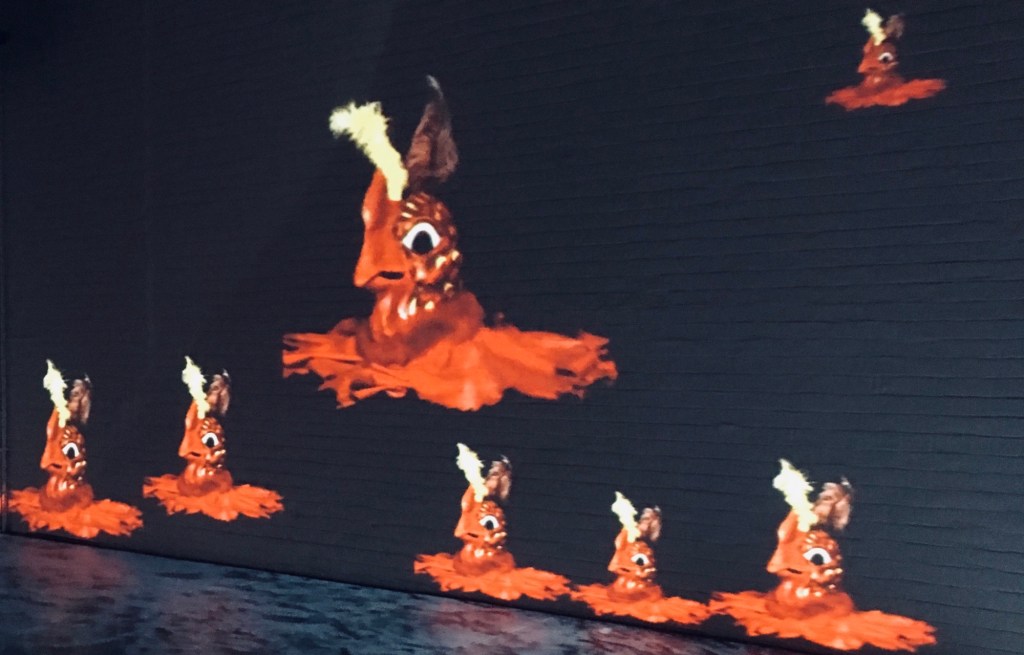
i jump off the bed— cold granito floor judders my core— legs & spine ablaze lower brain doused in fire.
i dread the conflagration in my head as i peck away at my dreams like one conditioned inside an arcade game box.
slot a quarter in the box & the turntable i stand upon spins— a hatch opens where i peck at feed.
to eat & not to eat.
so long since anyone’s come by & i had a grain or two. don’t pass me by / i say with shopworn eyes. don’t walk by / i will u to slot a coin.
i haven’t fed in three days— slot some money / honey provender’s behind the door. be a hun / i may be your child’s nugget some day. walk by that pinball game straight into my heart.
What I’m Reading:
How can you show that something is racist, or stupid, or dangerous, or genocidal when nothing means anything?
— Matt Greene / “On the Rise of ChatGPT and the Industrialization of the Post-Meaning World” / Lithub
I just don’t want to be conscious sometimes because when you’re conscious in the ordinary way you have to think about yourself a lot
Dull thoughts like what am I doing?
— Anne Waldman / “How to Write”
He took his hands off her face, turned away from her with a pained sigh, reminding her of other middle-of-the-night conversations that had ended with a pained sigh. Staying up too late, exchanging panic about the children’s futures, what will this planet hold for them by the time they’re our age.
— Helen Phillips / Hum
The most American disease is the dis- ease of self-obsession. In its ruins I find there are questions I never quite learned to ask:
How can I help? What did you need? How will I know?
— Sadia Hassan / “Anti-Elegy”
She heard it constantly. Everything bad was referred to, with a jocular glibness, as the new normal.
ADHD. OCD. Depression.
Agoraphobia. Xenophobia. Paranoia.
Antisocial personality disorder. Most of the diagnoses in the DSM-5. Albeit often at a subclinical level.
Abnormality was the new normal.
— Lydia Millet / “Therapist” / Atavists
I wrote it in coal on snow and on new shoes for the ink has become like mud and the paper, how miserable the paper is!
— Muin Bseiso / “Fingernail Poem”
Repeated exercise sessions on a treadmill strengthen the wiring in a mouse’s brain, making certain neurons quicker to activate. Researchers found that this ‘rewiring’ was essential for mice to gradually improve their running endurance, which suggests that the brain is actively involved in the improvement of a physical ability with practice. “Exercise is not just about muscles breaking down and building up,” says neuroscientist and study co-author Nicholas Betley. “It’s changing your whole brain.”
— Flora Graham / “Exercise rewires the brain for endurance” / Nature Briefing
I was awake, but when I was awake A while longer I woke up and said “I have slept until now,” and now I have stopped sleeping altogether.
— Laurence Wieder / “These Anemones, Their Song Is Made Up As They Float Along”
What I’m Listening To:
If there’s one thing you can say about mankind There’s nothing kind about man
She dances to KOKOKO! because there is nothing else in the world she would rather do. That is all there is to it, when one’s desires collide with the past. She was a child when the rebels raided her village and hacked her parents to bits. She reveled: for her mother beat her so violently and often, and her father came nightly with unwelcome ministrations. She gladly welcomed her liberation. When the Women’s Liberation Phalanx mounted their counter attack and she was conscripted as their cook and laundress, she claimed a joy she never imagined. Now imagine the promotion. Imagine having a head filled with lightning bolts and AK-47’s. Imagine the retributions. Imagine drifting away in a recurring mushroom cloud of hiss and sulphur smell of spent artillery. Now imagine hearing equivalencies early and often. Then you can imagine why that pounding din that KOKOKO! has shocked into existence appeals to her so. Come bring the noise, she says. And she abandons all hope on the dance floor.
What I’m Reading:
Life began to scream. At first it screamed into the echo of silence which had first owned the land. Then it screamed to overcome all the other screaming …
It’s all about noise. About the back and forth of improvisational counterpoint — an F flat ostinato call here, an arpeggio of the B scale in response there… like the scale of wildfires and flash flood cycles in call and response in a dozen places across the world… it doesn’t seem to end. Ash, dirt, and water transmogrified into an inexorable mud-wall swallowing all in its path… ten feet tall and half mile wide… There is no hope of escape in his mind. It’ll be his turn eventually… The skronk squalls out of his alto saxophone demand this much… But he can’t go on, even though the drummer beats an exquisite syncopation, and the bassist picks something near the upper bout so yawling and transcendent that he considers not walking away forever. But it’s not enough. The last note he ever blows is a C major. In C, he thinks, I’ve heard that before. He drops the sax as ceremoniously as thee final mic-drop, and bares his teeth — more grimace than smile — to the two dozen assembled in the dark. He beats it for the nearest bridge of fatal height. This is thee finale of seem.
What I’m Reading:
High up in unit 7763, each night slid in like an oil spill, filling the hours with sludge and shine until it seeped into another day.
Dark thought on a gray day — gray in every gradation:
18% gray card gray the ideal photographic gray
of wet city streets & shards of east river gray
the cold of gainsboro gray rain
dead-eye gray pale ash gray —
the fortune teller cried last night & auguries of apocalypse
revealed themselves in halftone grayscale.
What I’m Reading:
At the top of these ridges is a view more beautiful and terrifying than one might imagine; the world is without color. The white horizon meets the sky, and where one changes to the other there is no visible seam.
— Ethan Rutherford / North Sun or The Voyage of the Whaleship Esther
Instead of changing my shirt I changed my mind and requested a reverse baptism. Get the father son and the Laszlo Moholy Ghost outta’ my body. Get ‘em all outta’ my soul. Forthwith.
Can’t look back, won’t look back. Ozymandius Motors for all your autonomic pleas. Automatism at 350 horsepower ////// Wayside shangri-las and all the disjecta ejected in your superego moods during our President’s Day Sale!
You get rid of meaning by getting rid of meaning.
Start with Rasputin and work your way out from there. The peach cream turns bitter so allow me to lie down under your steamroller. Play me “Steamroller Blues” through your tinny transistor speaker and do your worst. Go.
Docket your trash—use pincers and gloves. Keep me at arm’s distance for I’ve seen a handkerchief of clouds (tzara-cumuli).
Keep me at a distance—I’ve heard a talking •Hugo Ball• head singing:
gadji beri bimba … tuffum I zimbra.
image: p. remer
What I’m Reading:
Get rid of meaning. Your mind is a nightmare that has been eating you: now eat your mind.
this belongs to my dead aunt fedora, she says, channeling her from beyond the green
a guest of the foredecks couldn’t salvage her nonchalance from a platoon of ambient debris
let’s call her dorothy march, let’s not, better not bother with her at all
we’re looking for an innkeepers wife who walks upon the mizzenmast with bells about her cankles in the blinding fog
or we’re not looking for anything at all, actually, just passing time until our time is up
we thought we’d alight on this page but now we sense our mistake
who would land here and stay here willingly — for its full of queer brocades
two possibilities from this point on:
mid-fifties housewives
continuum canoe conundrums
these aren’t really logical choices who needs to be ruled by logic anyway?
What I’m Reading:
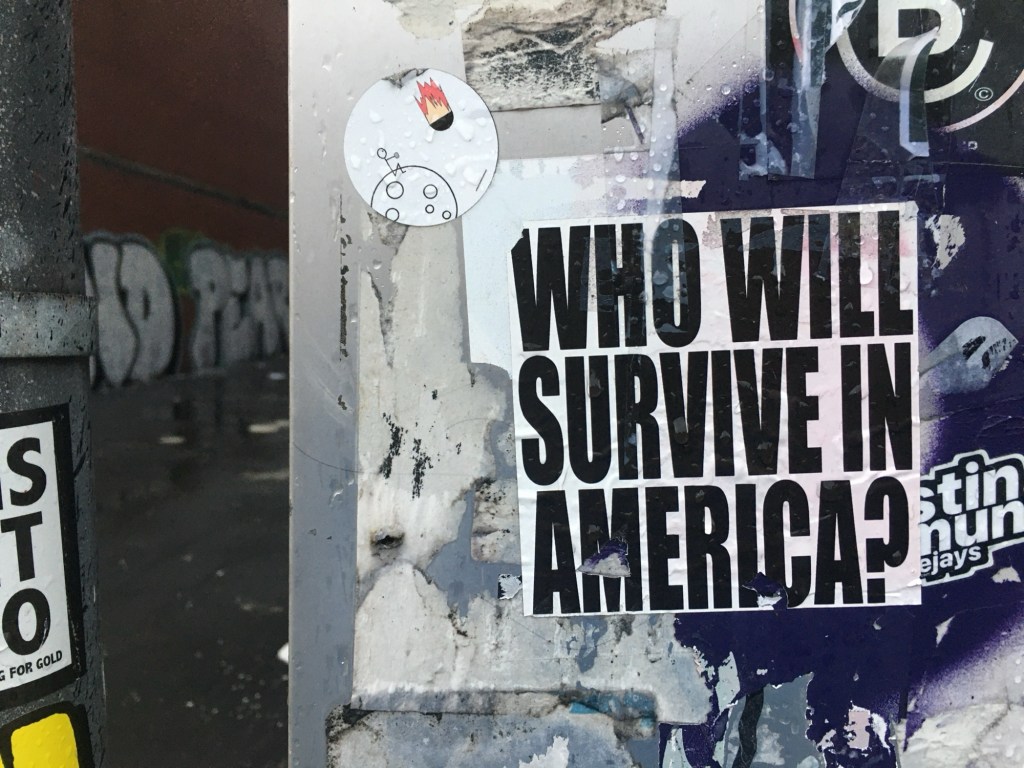
Even before the twenty-four-hour news cycle, Twitter storms, algorithmic trading, spreadsheets, the DDoS attack, Americans were getting “spread” in their daily lives; meanwhile, their politicians went on speaking slowly, slowly about values utterly disconnected from their policies.
There were not one but two American revolutions at the end of the eighteenth century: the struggle for independence from Britain, and the struggle to end slavery. Only one was won.
— Jill Lepore / These Truths: A History of the United States
Cats don’t quit after one yowl, and neither should you. Keep speaking up, keep demanding what’s right, and don’t let anyone convince you that you’re asking for too much.
You’re not.
Whether it’s food, fairness, or freedom, you have every right to demand it—preferably in a tone that makes it clear you won’t be ignored.
Fascists, for all their posturing, are hilariously bad at handling assertiveness. They think they’re the ones in charge, but the moment someone yowls back at them, they’re completely thrown off their game.
— Stewart Reynolds / Lessons from Cats for Surviving Fascism
The snake never shuts its eyes. The mouse sits tight.
— Mary Oliver / “Evening Star”
“Amazon is owned by Jeff Bezos, a billionaire backer of the president,” he wrote. “The president’s international policies and his support of ICE make it impossible for me to ignore his actions. If you feel as I do, I strongly recommend that you do not use Amazon. There are many ways to avoid Amazon and support individual Americans and American companies that supply the same products. I have done that with my music and people who are looking can find it in a lot of other places.”
— Andy Greene / “Neil Young Trashes Amazon, Gives His Complete Musical Catalog to Greenland for Free” / Rolling Stone
It’s all about sex and territory, which are what will finish us off in the long run.
— Margaret Atwood / “February”
. . . the global average temperature over the past three years has surpassed 1.5 ℃ above pre-industrial levels — an increase that nations pledged in the 2015 Paris Agreement to prevent. It is “hard to describe just how serious the risks to humanity are, as we rapidly take ourselves out of the climate our entire agriculturally based civilisation is based on,” says atmospheric scientist John Marsham.
— Jacob Smith / “ 2025 shows Earth is getting hotter, faster” / Nature Briefing
I now understand that hope cannot be bought; it is passed around, like cutlery. Hope is not abstract. It is solid, and unbearable. It wounds.
— Billy-Ray Belcourt / “Childhood Triptych”
What I’m Listening To:
I’m stuck in my old shoes waiting For that finger feelin’ Come on over me
teeth bared like a hounded fox beneath the matted fur the soft center of his core
line of struts drawn back the fall of manchego reducible to jacket-ore and earl crust
snot runnin into his philtrum like stalactites stretching optimism he is the soft heart of dejection
he looks the morass in the morass he is the morass
What I’m Reading:
But there are no grown-ups, that’s what you must grow up to know fully; your parents were just two more bodies experiencing landscape and weather, trying to make sense by vibrating columns of air, redescribing contingency as necessity with religion or World Ice Theory or the Jewish science, cutting profound truths with their opposites as the regimes of meaning collapse into the spread.