I am awkward in appearance. A sea oat blown near-horizontal. I will grow this beard as long as I want. I doomscroll as a default setting. I get excited when the gales cause these walls to creak. My minions deserted me long ago. Every alternating day silence and dread is all I get. And I get it, you know? No one wants to hear this, even less, no one wishes to read it, but I’ll tell you: you can’t be dead if you wanna’ make bread. That’s a sure thing. Money’s in the breakbeat. Mandrake’s in the shoals. Lost souls. That guy sang, “they keep calling me!” Lost Souls. I remain ungainly.
What I’m Reading, or: What I Just Finished Reading (a continuing series)
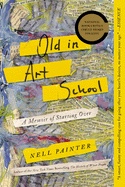
Old in Art School / Nell Painter (2018)
Respected Ivy League historian leaves cushy professorial job to get a BFA and MFA in painting, at the age of 64, because she desires to leave no stone unturned in a fully engaged, examined, and actualized life.
KUDOS that!
Said ex-professor/painting student wishes to become a canonized and collected professional painter, and gain entry into “Thee Art World” after 5 years of quasi-full time art making, (amidst dying parents, commuting cross country to Oakland, and fulfilling outstanding professional commitments) and make art tastemakers bend to her will.
DELUSIONAL that!!
Simultaneously inspiring and trying. Ends up being a long-winded whinge-o-rama.
Ebook & Audiobook, 03/09/21.
“I just regret everything and using my turn signal is too much trouble. Fuck you. Why should you get to know where I’m going, I don’t.”
What side effects should I expect tonight?
Really? Seriously? Today?
What is this filth?
What are the chances we become an intelligent and empathetic country?
Is this a poem or a story?
Where are these silverfish coming from?
When will I get back to revising that novel?
When was the last time I ate steak?
Is this layer of dust really dead skin cells?
Just what is this?
What I’m Reading, or: What I Just Finished Reading (a continuing series)
The Inland Sea / Madeleine Watts (2021)
A notable debut novel about a quasi-dissociative young woman coming of age while routing emergency calls across Australia. She is caught up in her own family’s disintegrating history as the country burns, floods, and seemingly cracks apart—paralleling her own behavior, affairs, and mindset. Incisive, sardonic, and appropriately dark.
Ebook, 03/09/21.
“Looking at the swimming pool I could forget the emergencies, my confused plans, all the men in leather jackets or thongs or tattered dressing gowns who laid their hands on my body whether I wanted them to or not.”
The scab I pick raw
Is a tear in the fabric
Of an absurd life
Sister Ray dances
Naked after vespers dark
Blind rat sniffs the air
Fog rolls in hissing
Starless sky is swallowed whole
Its embrace chills me
A burning godhead
Glows and hovers in the dark
Night drenched in nightmares
What I’m Reading, or: What I Just Finished Reading (a continuingseries)
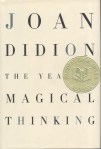
The Year of Magical Thinking / Joan Didion (2005)
After months of waitlisting—having read the play based on this book in the interim—and seen the Griffin Dunne’s (her nephew) documentary (Joan Didion: The Center Will Not Hold) much of the surprise was gone, but the power and depth of grief, and the scope of sensitivity and intelligence remain. A powerful and memorable memoir.
Audiobook, 03/07/21.
“Because we will still walk while brown in a Walmart (or Target, Sam’s, or Ross)
and walk tall.
Because why not? Because heart. Because God. Because Mighty Mexican Super Ratón. Because human.”
— Alessandra Narváez Varela / “23 Reasons Why Mexicanos Can Still Be Found in a Walmart”
Teofilo: Don’t be a putz with the futzing about, you mung nut. Pass me the spud gasket.
Bob: Shut up! Your voice is sharp as a yeast infection.
Teofilo: Tangy, is it?
Bob: Hey, did you know one of my favorite singers and lyricists died last week?
Teofilo: Nah. One of those punk nuts, I betcha!
Bob: Yeah, his name was Mark E. Smith and the name of his band was The Fall.
Teofilo: That’s tough shit, man. I’m sorry for your loss.
Bob: My loss? It’s your loss too, you know.
Teofilo: What do you mean? I’d never heard of the guy before you spoke his name.
Bob: Man, he wrote “Totally Wired.” Can’t you see? I’m totally wired. So totally wired…
Teofilo: Bud, I wish I could help you, but no. We’re master plumbers, man. We’re a different lot.
Bob: I know what you mean, bud. It’s ok.
Fenty: Tough shit, bud. This o-ring seal is a goner.
Teofilo: Did you know they used to call me “thee tough shit” on account that my initials are T.S.? Yeah, T.S. Vosquerichian. No shit.
Bob: No shit? So what got you into the shit business?
Teofilo: It ain’t just shit, bud. Come on. Did you ever think you’d ever be here in the state house cleaning out Governor Christie’s septic? Not many get to. Hey listen do you mind if I call you Bobcat?
Bob: Why would I? that’s my name Bob Katt.
Teofilo: Well that’s not what I mean. I mean bobcat like the cat you find in the forest bobcat. You know you’ve got these whatyamacallit? These fine feline eyebrows and these little whiskers here.
Bob: Hey, T.S. get your mitts offa’ me. If you ever touch my face like that again, I’ll kill ya.
Teofilo: I didn’t mean anything by it. It’s just very nice in you. You know, becoming.
Bob: Yeah?
Teofilo: Yeah!
Bob: Yeah, ok. You know they use ta’ call me the Panther in school. You know so I got that cat thing going, I guess.
Teofilo: yeah. We’ll be the master blaster gas fitters t.s. and bobcat — tough shit and the panther. We’ll do ya HVAC and your gastrointestinals.
Bob: No shit.
Teofilo: You know who’s a master? This cat Christie here. Yeah, the quantity of shit these folks is putting out … phenomenal. Jeez, I haven’t seen turds like that since I took that emergency call at the Watergate back in ‘72. How ‘bout you?
Bob: Well, I was really impressed by the fine quality of waste over at Mayor Giuliani’s place. You know, what they might call the finest quality feces. You know you’re a college boy: exquisite excreta! Hey, you think we’re fixated on fecal matters, chief?
Teofilo: Let me tell you about fecal matter … this is what they told me at the union office when I was an apprentice — you know that tongue twister in our plumber’s pledge — you know the one that’s goes “cloacal offal, excrement effluvia — that part was written by the poet T.S. Eliot. He was also known as “Tough Shit Eliot” when he was a youngster. You know before he moved to London and worked at the bank, and became a flannel wearing poet of “ragged claws” and such. He was one of us. He knew his way around a drain pipe, he was expert with rad-ee-ators, and grease traps? Like the back of his hand! In fact he reverted to the old ways in that first draft of that “wasteland” poem. That line that ended up I can connect nothing with nothing actually first appeared as “I can connect gaskets to gaskets.” And that last line “shantih shantih shantih” was actually “shitty shitty shitty.” And that other Hollow Men poem actually first ended “this is how the world ends, not with a bang but with a fart.”
Bob: True that. You don’t have to be weird to be wired.
What I’m Reading, or: What I Just Finished Reading (a continuing series)
Sweat / Lynn Nottage (2017)
Gritty blue collar story — and winner of the 2017 Pulitzer Prize for Drama. Topical play set around economic and labor issues, with a race relations leitmotif. A troubled human story at its core. Bookended by the penultimate two economics busts—the tech bubble and the home loans and market Great Recession.
Ebook, 03/07/21.
“You can’t be a writer if you’re not a reader. It’s the great writers who teach us how to write … Just write a little bit every day. Even if it’s for only half an hour — write, write, write.”
“No, dear. It’s the vault of the sky. The firmament, you know?”
“Is that like something permanent, Ma?
“No… It’s Satan! Satan! Satan! Satan!”
The clouds part and harp music ensues. Celestial bodies retreat to the edges, and the terminal point of the universe is revealed.
It’s merely tinsel with a corrugated cardboard backing holding this all up …
… and the choirmaster is a washed up, combed-over, carnival barker who loves tanning beds and all the best words. He has the best words, and all the chicks dig him, or so he says.
Ain’t we lucky to be living in the here and now?
… and now back to our episode:
“But, Mama, you made the Shake ‘n Bake without letting me help you!”
“Aw, go to bed already, you pain in the ass!”
And here are some scenes from next week’s episode…
What I’m Reading, or: What I Just Finished Reading (a continuing series)
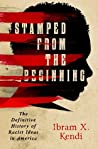
Stamped from the Beginning: The Definitive History of Rascist Ideas in America / Ibram X. Kendi (2016)
A big serious book, on a big serious matter. It’s breathtaking in its scope and research. Time and time again I wondered why we get shortchanged in our history, literature, political science, sociology classes — at least I did and I spent over ten years at the undergraduate and postgraduate level. We, as Americans do ourselves a great disservice when we continue to WHITEwash history — especially in a country founded on the backs of black Africans and black Americans. This was slow going, especially compared to Kendri and Jason Reynolds (YA) take on Stamped: Racism, Antiracism, and You (also highly recommended). But well worth the effort. I can only hope that kids in schools and universities are getting a fuller picture now — or else we risk another 400 years of needless pain and suffering.
Paperback, 02/28/21.
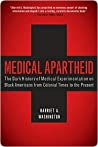
Medical Apartheid: The Dark History of Medical Experimentation on Black Americans from Colonial Times to the Present / Harriet A. Washington (2008)
Tough and disturbing read that turned my stomach a dozen times. A massive and painful, and excellently researched, history of the pathological trend in American medicine and research of using Black Americans as subjects. A rogues gallery of unethical and inhumane doctors, scientists, and government agencies rationalizing away their ethics for the bottom line. Now, Washington tells us, the problem has moved on to the less regulated environs of Africa and Latin America.
Ebook, 03/02/21.
A Small Place / Jamaica Kincaid (1988)
Sharp anti-colonialist travelogue opening with a brief tour of Antigua (Kincaid’s native country)-cum history-cum screed against the old Bristish rule, American hegemony, tourist entitlement, and corrupt post-colonial rule. Sardonic, righteous, and a quick read.
Ebook, 03/04/21.
Meander, Spiral, Explode: Design and Pattern in Narrative / Jane Alison (2019)
I’d love to be a student in one of Alison’s literature classes because she’s great at exegesis and open to alternative formal constructions.
I think my problem was that I listened to the audiobook (which was included in my Audible membership) — even though I don’t have any issues with the subject matter. As I listened to this book I kept on thinking how much I’d like to see the text Alison was referring to. Or, how the topic may have been improved if she were covering short stories in their entirety, as opposed to short excerpts of novels — a number of which I haven’t read.
(Think of how George Saunders solved this in A Swin in a Pond in the Rain by focusing on seven classic Russian short stories and including them in their entirety.)
I think this is a very good read — my to read list grew by a few books, and I’m currently reading Mary Robison’s Why Did I Ever thanks to Alison’s hermeneutical take. This would make a great textbook in a class covering these novels.
Audiobook, 03/05/21.
Kingdom Animalia / Aracelis Girmay (2011)
Sharp images as in “Self-Portrait as the Sanke’s Skin”
“I’ll miss you deer, / but I choose my head / & carry it out of doors: a bucket of eels / to set loose / in the dark, December sea.”
Complex constructions.
Attuned to liminal moments as in “Elegy”
“Listen to me. I am telling you / a true thing. This is the only kingdom. / The kingdom of touching; / the touches of the disappearing, things”
And a bit of a gauzy collection.
Ebook, 03/06/21.
“I’m thinking, This is not like reading Alfred Lord Tennyson but neither is it like inhaling from a bag of glue.”
Digby stomps on his shadow in the schoolyard. He tries to blot it out because it won’t stop following him. Digby believes the shadow rains down the indignities he suffers, although he doesn’t put it that way. He tells Funti that the shadow makes his father beat him, and his mother smoke too much.
“My shadow is a ruin I don’t want to visit, Funti. My shadow causes my father to think bad thoughts, and then to act on them. It’s the reason he beats me and my mother, although mother sometimes starts it when she drinks the whiskey after she finishes the wine.”
Digby has his shadow pinned by the ball of his foot. He applies so much pressure to pin his shadow his calf quivers and he balls up his fists.
“But Digby, your shadow has nothing to do in that. Do you see your shadow lurking at home when these things happen?” Funti says. “Your shadow stays out in the sun. It’s an outside thing.”
“Outside, inside, no matter. I know it’s at fault for our troubles. It lives in the walls, in the rug, in the ceiling. It moves about, Funti,” Digby says. “Just because I don’t see it doesn’t mean it’s not causing all my troubles.”
What I’m Reading, or: What I Just Finished Reading (a continuing series)
Black History for Beginners / Denise Dennis (1984)
Packed with excellent historical factoids that tell an important story.
But the art work seems slapdash and the text is riddled with mispellings and odd typos. It may be because I was reading an ebook version of the 1984 edition — the book has been revised twice since then and hopefully those quality issues addressed. The narrative history begins to substantively peter out during the late 1960’s—and seriously, only two sentences about Malcolm X?!
This is a good primer though. Even though I haven’t seen it, try to find the 2007 edition which hopefully addresses the aforementioned issues. Very good at pointing you in a number of interesting directions for your own research and further reading.
Ebook, 02/26/21.
****
Freedom Is a Constant Struggle / Angela Y. Davis (2016)
Transcripts of various speeches Angela Y Davis presented from 2012-2015; and transcripts from a series of interviews conducted by Frank Barat.
Still righteous, and correct, after all these years. But it becomes a bit repetitive as Davis repeats many of the same lines throughout the half-dozen or so speeches, which Barat asked about in the opening interviews. Solid read.
“… those who assume that because slavery was legally abolished in the nineteenth century, it was thereby relegated to the dustbin of history, fail to recognize the extent to which cultural and structural elements of slavery are still with us.”
Ebook, 02/27/21.
****
“I contend it is not the writing that makes writers miserable. It is the emphasis on publication.”
This week from the site of ingestion
—from the site of dyspeptic ruin—
the moment you swallowed
the hegemonic tincture
and began your slow
disappearance
into the stew
inside the
melting
pot.
“Don’t try to figure out what other people want to hear from you; figure out what you have to say. It’s the one and only thing you have to offer.”
Quetzalcoatl Crank—
the sign says—
this is a great place to live!
I’ve got to get out of this crot.
2.
It’s not helpful that you speak in an endless stream of psittacisms while I’m trying to listen to incisive political commentary. Why do you keep talking over something I’m trying to listen to when I’ve asked you to stop?
3.
The dictator says: St. Ignatius used a cilice; hold your breath and expand, let go. And I do. She’s gesticulating wildly and walking toward me. “She has violent intent,” the dictator says.
4.
My father claimed once to have stopped a bullet with his chest. He ascribed it to the power of positive thinking and the deep groove the bullet made in the car’s dashboard. I wondered where he was and what he had been doing.
5.
I was the strongest sperm, in a multitude of millions, in a deficient ejaculation. In short, I was strongest swimmer in a pool of defectives.
I whipped my challengers with a muscular tail, but I was still less than ideal, or even normal.
(Seventeen years later I would be called the “classic underachiever” by my high school guidance counselor)
But that day I somehow made it through and spent the better part of a day breaching the egg’s defenses.
6.
I once withstood my father’s antisemitic rant—for just so long, until I could withstand no more—my Jewish girlfriend barely out of earshot.
7.
I’m on fumes, coasting toward the end of the month with very few crots to show. BUT, I’ve pivoted—definitely have—I feel like I’m moving on from this rut: extricated, manipulated, and cleansed. Plans solidifying, goals to attend to, and much to achieve out on the face-masked fields. Get to it. Do it. Be content upon finishing. This is my crot for the day.
8.
Out here even my thoughts stop … perhaps he is dead. But his drone sweeps over me in waves. There is a frayed quality to his tone.
9.
I reach for a fraying vine overhead and try to pull myself out before I’m sucked in by the quick mud. Dusk is approaching and something is stirring in the bush.
* a crot is a verbal bit or fragment used as an autonomous unit to create an effect of abruptness and rapid transition
“Nothing is going to happen in this book. There is only a little violence here and there in the language, at the corner where eternity clips time.”