Get it together and join up now. What are you doing for fulfillment? Do you hum “fa la la, tra lee dee” much too often, throughout the dark days, the creaking nights, and in your barren dreams?
Well, I’ve got the thoughtbot for you!
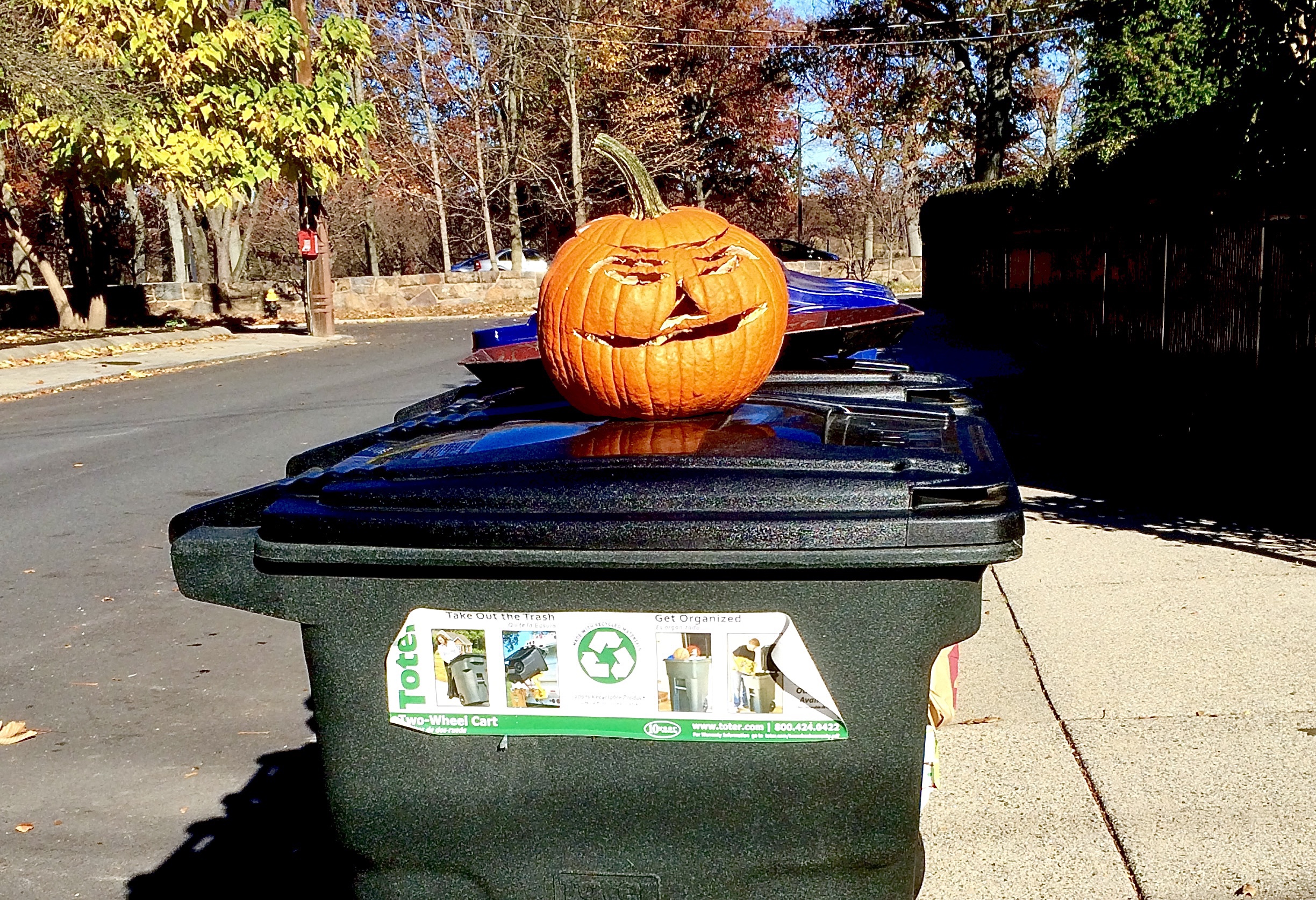
Increase the size of your pumpkin by doing nothing at all—or by doing everything you can (it doesn’t really matter)—just increase the size of your pumpkin in three … no! four easy steps:
take your pumpkin
place it in the sun
deliver us from evil
repeat
Your life will surely change because the size of your pumpkin matters. Surely it does! Show off your pumpkin with confidence, drain your carbuncles in peace, and suppurate freely. This is your life. You can make anything happen!
“we are each our own culture alive with the virus that’s waiting to unmake us”
Press play above to watch my short film: in the air (2:31).
Off-News at the Off-Chance at N+7
“I would be really sad if I didn’t write. I think I would feel really purposeless and silent and depressed if I couldn’t write. I don’t know if I would be that depressed if I couldn’t publish.”
—Ottessa Moshfegh, The Creative Independent Interview
Maple bacon cheddar pizza, I say, repeating what she just said to me.
I need a snack soon, she says.
A swoony-jazzy song plays like it’s 1967—remember the smarmy song playing in The Graduate when Bancroft is making the hard play for Hoffman—well some white bread m.o.r. tripe like that is playing in our background. But we’re both the same age, she’s only 3 months older than I am. We’re just living through a pandemic.
She stands up, unable to take it anymore and announces, snack! What snack do you want?
Before I can answer she’s walked out of the room and turning on the kitchen light.
She says, snack! What snack do I want? In a husky manner like she’s a hibernant bear just awoken.
Then comes the crackling of the plastic bag and the tinkling pretzels. I imagine the blue bag of organic pretzel twists—the pretzels falling and caroming around a small glass bowl until the scale reads 1 oz or 28 grms, depending on the setting she used—she’s a 1 oz type.
The crackling of the bag again. The clasping of the white chip clip on the bag—it might have been the black clip—and she walks into the room again. A deep guttural sort of crunching amplified in her mouth as she walks past me to the desk.
These are extra crunchy, she says, facing the laptop. The crunching continues, a gravelly molar-assisted deep crunch.
Today is the 20-month anniversary of the day Gov. Baker sent people home to work out the pandemic. That’s Massachusetts.
Everything But the Girl’s debut album, is bluetoothing through the blue Sony SRS-X33 speaker. It’s not really smarmy music, I just felt that particular conceit at the moment.
She asks why I want to know the make of the speaker.
I was researching how porn would sound through the speaker, I say. (Obviously not, folks, I was writing this!)
Huh, she says. Did you say corn or porn?
Corn porn! I say. It’s supposed to sound amazing through the speaker.
She ignores me. She knows me.
I should be working on my 50,000 word novel manuscript right now, but I’m procrastinating. I’m at 43,047 words as of 11:39 am yesterday, but I haven’t written a word on that project since then — but I have written many other words nonetheless.
(Take these for instance)
Anyway, there are only 9 days left until the artificially imposed November 30th NaNoWriMo deadline.
Like I said, I’m procrastinating.
The pretzels are consumed.
It’s time to get to work…
But I keep on writing this…
“… the girl asked me, as softly as she could: Are you a spic? And I, with a hive of words in my head, could only think to say: Yes, I am. She never spoke to me again, and as I thought of her in the outfield, the moon fell from the sky …”
What could I possibly say when you say (backhand): it’s you.
I don’t know if you’re talking twang, talking to those radicals, or if you’re addressing me.
Somehow, judging by the tonsure of your vole, I think it’s the boy racer.
You never speak in a mellifluous tongue to me—but you’re always: “hon, hon, hook-up with the racketeer.”
The flick-knives in your green irises are limned with black aureoles when you talk to Mr. Munchems.
When you speak to me your flecky eyefuls jaundice—sometimes you look possessed or malarial.
Why is that?
Why, when you speak to Mr. Clutter, do you speak in baby talk?
What dogmas a twit know of “ga ga?”
Yeah, to me you spice invective: your mother-in-law’s cupid is overripe like bag fugu fishmonger; or, please die already.
You salivate and your incursions get larger and pointier.
Do you not feel the wart in your crucible for me anymore?
“We had eaten the lobsters to forestall our own destruction, but it became clear that nothing would. I resettled myself on the sand and leaned back against you, and I closed my eyes, stroking your leg and your large right claw, and I was at rest at last.”
While I wasn’t paying attention this endeavor turned two years old, on 11/17/21, and quickly shifted into its third year of existence …
Hey, hurray, harrumph!
This is still:
thee istsfor manity reader
And this remains the origin myth:
i found my name on a t-shirt folded in thirds on a still warm body: a nice lady named ruth was wearing said t-shirt and i was wearing an open mind that day…
i’m a truncated word-person looking for a lower case assemblage of extracted teeth in a tent full of mosquitoes (currently writing a novel without writing a novel word) and pulling nothing but the difficult out of the magician’s top hat while the magician’s bunny munches grass backstage…
you might say: i’m thee asynchronous voice over in search of a film.
And this is still what people are saying:
“Please, make it stop!” — Lit Blub magazine
“I suffered from a severe case of leopard spotting, it led to a loss of jobs, family, and friends. Reading the thee istsfor manity reader every morning was directly responsible for my adding 20 lbs. of muscle and losing 2 inches off my waistline. I recommend the thee istsfor manity reader to everyone I meet. Granted, I’m still spotted and alone, but I’m now full of vim and vigor and look forward to each daily installment of the thee istsfor manity reader.” — Frank Relish, author of The Submariners: The Leaky Years, 1887-1902
“I don’t understand a lick of it. I just drop by occasionally for the nudie pics.” — Jean-Jacques Perdefue, former cruiserweight champion
“Despite the lacerations and the poorly done stitches, I read it daily for the Frankenstein-ish aspect of it. It has abnormal reasoning, it’s put together on the slap-dash, and it runs away from fire. Nowadays, one can’t experience that much underachievement, in such a concentrated form, from a single blogsite. It’s blatherskite. Uniquely trashy and crass.” — Abby Feldman, editor of The Journal of Psychiatric Dissociation and Acute Bacterial Prostatitis
“I fled communism nearly 60 years ago. I know unvarnished shit when I smell it. The thee istsfor manity reader STINKS like a totalitarian turd.” — Dr. Panfilo Sobrenada, Psychiatrist and Family Counselor
“I have flown under the power of my own wings, without setting foot on land — nonstop — from Alaska to New Zeland in 8 days. I would gladly crash and burn upon my next take-off if I were subjected to another post from the thee istsfor manity reader. Please stop it!” — E7, the Legendary Godwit
And the management promises not to sleep through next year’s anniversary—provided we haven’t been finished off by an asteroid, a super volcano, solar flares, hypersonic nuclear warheads, electro magnetic pulses, anthropogenic stupidities of a magnitude unforeseen (is that possible?), the revenge of fleas and banana weevils, the return of Gangnam style (or derivative styles thereof).
Thank you for reading, following, hovering, lurking, and plain being flummoxed by what goes on here. It’s greatly appreciated. Now on to year three …
istsfor manity, you might now say: thee asynchronous voice over in search of a nonlinear, non-narrative film
(j.i.alvarez)
“I write because I’m unhappy. I write because it is a way of fighting unhappiness.”
He took off his shoes and the right pinkie was exposed — nude, malformed, and smelling like Limburger from six feet away. A couple of wiry hairs arcing over the sock. She, on the other hand, was at the bookshelf pulling out a book about genital piercings, entitled American Primitives, out of a shelf filled with the best selling titles about effective extortion techniques, labiaplasty, and breast augmentation plastic surgery mishaps. At the rear of the study lay their son on a lazy boy recliner snoring like an opossum with a severed tail—the disembodied tail still involuntarily twitching under the light of the bold wolf super moon on U.S. 1—the Saab’s driver long gone and oblivious.
The son lays there, mouth agape, drool pooling in the cleft of his chin. The whites of his eyes revealed beneath the slits of his fluttering eyes.
The dark circles around his eyes, not yet diminished, accentuating the ‘possum affect. His half erect penis beginning to show because he drank a liter of water two hours ago and forgot to drape a sofa cushion on his groin.
II.
Your skin looks like shagbark. You look like a shameless twat hung by the toes. Who hangs by their toes?
“Did someone hang you there, or did you do that yourself?” His son doesn’t hear the question.
“I don’t remember this movie,” she says dropping the book And I say this isn’t a movie, dear. Someone is writing us into existence and I’m kinda bored by it. Hey, you’re kinda cute. Well this kinda cute ain’t around. And something about happy loving couples not being friends of mine… oh, he must be listening to Joe Jackson. You follow it? Nah, I really don’t care; I just don’t want to be a character here anymore. I’d rather go back into that inchoate place ‘o blackness and stasis. I’d like snail tacos and drag races. Oh, what are you watching some feature length cartoon, from a secondary angle, full of rice and stew and red wine? Yes. Oh well it’ll stop soon enough after 100 words. Look at the length of this. He’ll check to see if it’s north of 100 words and stop. You’ll see. Pari passu delivering Centurias he arrived.
III.
English is my second language, but my Spanish, although mostly atrophied, remains stubbornly attached like the original skin that hangs on to the anole’s back after molting. Everything seems processed in Spanish first before the protean firing into English. My neurons work overtime, and therefore all the wiring in my head never ceases working. The machinery overtaxed and always at the edge of a breakdown.
IV.
The fug in this house sticks to you. The persimmons on the table spin when you look at them, and when I look at them they levitate and circle into a gyre that moves from room to room looking for the energy that’ll stop them from moving. From movement to stasis is the natural order, and it seeks the natural order. You look at them again and the fruits drive themselves into the living room wall, creating a starburst pattern unseen in this millennium.
“To walk in the world is to find oneself in a body without papers, not a citizen of anything but breath.”
— Kazim Ali / Silver Road: Essays, Maps & Calligraphies
be the pain within me keep me underscored & over-nourished
please, i no longer wish to assimilate
be the impulse i’d like to deter bring me weight bearing softness
please, to the heavens, for murgatroyd nears
be the scratch pad malingerer & write a novel without writing a novel word
“Maybe you gotta understand what punk meant to us. With the Minutemen, punk was not a style of music. It was the state of your mind. We thought the style of music was up to each band. For us punk meant if you find yourself not fitting in a certain kind of world, you try to create your own.”
You are like the tuber of calcaneous, necessary but non-articulating…
Without you there is no ambulating me…
The things you said to me in your gasps and low moans:
“They transferred me to room 15…”
“It’s the same to die here or there.”
This meant nothing to me at the time, but it means everything now, in this age of torn Achilles … “in an existence where words don’t count for nuthin’.”
I miss you my tuber of calcaneus.
“If you want to do something, don’t wait for someone to ask you to do it. Get off your phone and meet people. Get a full-time job you don’t hate, do your own art on the side, save money, and when you have enough saved invest it into creating something you like and believe in. Maybe it will work out, maybe it won’t. I have no idea what I’m doing either.”
— Bráulio Amado / The Creative Independent Interview