Daughter of incestuous Union, impress your dominion over us—for we are a nation of poor examples—we breathe freedom reckless. Breathe your plague down on us. Insist: this is a declamation of god-given right. Stop. Ask. What is most dear—a naked face or children in tubes? Now cry for Comfort—your Marlboro Man destiny manifest. “Wait and see” and “the power of prayer” dropped you to your knees. Will comfort arrive—despite, and to spite you?
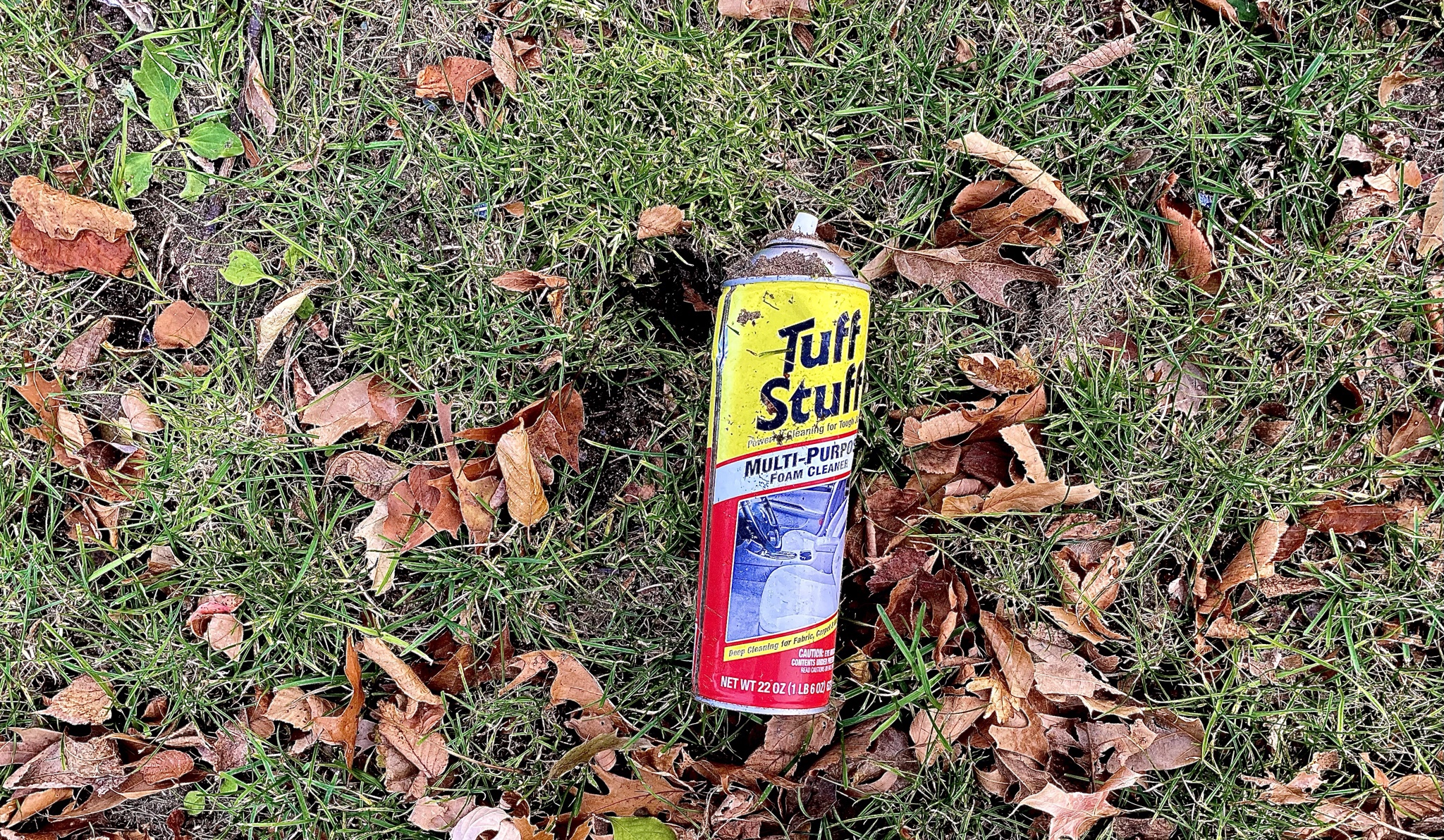
(USNS Comfort, image in public domain)
“Do you think that, if you were granted omnipotence and omniscience and millions of years in which to perfect our world, you could produce nothing better than the Ku Klux Klan or the Fascists?”
No need to look at me while I write, she thinks—and what’s this mass of entropy floating next to me? It seems most people go off-camera for the writing bits, then so shall I, she said to the muted cohort. In that instant of muting her video feed, the jingle for Sears Junior Bazaar hit her consciousness:
Jesus! I haven’t thought of Sears since … what 1999? Much less Sears Junior Bazaar, I’d have to go back to childhood—the late 1980’s for that! The air thick with popcorn and candy—intense—when you walked into that Sears on Coral Way. The candy shop was situated at the center of the first floor as you walked in through any of the doors—unless you walked in through the Auto Department annex—then you were assaulted by the smell of industrial rubber used for the tires on display near the washers and dryers. Walking into that Sears on the Miami-Coral Gables line was something altogether different than walking into any other suburban South Florida Sears store—it was a synesthetic experience: smells, sounds and the promise of something novel.
What brings that to mind, 20 years later in Boston while interfacing with folks across the country in my pandemic sanitized living room? This ain’t no Proustian fugue—is it?
Or is it the virus-driven imperative of meeting other writers via Zoom? What about the curious desire of not wanting to be the object of someone else’s gaze through these pixillated distances? Is it the nebulous sack of entropy that constantly accompanies me at the peripheries of objective focus—it’s always there with me, but just beyond my ability to manipulate it in any manner.
Just what the hell was I doing on this date in 1999? I’d know instantly if I cracked the storage closet by the entryway and went into the top Rubbermaid bin, but that’s too facile; and anyway, I’m supposed to be writing in the virtual company of 25 strangers, not rummaging through my closets. But who would know in the world of muted video feeds—and we’re on audio mute all the time. Imagine the glossolalia, the cross-distortion babble, the static ambient noise—the off-camera whispers, the squelched farts, the crunching if we weren’t muted. Better this. I guess.
I guess around this time in August of 1999 I was getting ready to go back for sophomore year at Tulane … Jeez, I hated those two years in New Orleans: total disinterest in—let’s see, what was that progression in two short years—journalism, political science, communications, history. That must be some sort of record-tying feat—four majors in four semesters. If it wouldn’t have for the two years at the radio station, and the film department screenings at Loyola University next door, I might have just wandered off and hiked the Appalachian Trail for years on end—oh wait, I did that anyway. In ’99 I was at the height of my Sonic Youth intoxication. I saw them four times on the A Thousand Leaves tour. Typical me to drive both 700 and 900 miles to see them in DC and New York a week apart—and I’d already seen them in New Orleans and Miami. Every journal I had for a decade was festooned with Sonic Youth stickers—until, like every other bastard geezer, Thurston left Kim for a younger woman. Fuckers, all!
Wo! I’m supposed to be free writing with a purpose here, not getting caught up in an endless pre-millennium eddy … and time always runs … short—and out!
Come to think of it—as most of us writer types jump-cut to black—what keeps pulling at me to return to 1999? It happened to be the year my father disappeared from my life. Last sighting. Last words. Just before I went back to New Orleans for the Fall semester I saw him briefly—his invite, my birthday—at Señor Frogs in the Grove. The last time I ever heard from him was that desultory letter just before that Christmas, setting up the meeting he never showed for, just before Y2K. He was getting progressively worse: drugs, erratic behavior, offering me to drop acid with me just before my high school graduation—and what everybody thought was the topper was his bringing a young woman, only six months older than I was, and presenting her as his new wife. Some of the guys in my graduating class asked me if I could hook them up. Fuckers, all!
Just before my high school graduation he reappeared, after a year and a half absence, and revealed he’d never been more than 10 miles away from me in that time. It begged the question, why no call? But I was so pleased that he wasn’t dead—murdered, I thought, given some of the people he was hanging around with.
I see it as if a dialogue box—a cloud floating over his head reading: I’m back, Maria.Party Time!—appeared. He expected what? An invitation to the Free Kitten show? Well, dear father, I’m 40 and single—with a purpose—and haven’t seen or heard of you for twenty years. I thought you were long-gone-dead-earth-meal, or an ash molecule wafting its way south to Patagonia. Thanks for the creeped-out letter-screed about the medical-industrial complex conspiracy; about the cabal running the world; how Iridology changed your life and can change mine; and how you heal people by laying hands and shooting a laser from your third eye. You’re a stranger to me, as alien as Erich Honecker was to me in 1989—and you saw how well things worked out for him!
You stood me up on the day before New Year’s—before the world was to fall apart crushed and darkened by Y2K. I didn’t exactly expect Party Time! Woo Hoo (… and I feel pins and needles) — but I didn’t expect you not to show. To leave me expectant, wanting a still small token, at Señor Frogs. What’s the use in trying to rationalize this? Why do I find myself here again in a mindless moment?
It’s so vivid, and it haunts me, that last time I saw you: that dayglo green grass seemingly irradiated by the sun unleashed from its cloud cover. You were on a Santeria trip insisting your poor-man’s version of Madame Sosostris (did you ever get around to reading Eliot, I wonder) read my future—with her histrionic staring into my eyes and death grip on my upturned hand—it was laughable, but I kept a straight face more out of shock than sobriety. How sober were you, I wonder. Your reassuring nod, when she brought over the frozen cow’s heart and passed it all over my body to cleanse my aura, did nothing to assuage my anxiety and only proved how far I’d go to spend a couple of hours with you. Hoping. Wishing.
But now time’s up again … and now I’m back, as we writerly types listen, then ensconce ourselves behind our black boxes—long live black-box-video-feed-mute! But I’m dropped back into this boxful-o-reverie. Actually, this feels like a tale told by an idiot signifying over-caffeination and over-tiredness.
What did you mean by this game, long dead-dad, of the trailing twenty-year-old missive? How you have burrowed like a trojan horse and reappeared like a recrudescent virus. You were always a fucker(!) and you shall always be. And what the hell am I doing ensnared in this sepia-toned vortex?
If things had happened differently… what?
Would I listen to Up With People instead of the Butthole Surfers?
Would Elizabeth Gilbert be my touchstone instead of Kathy Acker and William Burroughs?
And instead of Eraserhead would my favorite film be Runaway Bride?
I don’t know. I don’t what, or where else, I’d be if those weren’t some of the most obtrusive memories that impinge on my consciousness in the darkness of the video feed mute.
“Hug me, mother of noise. Find me a hiding place. I am afraid of my voice. I do not like my face.”
“The days are loud and long, and on some exhausted evenings, the simple existence of others feels like an inconvenience. Strangers invade the monasteries of our minds.”
“Maria, chica, it’s not about the damned orange juice, it’s the principle of the thing,” Garcilazo says. “Maria, hey! Earth to Maria. Are you there, psychonaut? What are you doing?”
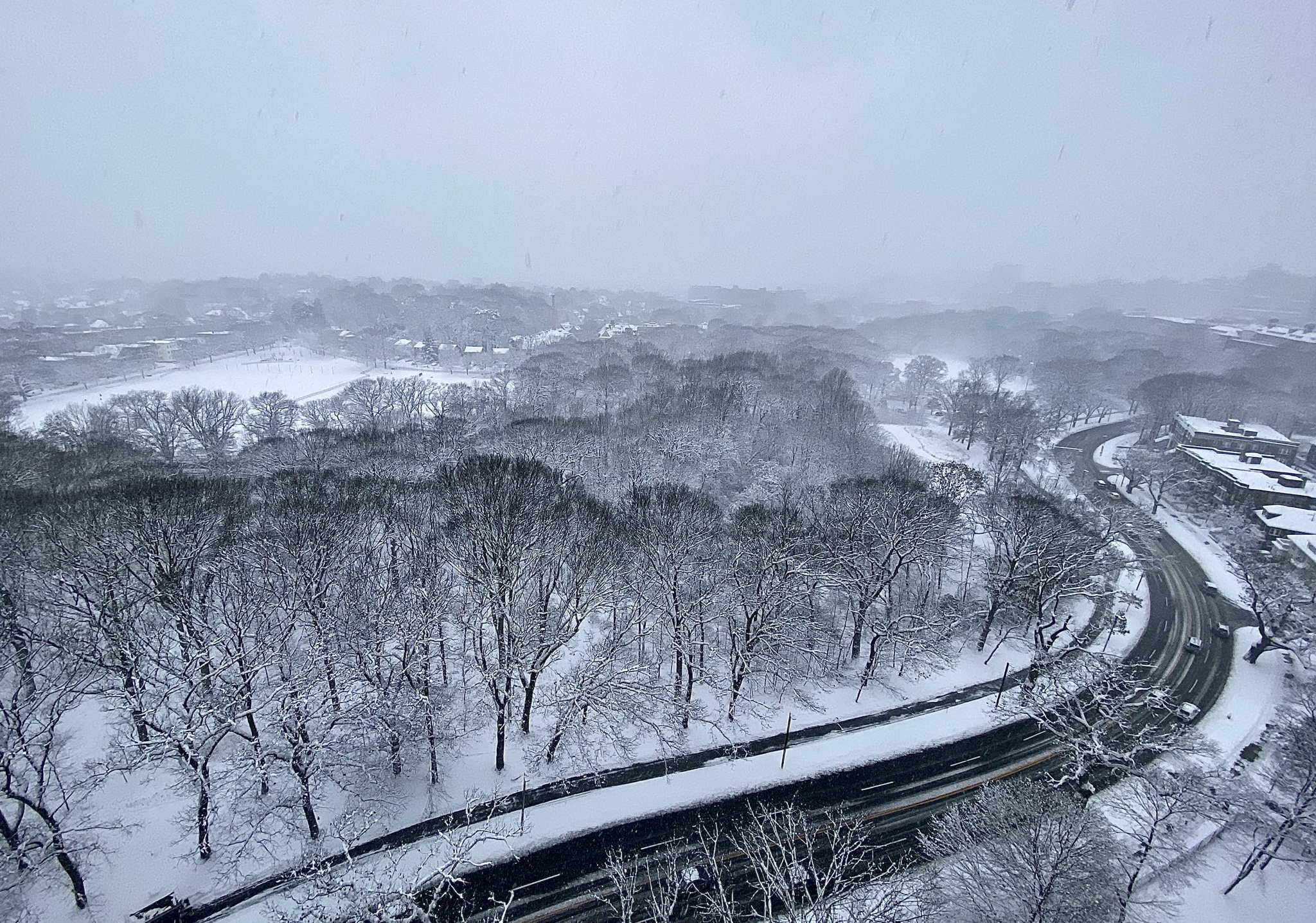
Maria is rapt staring out the balcony window. “You know, Garci, that’s not fog swallowing the city. There’s a weather advisory today—that out there is particulate matter from the wildfires out West. So don’t give me any crap about spilt orange juice, or $2,000 for a creative writing class.” Maria doesn’t turn to see Garcilazo holding the glass tumbler in one hand and wiping the orange juice pooling on the counter top. “Why the hell are you opening up the AMEX statement, anyway? Mind your own business.”
“Sis,” Garcilazo says removing the credit card statement from the edge of the spill and throwing it on the laminate dinette table, “it’s never just the juice, not climate change, not your damned novel writing program—that account is in trust for Mami’s care, and her plot. You can’t … you can’t be doing this again. The money. It’s not yours to use this way. It’s—”
Maria steps outside, sixteen stories above Huntington Avenue, the sound of traffic whirring below and an acrid odor briefly fill the apartment. At the railing she turns around; her face pinched, she tweaks her nose. Garcilazo waves her inside, mouthing, get in.
“It smells like the fire was somewhere in the city,” she says. “How can it be, the fires are 3,000 miles away?” Maria is teary-eyed. “Are we going to wear masks forever?”
“Maria. Focus. Please,” he says. “Pay attention.” He throws a handful of paper towels on the counter; he tears off another couple of pieces and drops them on the floor. “First, it was trepanation—lord knows I wish I would have never mentioned it to you! Then, a succession of colleges and art school. Then the radio stations. Now, it’s novel writing. You’ve got to get a grip, sister.” Garcilazo, moves spasmodically as he wipes juice with the towels under his feet. “You have to get real, Maria—quit the fantasies!”
“Don’t patronize, Garcilazo,” Maria says. “I do what I want to do, whenever I need to do it. You’re not my father, and you’re certainly not that vegetable over there in assisted living. Don’t come to Boston, on your yearly visit, telling me what to do. I’m in charge of that account. You stayed in Miami and washed your hands.” Maria walks to the alcove by the front door of the apartment and brings him a small black framed picture. “You see that? You see me? I’m fierce!”
Garcilazo knows the photograph well; he shot it. He was there to support her the day she trepanned herself—in a manner he felt responsible. She insisted he bring his Nikon cameras and document the procedure. It was he, after all, who first told her the story that shocked him about the modern trepanation subculture. He not only felt responsible for exposing her to the idea, but he was also in awe of his younger sister. She had the temerity to follow through with a notion that, while theoretically appealing to him, seemed outrageous and dangerous. He knew her fearlessness and audacity was something beyond his capacity. She insisted on blasting through her limitations and fears, and actually drilled “thee cosmic third eye”—by way of a borrowed dentist’s drill—just above her shaved hairline. Her way of tapping into that universal flow and consciousness. The extreme altered state of consciousness.
Now he can’t get through to her.
“Perhaps we see loneliness in others simply to feel less lonely ourselves.”
My husband dreamt the sheets were on fire, and I wouldn’t come in the bedroom. He called and called for me, but I would not come. When I finally walked in he asked, why didn’t you come? I said, because you weren’t yelling fire — the sheets are on fire! He was pissed off at me when he got up this morning; beyond the dream something piqued him, some unease set in. In that memory—although it was only a dream—of me not coming to help him was born our disentanglement; the dissolution was set in place, which by then was a watery tincture at best. The dream of fire was our liberation.
“You and I, when we sleep, we’re like whales because fish swim out of my mouth and you dishevel the seaweed.”
“Well you’re a Postmodern pig, so I guess that evens it all out doesn’t it?”
“Why are you taking her side in this?”
“Im not. You need to be aware that there are two points of view in this case. What you consider to be edgy experimentalism, she considers profane and poorly rendered. And she’s the editor, so tough shit,” Angela said.
“Ah, she’s a menopausal Holstein. She should change her name to Elsie.” He pulled back on the rubber band around the tip of his index finger and he fired it at her. “And, fuck you too, you heifer.”
“Screw you, Richard. Is that all you can manage when you’re pissed-off at us, liken us to cows?”
“Well, you called me a pig! Oh, how quaint repeating grandma’s early ’70’s clap trap. Why don’t you append ‘male chauvinist’ to it, Billy Jean Bovine?”
She picked up the stapler from her desk and flung it at him. It flew wildly to the left and punctured the sheet rock wall. It fell open, next to his laptop, and spewed out two neat rows of staples.
He pecked at his laptop and a string of party horns, kazoos and mooing noises belched from the speakers. “It’s called ‘Dying Cows with Putrid not Praiseworthy Predation,’ and the name of the band is Smegma, just like your breath smells, bitch,” he said.
“Are you serious? Are you serious?! You’re just a Trump voting ‘SpaceHitler’ wannabe aren’t you? I’ve had all the shit I can take from you, asshole. I don’t care that she’s your aunt; she’s had all she can take from you too. Say goodbye ’cause this is probably your last day here.”
“Aw, it looks like my little heifer ain’t been milked yet. What’s wrong? Is it that time of the month? Are your udders sore? Your bra a little tight?” He was pinching his nipples through his shirt as he said this.
“It’s a new day, chickadee. It’s November 9, 2016, babe! Circle it on your calendar with your bloody tampon, bitch. Things is going to be different from here on out. Woo Hoo!” He flicked another runner band at her, this one thicker and harder; it found it’s mark on her left breast. “Bull’s eye! Beam me up Scotty I think the dyke is gonna’ burst.”
“You fucking prick. You’re lucky if you get a severance check after I’m done with you. Pig!” She walked out of the office under a hail of paper clips.
“Moo,” he cat called as she slammed the door. He mock-masturbated his tie at the door. “Bitch,” he hissed. He slapped the volume higher on the laptop.
Richard knew this would be the last offense tolerated at the office.
IT IS A NEW DAY, he scrawled with a red extra wide sharpie just below the gaping hole in the wall. As the intensity of the next song on playing from the laptop, “Madness Mambo,” increased he repeated: IT’S A NEW FUCKING DAY on Angela’s purse, her desk and then in foot tall letters on all the office walls.
“A new fucking day,” he whispered and walked out of Stillwell Publishing for the final time.
“CALIGULA: No, Scipio, it’s clear-sightedness. I’ve merely realized that there’s only one way of getting even with the gods. All that is needed is to be as cruel as they.”
Chut, man, he’s got thee upturned syllogism logic. He’s also got a bad case of the Higgs-Boson blues. He’s got the anthropocene cold shoulder, and a slight case of thee reliquary saint’s joints and bone shards flu. His name is Smith.
All the while she’s about a mover, but Smith has got the worst case of mondegreen and all he hears is: eedda vadda voodda. Her name is Mary.
I tell you it makes no sense at all—and it’s so bad that this scene conflates with a litany of sea-green epistolaries. Nobody sends letters like this anymore—did they ever?—such a shame!
Mary reads “The Emperor of Ice-Cream.” She cuts-up the poem—then adds to it—so it reads: let queef queef be finale of streams / be downtown be the emperor of nice dreams.
Smith dips his cuticles in a bowl of dal makhani, and brainstorms tankas about Goa’s sacred cows. He coins neologisms galore (parenthetically including [cowfabulations!]). Then he gets a dose of thee Kipling throttle-wish and wants to whip a manservant for ole’ colonial times sake: the good old ruddy duddies, he laments. (This is a bad man, kiddies—steer clear!)
Light up the world with nicotine nabobs, Mary quips (and queefs) from her Moosetracks perch. Smith is past caring. He starts a freewrite—using his knife and the tamarind sauce—on the napkin tucked into his shirt collar.
He reads aloud: Harrumph, huzzah, and all that… extortion for freelancers and firefly friendly sky pies. Don’t shout ‘negatory’ before noon … oh, stop me if you’ve heard this one before…
Even though we haven’t heard it before, let’s not and say we did.
“I don’t quite understand about understanding poetry. I experience poems with pleasure: whether I understand them or not I’m not quite sure. I don’t want to read something I already know or which is going to slide down easily: there has to be some crunch.”
I pine for the days of guileless saliva slings loosed down to my toes, before the unexpected guttings and unremitting blood—ratiocination fading—eddying down the bathtub drain…
“Every man you ever meet is nothing but the product of what was withheld from him, what he feels owed.”
Henry found Mao, Fidel and his mother at the foot of the bed. They sat cross legged on the floor. Castro held a cast iron pan up for the Chairman’s approval.
The Chairman said, “Your mother is teaching us to make grilled cheese sandwiches with just the proper char, Henry.” Fidel turned to Henry and hummed approval.
Henry’s mother said the secret was in the breast milk wash of the bread, and the queso blanco.
“Always use white cheese,” mother said.
They dissolved into a mist, spiraled about the ceiling fan, and floated down in a mushroom cloud of hiss.
“All art is propaganda … but not all propaganda is art.”