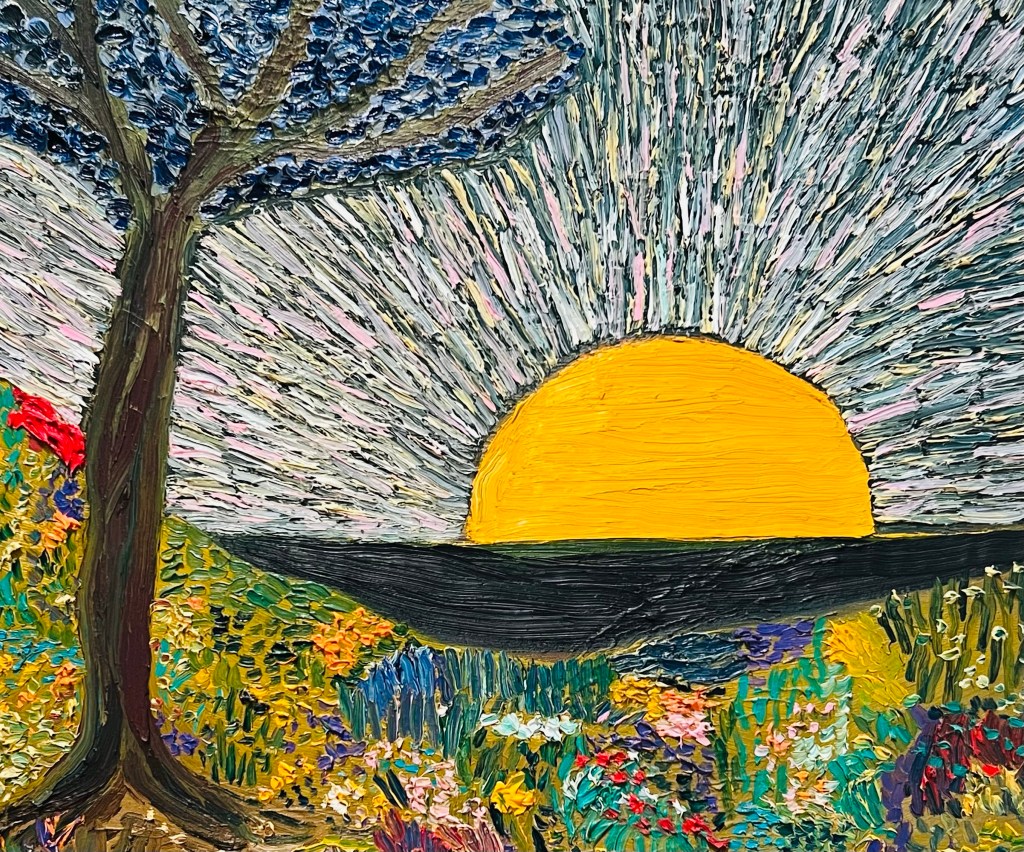
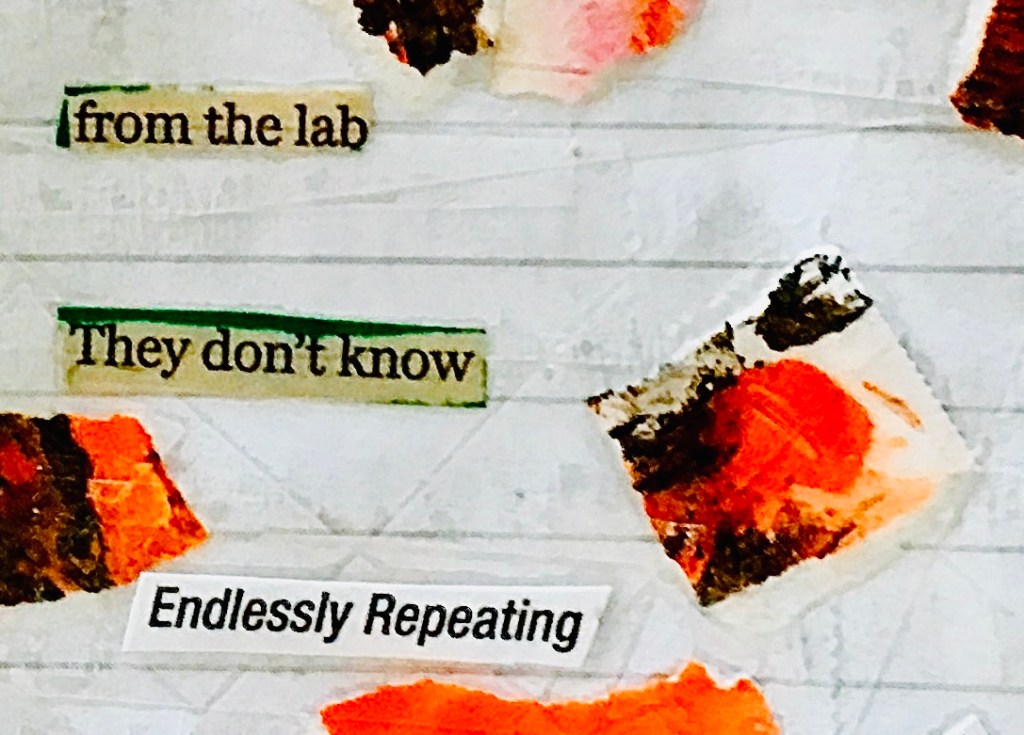
image: detail from matthew wong’s realm of appearances / mfa boston
The Best Stuff I Read This Week
“Someone calls me by the skin I did not know I had and to this I think—language, …”
— Mathem Shiferraw / “Beginnings”
“The greatest challenge the Anthropocene poses isn’t how the Department of Defense should plan for resource wars, whether we should put up sea walls to protect Manhattan, or when we should abandon Miami. It won’t be addressed by buying a Prius, turning off the air conditioning, or signing a treaty. The greatest challenge we face is a philosophical one: understanding that this civilization is already dead. The sooner we confront our situation and realize that there is nothing we can do to save ourselves, the sooner we can get down to the difficult task of adapting, with mortal humility, to our new reality.”
— Roy Scranton / Learning to Die in the Anthropocene
“We carry a pinch behind each eyeball”
— Lisel Mueller / “Love Like Salt”
“The story of human civilization has been steady expansion. Out of Africa into the surrounding continents. Out along the river corridors and ocean coasts as trade grew. Into new territory as we cut down forests or filled in swamps. But that steady expansion has now turned into a contraction. There are places it’s getting harder and harder to live, because it burns or floods. Or because the threat of fire and water is enough to drive up the price of insurance past the point where people can afford it.”
— Bill McKibben / “An Ever-Smaller Board” / Substack newsletter
“The sky is / blue-gold: / the freedom of possibility. … Today, I broke your solar system. / Oops. My bad.”
— Fatimah Ashgar / “Pluto Shits on the Universe”
“Carbon-fueled capitalism is a zombie system, voracious but sterile. This aggressive human monoculture has proven astoundingly virulent but also toxic, cannibalistic, and self-destructive. It is unsustainable, both in itself and as a response to catastrophic climate change. Thankfully, carbon-fueled capitalism is not the only way humans can organize their lives together.”
— Roy Scranton / Learning to Die in the Anthropocene
“Signs that the end of summer is nigh / The skies will darken, / Pumpkin spice shall rain down upon the land and the rivers will run red with cider…”
— Gemma Correll / “End of Days” / The Nib
What I’m Listening To:
“T.V.O.D. I don’t need a TV screen I just stick the aerial into my skin Let the signal run through my veins T.V.O.D.”
“… if the story is starting to feel very forced, or if you become excited about an alternate possibility for your story, feel free to abandon or modify one of these constraints”
the wild is where we belong
“I find myself writing about family and the little betrayals that can occur between parents and children, brothers and sisters. The family is such fertile terrain for fiction, because there’s shared history there, such intimacy and love, and yet our families are forced on us. No one knows quite how to push our buttons like our family members, and small gestures can take on huge resonances.”
enough of that
“Often my entry into a story is a pair of characters…”
buried alive
“FORMATTING: All manuscripts for this class should include your name …”
full of rats
What I’m Reading:
“By the mid-1960s, we would discover Gysin’s ‘cut-ups,’ a creative methodology enabling a far more accurate reflection of so-called consensus reality than any linear structure could impose. In turn, this retroactively liberated me from feeling obliged to formulate any formal sense or shape out of the mess my fractured memories delivered.”
dont appease / go back — all the background to destroy — liberate urself
cut-up / marinate ur mind stew in random abandon
What I’m Reading:
“’Genesis … your task from now on is to tell me . . . HOW DO WE SHORT-CIRCUIT CONTROL?’”…
“… Once you decide to devote yourself to this cut-up technique, it joyfully contaminates every aspect of your life. A kind of truth virus. And, for me, it remains the only reliable filter through which to observe this earth and the overriding culture with any hope of accuracy.”
— William S. Burroughs + Genesis P-Orridge / Nonbinary: A Memoir
“‘For years, you read all the articles,’ Wehage told me recently, over the phone. ‘You look at pictures of the pollution, you think about the greed that fuels it, and you feel upset. But then, when you’re there, you understand that it’s so much worse than anything you could read.’”
— Chris Wehage, to Jia Tolentino / “What to Do with Climate Emotions” / The New Yorker
“I write as though you could understand And I could say it One must always pretend something Among the dying”
— W.S. Merwin / “For A Coming Extinction”
“The human psyche naturally rebels against the idea of its end. Likewise, civilizations have throughout history marched blindly toward disaster, because humans are wired to believe that tomorrow will be much like today. It is hard work for us to remember that this way of life, this present moment, this order of things is not stable and permanent. Across the world today, our actions testify to our belief that we can go on like we are forever: burning oil, poisoning the seas, killing off other species, pumping carbon into the air, ignoring the ominous silence of our coalmine canaries in favor of the unending robotic tweets of our new digital imaginarium. Yet the reality of global climate change is going to keep intruding on our collective fantasies of perpetual growth, constant innovation, and endless energy, just as the reality of individual mortality shocks our casual faith in permanence.”
— Roy Scranton / How to Die in the Anthropocene
“Even if they survived — even if they could be perpetuated indefinitely in laboratories and zoos — their extinction would already be in progress. Like a neurodegenerative disease, extinction was a slow hollowing, not a sharp cut. The death of the last holdout was in some sense a mere formality.”
— Ned Beauman / Venomous Lumpsuckers
“I yearn for the darkness. I pray for death. Real death. If I thought that in death I would meet the people I’ve known in life I don’t know what I’d do. That would be the ultimate horror. The ultimate despair. If I had to meet my mother again and start all of that all over, only this time without the prospect of death to look forward to? Well. That would be the final nightmare. Kafka on wheels.”
— Cormac McCarthy / The Sunset Limited
“in some cheap room they will find me there and never know my name my meaning nor the treasure of my escape.”
— Charles Bukowski / “old man, dead in a room”
“The luxury I had of pondering my emotions at length was evidence of how much closer I was to the problem than to the solution: climate change’s worst effects will always fall on the poor and disenfranchised, both locally and globally, and in this context it was hard to believe that the project of teaching the world’s most fortunate people how to feel was more than another form of self-absorption.”
— Jia Tolentino / “What to Do with Climate Emotions” / The New Yorker
What I’m Listening To:
“Onward Buffalo Alone Onward, no herd, I heard You killed them”












 thee istsfor manity reader