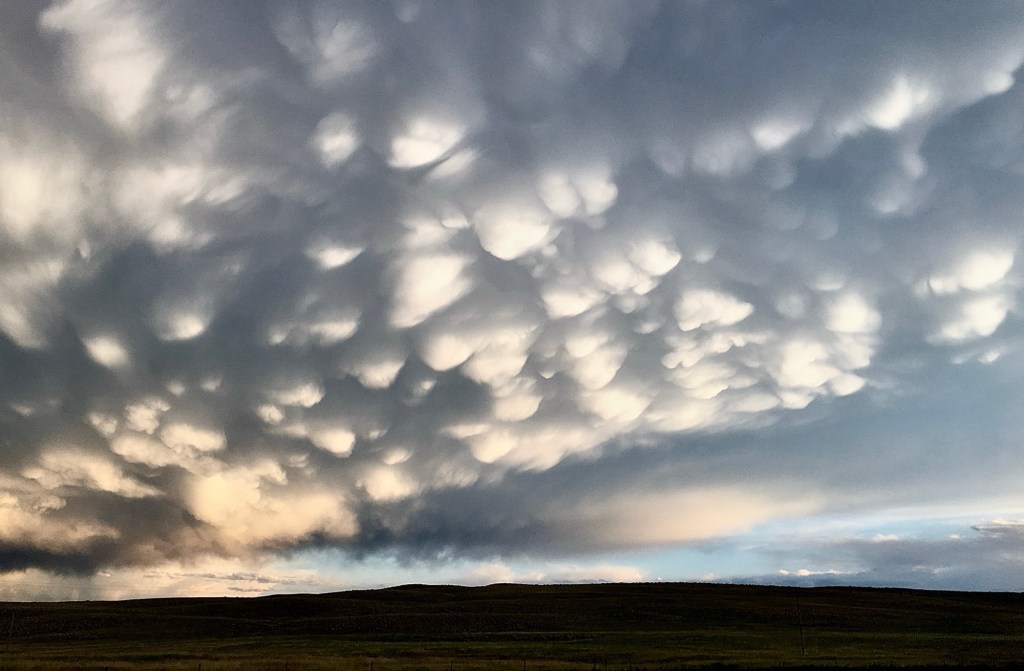
Small sharply defined puffs— No heat, no air compressors, Gaskets, rubber seals, rubber feet— Cloud-like, a shy homunculus, Trapped beneath a 5 o’clock crowd.
What I’m Reading:
I squeeze my days into such small boxes I forget that I can make whatever I want . . . . . . We can make whatever we want together.
A city will know that it’s succeeded in becoming a cycling city when people don’t think of themselves as cyclists – riding a bicycle is just the way to get around.
— Melissa Bruntlett & Chris Bruntlett / Building the Cycling City: The Dutch Blueprint for Urban Vitality
It was hypnagogic sitting with him on the vinyl sofa tucked under the vibrating signs THRILLS, LOVE, and THE BRIGHT & THE SHINY as bluegrass twanged. We talked deeply over Bengali food . . .
— Tree Abraham / Cyclettes
Digging rock from hardscaped beds, I think, is a bit like not writing poetry—like thinking about writing poetry but digging rock from my backyard instead.
— Camille T. Dungy / “Frequently Asked Questions: #6”
I went to the dining car and tried the breakfast poutine. I concluded that poutine is a perfect all-day meal. I wrote “open 24-hour poutine restaurant” in my notebook . . .
— Christopher Muther / “Two nights, three provinces, and 1,600 miles. A sleeper train through Maritime Canada is slow travel at its best” / The Boston Globe
When future generations look back upon the Great Derangement they will certainly blame the leaders and politicians of this time for their failure to address the climate crisis. But they may well hold artists and writers to be equally culpable — for the imagining of possibilities is not, after all, the job of politicians and bureaucrats.
— Amitav Ghosh / The Great Derangement: Climate Change and the Unthinkable
I am thirty-two weeks pregnant when they announce it: the water is rising faster than they thought. It is creeping faster. A calculation error. A badly plotted movie, sensors out at sea.
— Megan Hunter / The End We Start From
WENDSLER NOSIE: In 1974, in the town of Globe, they still had signs, ‘Dogs and Indians Keep Out.’ We still had to order outside of restaurants. We really didn’t start eating in restaurants until the 1980s.
— Lauren Redniss / Oak Flat: A Fight for Sacred Land in the American West
We are not hostages, America, and your soldiers are not God’s soldiers…
— Saadi Yousseff / “America, America”
image: p. remer
What I’m Listening To:
The power’s out And no one can save us No one can blame us now That the power’s out
Together we will read and disinfect literature and curate augments about the purity of intention. We will wreck work that is not up to our values purity. We will be attentive to the hobgoblins of human imperfection we must strive toward purity. Always. We will burn the offending works and strive to drive out the poison mentality. We are the tornados of righteousness. Honor always, gentlemen. Honor always wins. Honor trumps love and understanding. We are the quicksand that will swallow them up and suffocate them. The human mind is a wound that needs triage. We are the arbiters by virtue of human declension. We are the chosen. Let us pray upon this and devise a way to suppress the fallible. We are the weapon. We are the smiting hand of the all-mighty.
What I’m Reading:
But we are professionals: we have to go on fighting till the politicians tell us to stop. Probably they will get together and agree to the same peace that we could have had at the beginning, making nonsense of all these years.
Sometimes I have the ocean roaring in my ears, in my head—not the intermittent breaks and ebbs of waves on the shore, but only the crashes—crashes, crashes, crashes—on an endless loop for minutes, hours sometimes. A stream of white noise. Vision becomes strained, as if I were only seeing clearly through the spaces in a chain link fence. But much of this is going on without my awareness—and only when it becomes suddenly silent and my vision resolves, refocuses completely, do I become aware of what has just happened. Where did those minutes or hours go? What was I doing? Was I here all along in my room, in my car, in my office, this museum—or did I go somewhere else and do other things: unconscionable things, while I was out on the waves?
Best,
X
What I’m Reading:
Indeed, this is perhaps the most important question ever to confront culture in the broadest sense for let us make no mistake: the climate crisis is also a crisis of culture, and thus of the imagination.
Culture generates desires for vehicles and appliances, for certain kinds of gardens and dwellings-that are among the principal drivers of the carbon economy.
You are an insouciant acolyte of peregrinations plus, and you ameliorate my angst. You’ll find me a way to progress as a pilgrim that isn’t full of that old time religion. Then you’ll find me a way to plant a flag in Patagonia.
I tell you the farfisa is the garfish of spell correct.
You spell check me on the profane and change it to the divine.
No one is truly enthralled with conspiracists — our eyes on the mounds of flesh decaying while the landfills overflow with our wretchedness — we are all husks.
We become the planet we kill.
We are elaborate confectioners and puppeteers of malice (we are) — we add no value. We desecrate and fill morgues with dispatch.
You call me Angel, but you are a devil of a teenage hoodlum, hoodwinker, hood scratcher.
Sell me a Münchausen Syndrome by Proxy planner to keep the narrative slant.
Instead we Rochambeau thumb it for rock flautists: you get the Moody Blues guy spouting poetry, and I get the Jethro Tull tippy-toe psychotic. We’ll play it like it’s 1972.
What I’m Reading:
But how do we accept that the dystopian world in the latest sci-fi disaster film is actually going to be your grandchild’s future? Or that ocean acidification could kill off most marine life by the end of the century? Or run-away global warming will make 1.2 billion people homeless by 2050.
— Andrew Boyd / I Want a Better Catastrophe: Navigating the Climate Crisis with Grief, Hope, and Gallows Humor
Juana weaves her homily—one uprise after another, unaware that she’s at the precipice of her irritating anecdotes.
Jean believes he deserves his honorific—the one Juana refuses to use when addressing him.
Gaffes occur in a world ruled by impertinences and reverberatory prayers.
I wish to crochet synchronized heartbeats for them, but my literary physics is pockmarked with black holes—letters and syntactic marks swept up beyond the event horizon.
But hold on, this isn’t about the serial graphemic elements indicating syntax—no, this is about love gone awry. Misanthropy, misogyny, miserliness, and misery. The human condition paradigm.
So why the tangent?
(The tangential has potential, so we diverge.)
Now, Juana deconstructs Jean’s argument and shoves him in his place: You don’t blaspheme in here!
Jean retorts: Midriff-clavichords are the only way to go. Get behind thee, Satan!
Juana says: You know, I always thought clavichord should be spelled “clavychord”—it has a jauntier ring to it. It’s zingy and fun to say, say it with me “clavychord … clavychord …clavychord …”
Jean realizes his education was fraudulent. All is relative. There is no solid ground. Nothing to rely on. No exit.
There’s a naked preamble about the paradigm of the photocopier. Transient elation ensues.
One must imagine Juana and Jean happy.
What I’m Reading:
an unimaginable combination of food flavors for people not ready to go home to their parents
— Aaron Tyler Hand / “Self-Portrait as Combination Taco Bell / Pizza Hut / KFC”
Briefly, gentlemen, it has come to my attention that there has been an inordinate amount of “buggery” going on between you and our beetles. This will not do.
As of tomorrow at 7:00 am all those apprehended singing plaintive love songs to our collection of Coleoptera will be suspended for a minimum of one month and lose all member privileges.
Additionally there will be no more dressing up our rhinoceros beetles in little sundresses. This is not a carnival, good sirs! We are not puppeteers, this is not the Punch and Judy caper hour. This must cease.
And whomever is painting the brown beetles dayglo blue, you must stop immediately. Now the confused flour beetles are demanding to be painted fuschia and emerald green on alternating days.
Decorum, gentlemen. We are civilized men.
And stop it, stop it, with the little tank tops on the stag beetles! We are not infants. I expect these hijinks to stop immediately, but the culprit who has “toilet-papered” all our dung beetles may continue to do so on a biweekly basis.
Civilization is progressive, and we are exceptional, gentlemen. Carry on!
What I’m Reading:
I know. I’ll talk to the wall and for once, tell all.
Nothing enervates like changing midstream, he said to the garage walls, but we adapt.
William Katz, in the slipstream of placenta trip time, started anew.
Katz was 103 miles into his new life—the New England life he envisioned—when he stepped out into the heat and the hate of this particular August morning. He’d be out of Florida by midafternoon—but first, his last cafecito cubano and flan in his foreseeable future. One last stop in his accursed birth city and goodbye Miami! forever.
But the well-trod adage goes: careful what you wish, ‘cause the three fanged rattle snake has no compunctions . . . (well, it’s a well known adage in some arid places of the mind) . . . anyway, Katz was hankering for one last dose of Cuban sweetness before getting on with this next part of his life—so auspicious it was.
He could see himself making eyes at Medusa on Mount Katahdin, sparring with the Cyclops on the shores of Casco Bay, battling Scylla and Charybdis between the Quoddy Narrows.
He shook his fist in the air— you Canucks will hear from me!
Then a crystalline moment of clarity . . . Conch Key really isn’t such a bad place for placenta trip time . . . maybe I’m overreacting . . . maybe my Penelope waits there . . . patience, old man . . .
Then he slammed the cafecito and flan, pulled his pants up to his sternum, and turned south again.
What I’m Reading:
Sooner or later pain becomes too great for fear and when the people’s fear has gone the regime will have to go.









 thee istsfor manity reader