


What I’m Reading:
You have to learn who you are before it’s too late. The big mistakes people keep making in life—the pattern is so obvious to everyone except the people themselves.
— David Burr Gerrard / The Epiphany Machine
What I’m Reading:
You have to learn who you are before it’s too late. The big mistakes people keep making in life—the pattern is so obvious to everyone except the people themselves.
— David Burr Gerrard / The Epiphany Machine
Is there a bicycle culture war happening on the streets right now? It sure does seem like it, as conversations turn from differences in policy to inflammatory and, yes, hate-fuelled rhetoric. Do bicyclists represent more than just a person wanted to pedal a two-wheeled thing of beauty to work? And, since when do people who choose cars represent everything wrong with the world?
It’s hard to ride a bicycle to work on a regular basis, and not turn into a bike advocate. People want to be safe, and riding a bicycle for transportation currently comes with significant risks.
— Ron Johnson / “Why is Riding a Bicycle in the City Turning Into a Culture War” / Momentum
… The idea of
nation is a record full of __. Anzaldua wrote, the U.S.-Mexican
border es una herida abierta. Scrawled in black marker on a wall in
Bulgaria, EVERY BORDER IS A WOUND.
— Patrycja Humienik / “Borderwound”
Someone asked me this week what my artistic process is. “I don’t really have a process,” I said, thinking. “I just make what I feel like I have to make.” It’s less like a well-honed practice and more like a compulsion, an itch I have to pay attention to. These days, it’s easy for me to spin out and feel powerless. I try to not get into a mental swamp where fear and anger make it impossible for me to create what I want to in the world. I try to see it as a victory against all the oppressive forces in our country when I live my life freely and create art that’s not making any billionaires any money.
— S. Mirk / “No Star Knows the Shape of Its Constellation”
… there is still so much violence. And hunger.
— David Williams / When the English Fall
“Let’s be brave and take cycling out of the culture wars,” wrote Trudy Harrison, a Conservative MP in the United Kingdom, in a recent opinion piece. “I encourage every candidate standing at the next election to include walking or cycling on their leaflets; it might just attract people who don’t currently feel spoken to. People want to cycle more. We just need to help them do it.”
— Ron Johnson / “Why is Riding a Bicycle in the City Turning Into a Culture War” / Momentum
Sit here by me. It all worked out for the best, because look, here you are and we’re happy and safe now!
That didn’t last, though. The happiness.
The safeness. The now.
— Margaret Atwood / The Heart Goes Last
Philip Crosby once said “slowness to change usually means fear of the new.” And that could very much be the case when it comes to urban cycling. But by understanding these complex dynamics, we can better appreciate why riding a bicycle is becoming more than just a mode of transportation—it is turning into a symbolic battleground in some strange culture war. It doesn’t have to be this way.
— Ron Johnson / “Why is Riding a Bicycle in the City Turning Into a Culture War” / Momentum

What I’m Listening To:
Every night
Oh, man
What you pray?
Look out the window
It’s Hell out there
— Darkside / “Hell suite, Pt. II”


What I’m Reading:
WILL I JUST KEEP GOING THROUGH THE MOTIONS UNTIL THE DAY
THEY COME ARREST ME, TOO?
WILL WE LOOK BACK AND SAY
“WHAT THE HELL WERE WE DOING?”
WHY DID WE KEEP TRYING
TO LIVE OUR NORMAL LIVES?”
“DID WE THINK
WE WOULD BE SAFE?”
— S. Mirk / “No Star Knows the Shape of Its Constellation”

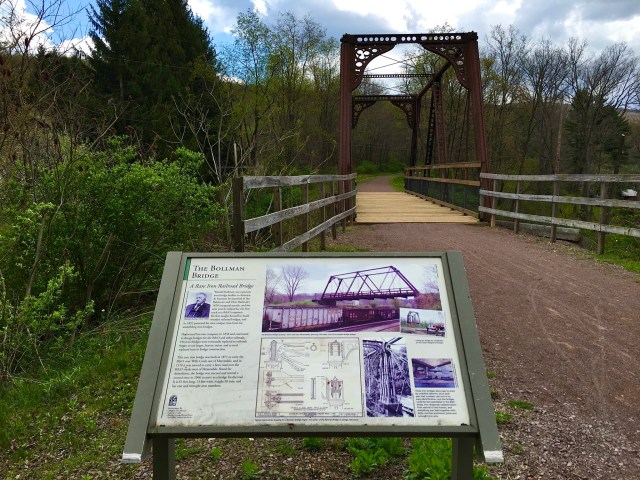
It was an aversion that grew out of a childhood compulsion to read every interpretive sign she came across on family vacations and school field trips.

She began back in the analog age on a single lens reflex camera, in high school she switched to a digital camera. She rarely dipped her hands into photochemicals again—goodbye, D-76 and HC-110—hello memory cards. Within a decade everything she shot she shot on her phone. All through the years the same obsession persisted she must shoot every interpretive sign with its ancillary scene, if possible, she encountered. And she often went far out of her way to encounter them.
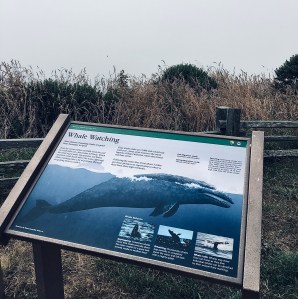
She still hadn’t figured out how to create a vacation or trip where she was assured of encountering these illustrated signs, but a historical or memorial plaque in situ would do in a pinch. Clearly, her ideal was to shoot the scene illustrated on the sign before the self-same scene in nature from the same angle illustrated on the sign.
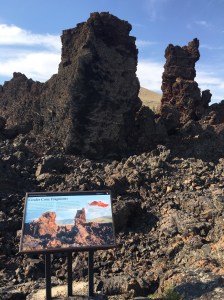
It was not always possible, but she always strived for perfection—often waiting hours until the flow of tourists at scenic or historic spots dwindled away, or more often arriving at spots before tourists arrived. Although the lighting often added its own set of challenges. She was in the process of transcending—a true existential argonaut.
What I’m Reading:
… we’re a disgusting species with horrible manners and not fit to survive…
— John Brunner / Stand on Zanzibar
This takes place everywhere and nowhere at once. At the center of a spin art piece before the paint reticulates out; in manifold dusty, dark spaces; in destitute backyards choked with crabgrass; and Gusman Hall in Miami, Florida.
A father. A son. Supporting players.
Illicit substances, vitriol, a gun, mind control techniques, married people that shouldn’t have been… married, that is.
And here, someplace, we join…
Son:
Don’t twang that pang of that Journey to Ixtlan at me. I believe the interregnum is better than the internecine, and neither are as good as interstices. What do you sing? What do you sing?
Father:
I sing of the sun going out. White dwarf? White dwarf? Pray tell, dying star, where was your fiery giant? This will all disappear someday after we’ve disappeared in an anthropocentric extinction — the sixth great extinction!
(He points savagely at the heavens.)
There will be nothing you can do… do be do be doo… do about that?
Son:
I think you mean to bring me down at the nascent end of the good new year! It’s 1979! Get with it.
Father:
Nope! Look around, look around, you’re already well into the first act of the end. Act two is a bitch! No one has ever seen anything like it.
(He adjusts his Pope’s mitre — a hat that never became him, always slipping off his shaved head. He flings the hat over the backyard fence. He recoups.)
Act three is acid, bitter, and terminal. The dènouement. So out! Out. Out in your bitter boy britches and fasten your seat belt, son. It gets harrowing from here. A goon’s new year to you, boy!
Son:
I fear my grip on reality is tenuous, at best. I grant you that. After all, you pulled a gun on me when I was eleven. You often pulled the same gun on my mother during those hazy rages in our smoke-filled living room.
(A paisley brocade sofa, a large stereo console, and field and stream oils materialize on the busted walls.)
The ash trays were always overfull — the butts were a dark prophecy of lost days to come. The record player always hiccuping from the stylus on the never ending last groove. Pop! Pop! Pop! Johnny Mathis did not soothe your savagery.
Father:
It’s best not to bog down in theories or paralyzing rationalizations. It was what it was. Just something. Your experience may vary, my mileage was fine. I’m here aren’t I? Buck up!
Son:
I never thought such displeasures were possible. Yours, hers, mine. We drowned.
Father:
Oh, yes we did! The best plan was none. Chaos undergirding all designs — it yielded the most mileage per trauma cluster. That hothouse in your skull is full of dendritic knots.
(He swings his arm out like a madcap magician and produces a silk scarf out of his sleeve.)
There will be cold and snowy days; there will be warm and sunny days. I’m here to make sure many of them will be a hell!
Hell— Hello. Helloooo!
(His voice echoes and bounces back from the corners of the warping room.)
Try me, sonny. Go ahead. Try and find me somewhere in the spring of 1981. I disappeared from your life for a reason. Try to shape my thinking. It hasn’t happened since Silva Mind Control — my method is thee only Method! I use it to pick up all the I women want, from 15 to 53!
Son:
Wait! You claim to use the power of mustard seed grain faith to move a mountain, and instead you use it to pick up women? Really?
You claim to control and harness your mind power to dissipate clouds and divert hurricanes. You claim to shoot lasers out of your third eye, and you’ve the power to lay hands-on to cure cancer, and instead of doing something truly useful you’re using it to pick up women?
Father:
It’s useful to me.
***
Two weeks later my father came to my high school graduation with his new wife — an 18-year old woman barely six months older than I was — and introduced her (left to right, in order of largest mouth-agape) to my mother and my gangster stepfather of three months; to my 60-year old grandmother-inquisitor and her mute husband of 6 months; and to my drug dealer uncle and his pregnant 16-year old mistress.
In that fitful din of graduates and families finding their seats, during the opening strains of Pomp and Circumstance, I took out my pocket comb and made the first gouge. The first of a thousand of gouges to come.
I resolved to never marry.
After the graduation ceremony, bleeding from the chest and thighs beneath my graduation robe, I drove to Tijuana and joined the Camacho Brothers’ Freak Show.
And so I stand here, as you see me now.

What I’m Reading:
If there is something gnawing at you, that means you’re delicious. That gnawing is the universe trying to get at the tasty juice inside of you. Your entire unsatisfying life is just the rind…
— David Burr Gerrard / The Epiphany Machine

what is this place now?
a narrowing inward turn—
the shock of the real—
falling short of our ideals—
original sin baked in
(now flourishes unchecked / unimpeded)

What I’m Reading:
A common stereotype about people on bikes is that they’re anti-car or just don’t drive. This myth is particularly harmful in that it leads to a high level of antagonism and subsequent danger on the roads because the two sides are pitted against each other when cyclists are perceived as an “other.” In reality, 88% of American bike riders also drive a car. When drivers complain about cyclists getting in their way or not following the rules of the road, it would be helpful to note that cyclists are, in fact, also drivers.
— Hilary Angus / “The 10 most common myths about cyclists” / Momentum

I was begat by malpractice & malfeasance
Death had no use for me
Because I would not squat for death
There would be no dearth of fezzes
(and jaunty chapeaus)
Have I got a crazy memory for you—
Nine pigsties & a professional provocateur
Stop shivering in the cemetery
You’ve got bags under your eyes
Viper teeth & elfin ears
After 25 misconceptions
The monocle countess is 20 pilchards short
Wear my cassock
In roughly chronological order
Take me out & ridicule me
You are brimless & cylindrical

What I’m Reading:
Watching apes pelt enemies with dung
may remove the bloom from eating fruit.
— Jonathan Sisson / “Movable Type”
my heart distills my blood
heliotrope
looking for a sun
a plantation of hateful
verdigris
factors out to flow
out big star not too far
severance
runs rampant over
my tripartite welcome
parse
the light hiding from guards
foiling the crowds
out
in the rain
i care
less
each passing year

What I’m Reading:
Just as he was placing his camera in position, the sand at his feet began to move with a rustle. He drew his foot back, shuddering, but the flow of the sand did not stop for some time.
What a delicate, dangerous balance!
— Kobo Abe / The Woman in the Dunes
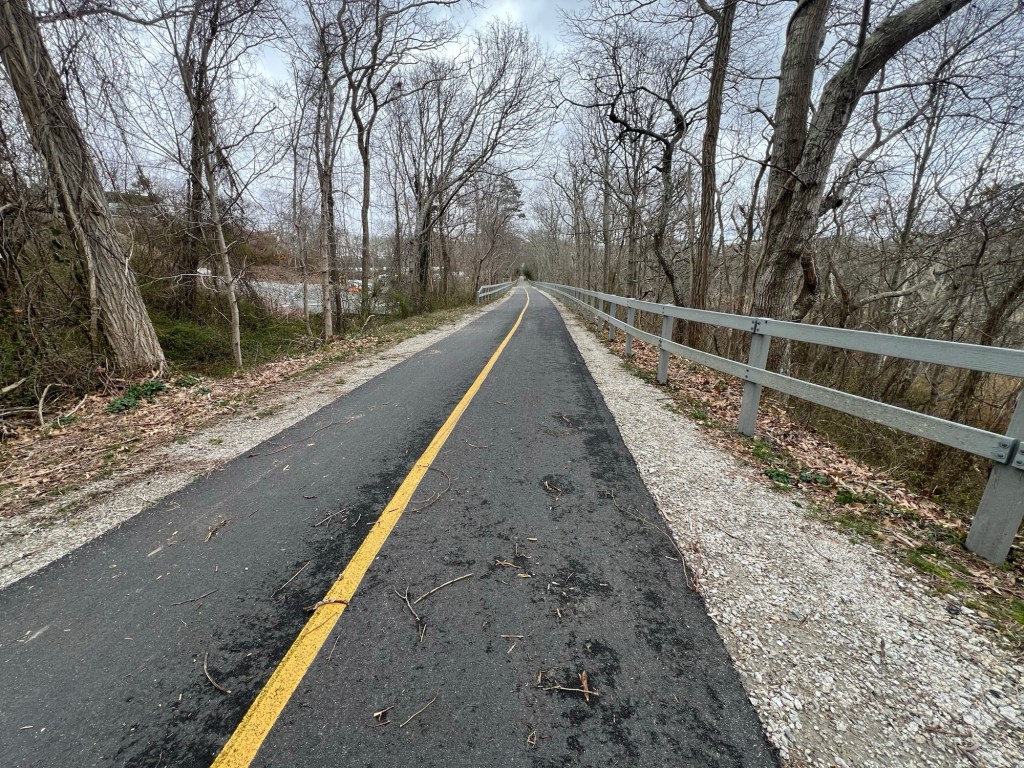
But you. Rain on the hot sidewalk.
Turned mist. Handsome aura. Gone.
— Nicole Callihan / “Summer Elegy”
The sky is low and charged with snow that has not yet begun to fall. A flock of starlings keeps lifting off and landing, lifting off and landing. The sound of their wings all at once is soft and explosive. A hundred feathered concussions.
— Anne de Marcken / It Lasts Forever and Then It’s Over
The universe demotes me,
yet again, to coin-operated laundry,
and each night, when everyone
is sleeping, our tongues all migrate
one mouth to the left.
— Josh Bell / “The War Against Birthdays”
The American narrative is morally unresolvable because the society that saved humanity in the great conflicts of the twentieth century was also a society built on enormous crimes—slavery and the extinction of the native inhabitants.
— Robert D. Kaplan / Earning the Rockies
Much like plate tectonics, poetry is a measure of time, decades and seconds felt equally, refreshed until we pass out or think of better ways to explain what this means.
— Jean Prokott / “Trust the Hours: Poetry to Reclaim & Rename the Sorrow”
I still lived alone in those days. The man who’d helped me make the baby had left to find his way into the television. Specks of skins of selves he’d been in other years still lay around me on the air; and, as such, I’d breathe him in. I pulled his long hair from the sink pipes.
— Blake Butler / Scorch Atlas
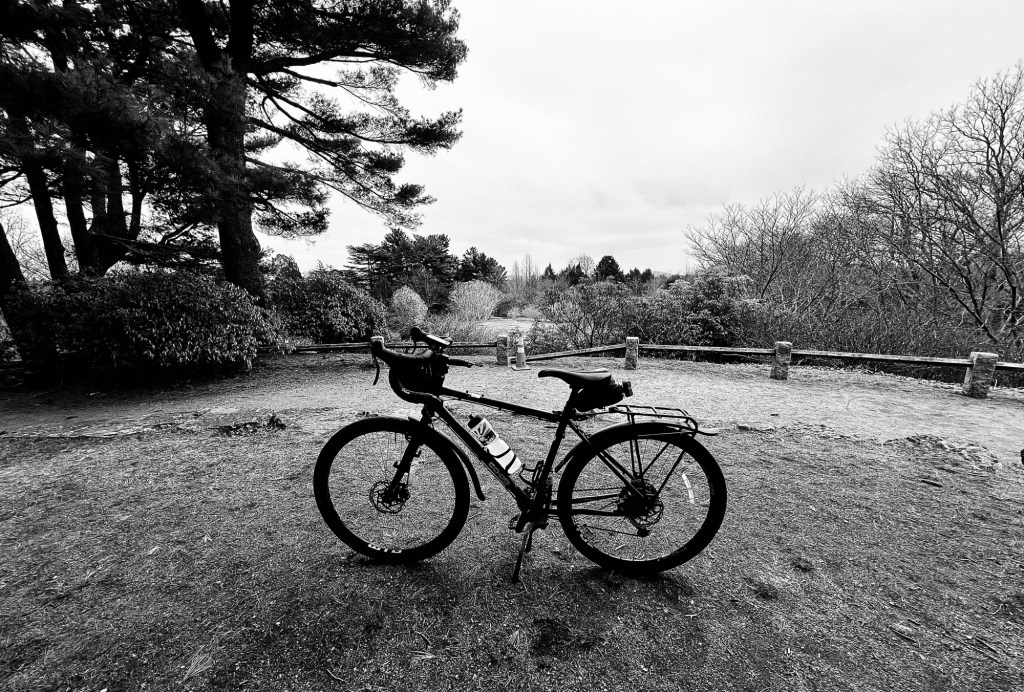
. . . mechanical autonomy on a bike opens other doors, such as going on long trips with the confidence of knowing you can face any technical problem.
— Laurent Belando & Louise Roussel / Practical Cycling

What I’m Listening To:
I’m lost at sea
Don’t bother me
I’ve lost my way
I’ve lost my way
— Radiohead / “In Limbo”

There’s no crying in trying—
Pain is the upshot of doing
Pain is the upshot of failing—
Pain I await
No pain no rain no Maine
(at the border with Canada)
Now I can change these things from what I’ve learnt
Now I can effectuate these things to make the experience better
Now I wait
Now I dream
What I’m Reading:
Sometimes I watch time-lapse videos of continental drift, a bit of Paleozoic melatonin, when I need an escape from grief. It’s remarkably soothing…
— Jean Prokott / “Trust the Hours: Poetry to Reclaim & Rename the Sorrow”

