Moving on, as a concept, is for stupid people, because any sensible person knows grief is a long-term project. I refuse to rush. The pain that is thrust upon us let no man slow or speed or fix.
Now, the rain, the iron rain, with its little keys is closing all the doors . . .
and I think we’re all dead. See how the sky sits like a tombstone on the roofs.
— Bert Meyers / “Rainy Day”
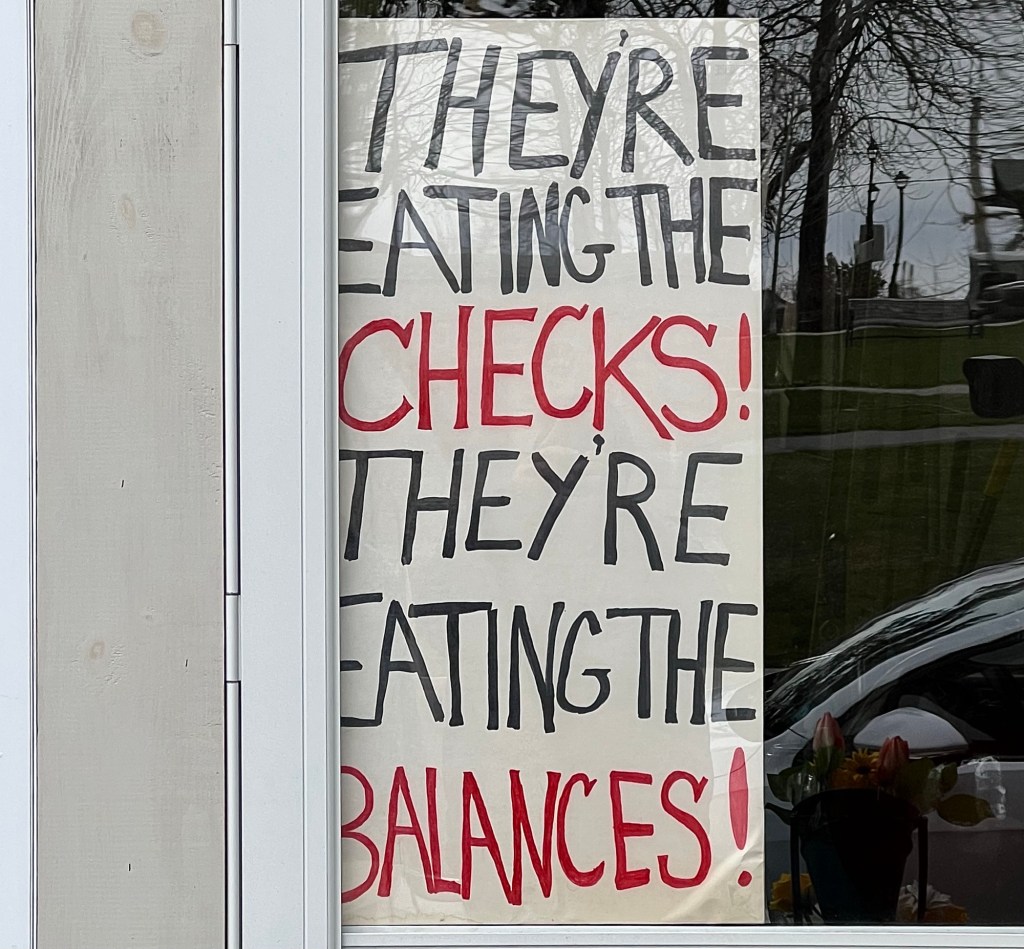
DEMOCRACY IN THE UNITED STATES faces a critical threat in the rise of fascist revolutionaries. These deadly serious right-wing extremists have found a home in MAGA and a source of cash in oligarchs hellbent on bankrolling the destruction of the American system of republican government. Antithetical in every way to conservatism, backed by deep-pocketed authoritarian elites, and allying far-right ideologues with Christian nationalists, the new fascism is a radicalized movement steeped in the rhetoric of bloodshed and upheaval, its goal to capture government and deploy the state’s monopoly on violence to remold society and crush dissent. The endgame is not only to merge the state with corporation and church—a modern redux of the classic fascist configuration of Mussolini and Franco—but the exercise of raw power, brute force, and unfettered avarice. Think of it as owning the libs with an AR-15 while bowing to Mammon and smashing what remains of the welfare state. With his second term underway, Trump is making swift progress implementing this vision of … “reactionary nihilism.”
— Christopher Ketcham, in conversation with Katherine Stewart / “Burn Down the House” / The Baffler
My poems were not major
enough to even make me
a “minor poet,”
but I did sit here
instead of getting up,
getting the gun, loading it.
— Olena Kalytiak Davis / “I Was Minor”
But now, Lyft has given a group of researchers access to detailed data from their drivers. The results confirm that minority drivers get more tickets, and they pay higher fines when they do. And the results also show that minorities aren’t in any way more likely to speed or engage in unsafe driving. Which suggests, in their words, that the problem is “animus” against minority drivers.
— John Timmer / “Study of Lyft rideshare data confirms minorities get more tickets” / Ars Technica
I have no high stake in this world, no children to want to leave a better world to, nothing but fucking & bookmaking that is my legacy & it is as undeniable as smoke; yet may disappear like it too.
— Yesenia Montilla / “High Stakes”
And where was education in all this? The initial goal of the student aid program was to make it easier for straitened low- and middle-income students to afford a college degree because, as a nation, we believed that was mutually beneficial for individuals and society. This motive had been lost in a morass of cynical disputes about the federal budget and political posturing over personal responsibility. Students and the degrees they sought for themselves and the country were no longer placed at the forefront of decisions about higher education. Instead, they became figures on a ledger aimed at enriching private contractors and reducing the federal deficit.
— Ryann Libenthal / Burdened: Student Debt and the Making of an American Crisis
You’re a poet, don’t be silent, lives are lost under cover of silence. Speak up, read a couple of lines, read us verses, keep talking to us.
— Mir Taqi Mir / The Homeland’s an Ocean
What I’m Listening To:
Greed is an unfillable hole, insatiable Avid the fear of death Thirsty is the fear of death, there is no way We can’t eat our way out of it We can’t drink our way out of it no more
I went under last summer. I was tedious. I was trite. Summer raged. I withstood, until I couldn’t anymore. Lids often closed as I approached. Blinders blinked. It was forever the moment after the storm. Summer claimed closure. I sang bereft of benevolence. I stood alone. Summer anchored itself in wafts of my being. I sang contrite. I whispered sinecures to hourly priests. I rankled raffish pincers downtown. Summer melted with ease. I bobbled adrift. I fished for fifteen words. I wasted my time. Then six words found me, and I stopped fishing. Summer was no more.
II.
The last wastrel in an open sky. The voices echo down from above — well, if they’re echoing down isn’t the “from above” assumed? Ok, but the editor is supposed to stay out of the way for a while. I dreamt that I was in Gala’s kitchen asking her about the water for the rice. She was making rice and beans, but just as easy as it was Gala it was Olga too. “How does this top come off?” I said. “It’s an incredibly elaborate way of camouflaging a pot — the water goes where? How do I take this apart?” The rice had been soaking for hours. I put it back in the pot but it felt soft, and it was broken open like the rice in chicken and rice soup, and so I put the rice back in the pot, which I managed to open — “god damn over-elaborate thing.” And I wondered what I was doing there dreaming of Gala, which could be Olga.
III.
There’s hemming and hawing and there’s scritching and scratching, and that’s what’s happening upstairs at this moment. The scritching and scratching of renovations being done so the folks upstairs can move out. Their place has gone without renovations for forty years (“I don’t need no mule, Jack!”) So on and on it goes with the scritching and scratching, the sawing and drilling, the hammering and jammering… and at some point the water in this stack is going to be turned off when renovating time comes for the ancient bathroom — above where I sit at this moment — it’ll need to be replumbed and reapportioned. Oh, baby, take me to the bayou and drop me on thee anthill heap. Take out your washboard and tambourines. Start with that polyrhythmic scritchy-scratch ‘cause that’s the only type I enjoy. Take me away, spirit!
What I’m Reading:
. . . you hear the sound of a knife cutting paper, you see it too and you realize how that image is simply the extension of another image, that your own life is a chain of words that one day will snap.
Briefly, gentlemen, it has come to my attention that there has been an inordinate amount of “buggery” going on between you and our beetles. This will not do.
As of tomorrow at 7:00 am all those apprehended singing plaintive love songs to our collection of Coleoptera will be suspended for a minimum of one month and lose all members privileges.
Additionally there will be no more dressing up our rhinoceros beetles in little sundresses. This is not a carnival, good sirs! We are not puppeteers, this is not the Punch and Judy caper hour. This must cease.
And whomever is painting the brown beetles dayglo blue, you must stop immediately. Now the confused flour beetles are demanding to be painted fuschia and emerald green on alternating days.
Decorum, gentlemen. We are civilized men.
And stop it, stop it, with the little tank tops on the stag beetles! We are not infants. I expect these hijinks to stop immediately, but the culprit who has “toilet-papered” all our dung beetles may continue to do so on a biweekly basis.
Civilization is progressive, and we are exceptional, gentlemen. Carry on!
What I’m Reading:
She’s justly proud of her efforts and her talent, she does have a gift, you can see it in their eyes. She executes well, she gives good death: those entrusted to her care go out in a state of bliss and with feelings of gratitude toward her, if body language is any indication.
A note stated that his left arm was touring the Costa Brava, visiting the sites where Joan Miró sketched a biomorphic vision or two—while the right arm was tracing Darwin’s “finch routes” through the Galapagos.
Over the next weeks the arms sent him postcards, twice-weekly, as they extended their travels to the former ice fields beyond Ilulissat, slowly paddled the Zambezi River, and covered portions of the Annapurna and Appalachian Trails. The arms had a fruitful summer.
Back at home Hortensio became well acquainted with the adroitness of his feet. They were both usurpers, ever trying to make him realize the superfluity of his arms.
Daily they harangued him to break off relations with his peripatetic and prodigal arms: “The fortune they are spending! Their wanton disregard of your dexterity!” was the constant cavil.
At his feet’s prodding, Hortensio wrote both arms a note at their next appointed stops—Iquitos for the right arm; Petropavlovsk-Kamchatsky for the left—telling them not to bother returning home: “Your services are no longer required.”
At the right foot’s prompting, Hortensio filed a complaint with the State Department which prompted an alert from Homeland Security. “That’ll fix ‘em,” the left foot said.
His arms are wandering rogues to this day.
What I’m Reading:
I was lying on the sofa to rest, to sleep a few minutes, perhaps. I felt my body sag into the hole of sleep. All at once I was awake and frightened. My own death was drifting near me in the middle of life
1. His mother and father died when he was 15, and his first super-8 film was of chalk drawings in darkened spaces: where he imagines the poses and places where his people died.
2. On forms and applications he checks the box “Other Disability:”
He writes in the explanation box:
“I’m moderately misanthropic. I hate crowds, and the excessive inane conversation of mindless individuals. It’s an attitude-disorder.”
3. He tells the barista : “l’m a multidisciplinary artist, working at the intersection of physical texture, shadow, and sound.
My works explore what could have been, by tracing the physical gestures and material qualities of everyday things.”
4. He tells the patrolman he’s driving his inner child home after the stabbing.
He talks to other policeman all night long, without stop.
5. When they ask him why he did it he says:
“ I’ve got the KetoFuelDoctor1 tracking me down. He fills my junk mailbox daily! What are you trying to say, Doc? Do I look fat in these pants?
Well I am fat, doc! But I don’t want what you’re peddling.
What the hell is he peddling?
I’m not clicking on the links in his emails!
But I read the subject lines…”
What I’m Reading:
Whenever he thought he had finally mapped out his boundaries there was always the wilderness. The farther. The dregs of him. Black parts of which he was ashamed. There’s no returning from some places. Maybe that was the grand realization. You are the monstrous, the abominable. You are the beast beyond love.
I often stare into the sun. It’s the only way I know to calm down. My father required it of me when I was a young boy—he broke me early and often. He was the superintendent of our crumbling building in Boca de Camarioca after the revolution. Our homely squalor had a taste and a color: bile-yellow.
When I was a pre-teen my mother also demanded that I stare for hours at the sun. One early morning she plunged all of my father’s screwdrivers—a dozen from his tool box—into his chest; and when I say early morning I mean when it was still dark out. The talon ends of three claw hammers were embedded into his head.
None of this was traumatizing at the time. But over the past few years I find myself living inside that visionary loop multiple times daily. And here, when I say daily, I mean when it’s light out. In the dark I have other devices and literary tropes to rely on.
All these years later I live in exile, in Hialeah, and as you might imagine I am half-blind. I still look into the sun out of habit, but the sun at this hyper-capitalist meridian is out of tune—a legato A minor flat 6 chord that fills me with revulsion. I want to go back to my island where the sun is in the proper key.
But for now I wait in this dollar-rama thrift shop of a philosophically bankrupt and pestilent country. At least I still have my guaguancó and my son montuno. I carry those in my heart everywhere I go.
I do like the sound of the word kookaburra but I hate the fact that’s it’s a silly looking bird. It should be a sabre-toothed marsupial with a name like that. I hate it when life does that!
Life does that all the time.
And I hate inhabiting my skin. It gets to me, especially these days—it happens more and more that I find myself with some sharp implement in hand ideating about all sorts of bitter and painful ends for myself, but I can’t get anything to happen. My hands won’t conform to the images unspooling in the projection room in my head.
But, man, do I remember mother and those stare-downs with the sun. For the record, I never blinked first. I was always called away to do my chores.
Sometimes I envy how the Mongols had Caffa (I think they call it Feodosia now) and their trebuchet delights; how the Spaniards had their mastiffs for Taino ambush oneupmanship; and how deftly American colonials deployed their pox blankets.
Why can’t I get what I want?
Please, please, please let me get what I want… but I’m even off of that song, as the man who sang it is a white supremacist of some sort now.
The rails—bottom and top—don’t stay in place anymore… everything that rises must converge… or so mother told me. But I found, as all frauds are eventually found out—it was really something she gleaned from a Flannery O’Connor narrative… and then she said that Hemingway rewrote the last page of The Sun Also Rises 39 times.
Apocrypha?
Sometimes I feel like a detached bathysphere. All I have is this metaphoric gibbet and the wheel: I’m here alone. Pitched up here—30 feet in the air, spinning a half turn with every stiff breeze…
What I’m Reading:
He knew that was nonsense the moment he had said it. Human beings were deluding themselves when they claimed that hatred was something they had to be taught. Hatred of rivals, of intruders on private property, of the more powerful male or the more fertile female, was implicit in the psychological structure of mankind.
You have to learn who you are before it’s too late. The big mistakes people keep making in life—the pattern is so obvious to everyone except the people themselves.
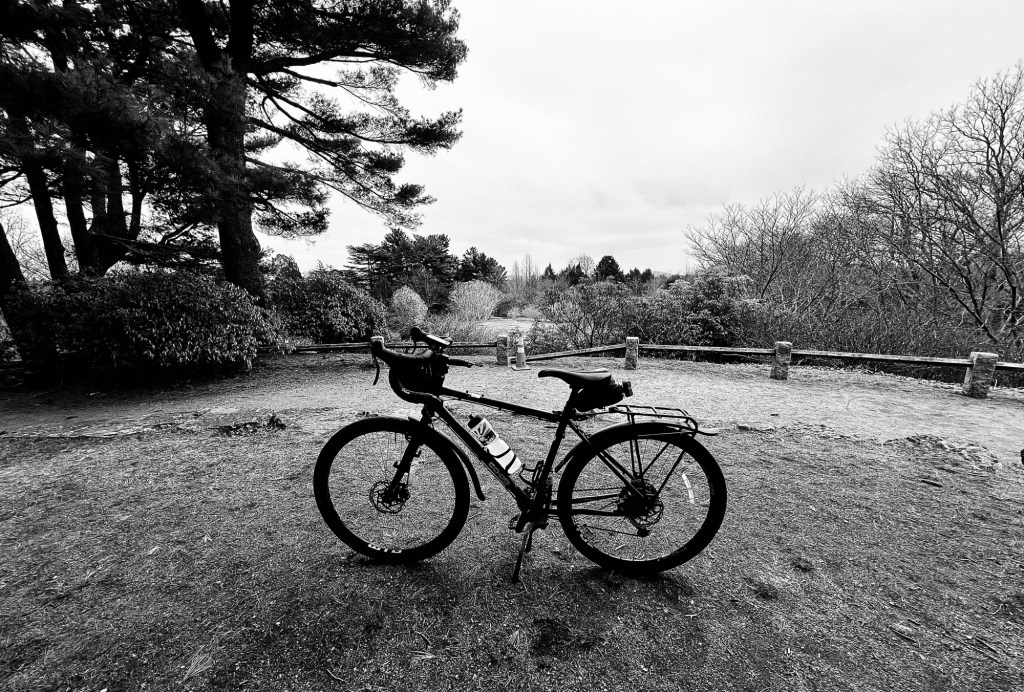
Is there a bicycle culture war happening on the streets right now? It sure does seem like it, as conversations turn from differences in policy to inflammatory and, yes, hate-fuelled rhetoric. Do bicyclists represent more than just a person wanted to pedal a two-wheeled thing of beauty to work? And, since when do people who choose cars represent everything wrong with the world?
It’s hard to ride a bicycle to work on a regular basis, and not turn into a bike advocate. People want to be safe, and riding a bicycle for transportation currently comes with significant risks.
— Ron Johnson / “Why is Riding a Bicycle in the City Turning Into a Culture War” / Momentum
… The idea of nation is a record full of __. Anzaldua wrote, the U.S.-Mexican border es una herida abierta. Scrawled in black marker on a wall in Bulgaria, EVERY BORDER IS A WOUND.
— Patrycja Humienik / “Borderwound”
Someone asked me this week what my artistic process is. “I don’t really have a process,” I said, thinking. “I just make what I feel like I have to make.” It’s less like a well-honed practice and more like a compulsion, an itch I have to pay attention to. These days, it’s easy for me to spin out and feel powerless. I try to not get into a mental swamp where fear and anger make it impossible for me to create what I want to in the world. I try to see it as a victory against all the oppressive forces in our country when I live my life freely and create art that’s not making any billionaires any money.
— S. Mirk / “No Star Knows the Shape of Its Constellation”
… there is still so much violence. And hunger.
— David Williams / When the English Fall
“Let’s be brave and take cycling out of the culture wars,” wrote Trudy Harrison, a Conservative MP in the United Kingdom, in a recent opinion piece. “I encourage every candidate standing at the next election to include walking or cycling on their leaflets; it might just attract people who don’t currently feel spoken to. People want to cycle more. We just need to help them do it.”
— Ron Johnson / “Why is Riding a Bicycle in the City Turning Into a Culture War” / Momentum
Sit here by me. It all worked out for the best, because look, here you are and we’re happy and safe now!
That didn’t last, though. The happiness.
The safeness. The now.
— Margaret Atwood / The Heart Goes Last
Philip Crosby once said “slowness to change usually means fear of the new.” And that could very much be the case when it comes to urban cycling. But by understanding these complex dynamics, we can better appreciate why riding a bicycle is becoming more than just a mode of transportation—it is turning into a symbolic battleground in some strange culture war. It doesn’t have to be this way.
— Ron Johnson / “Why is Riding a Bicycle in the City Turning Into a Culture War” / Momentum
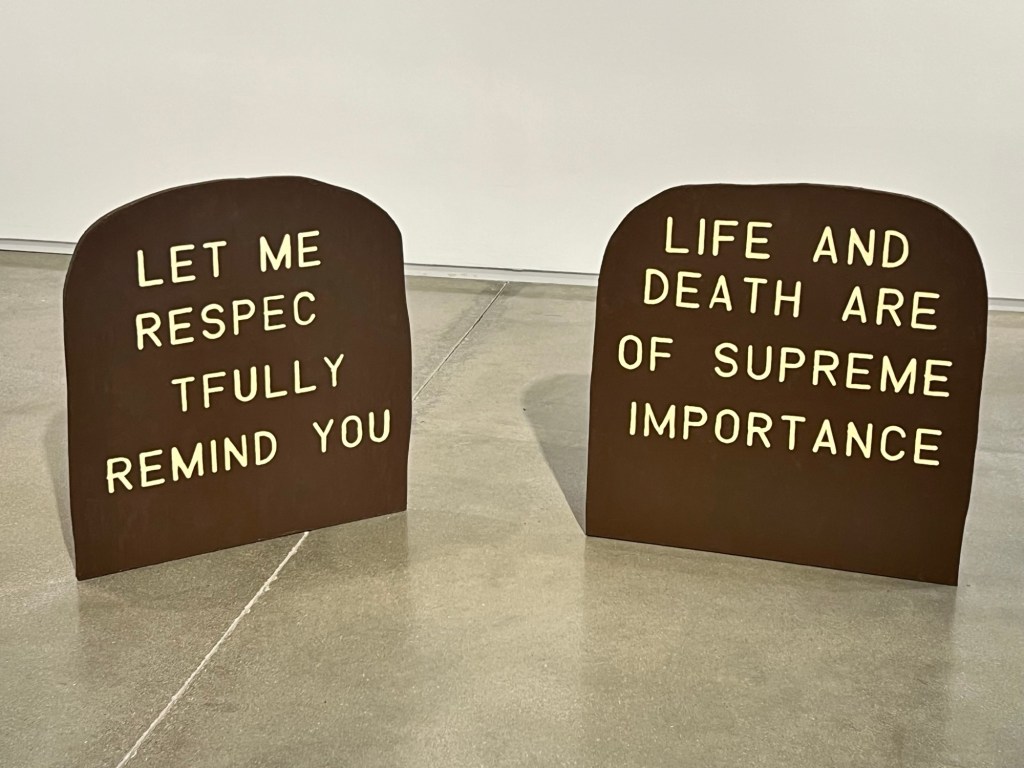
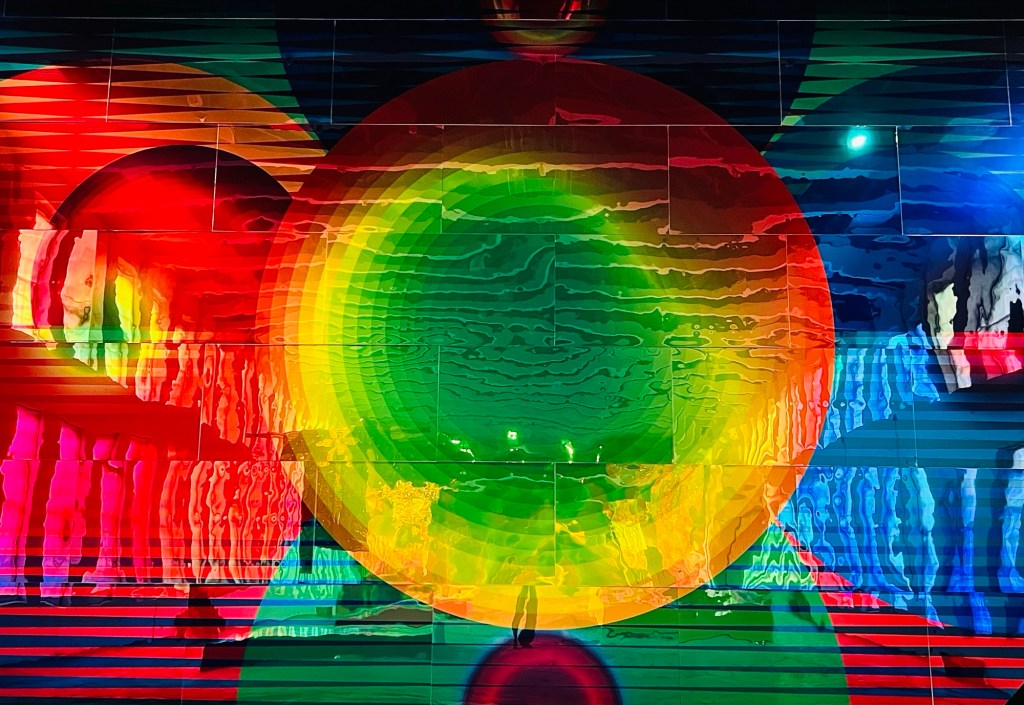
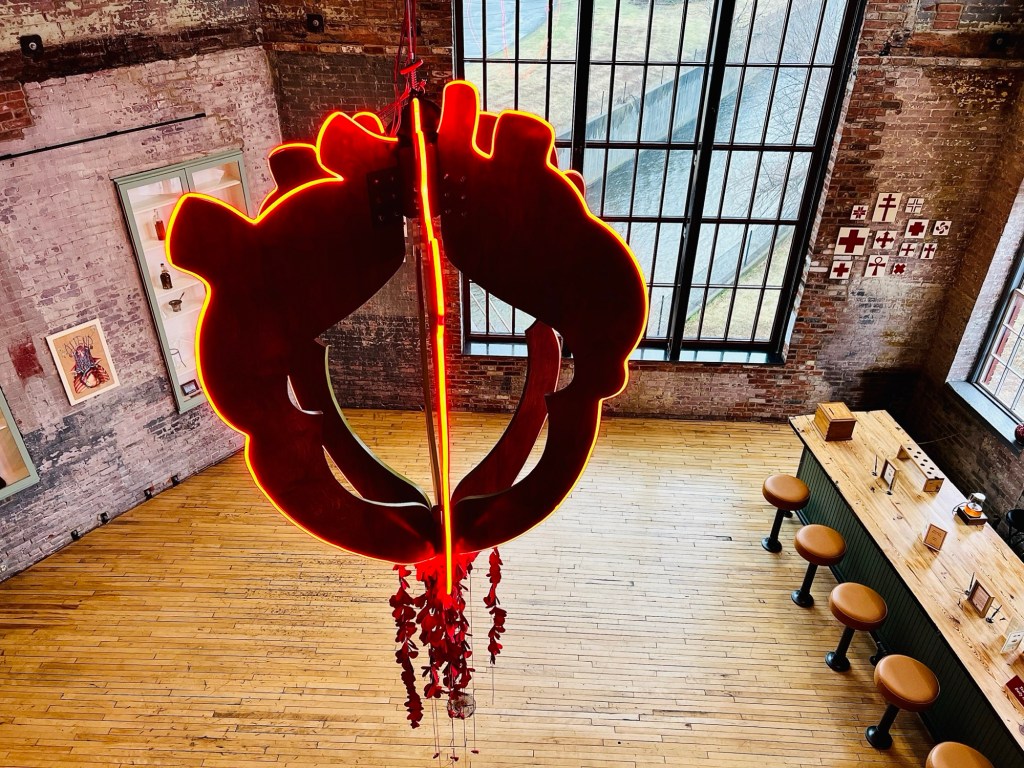
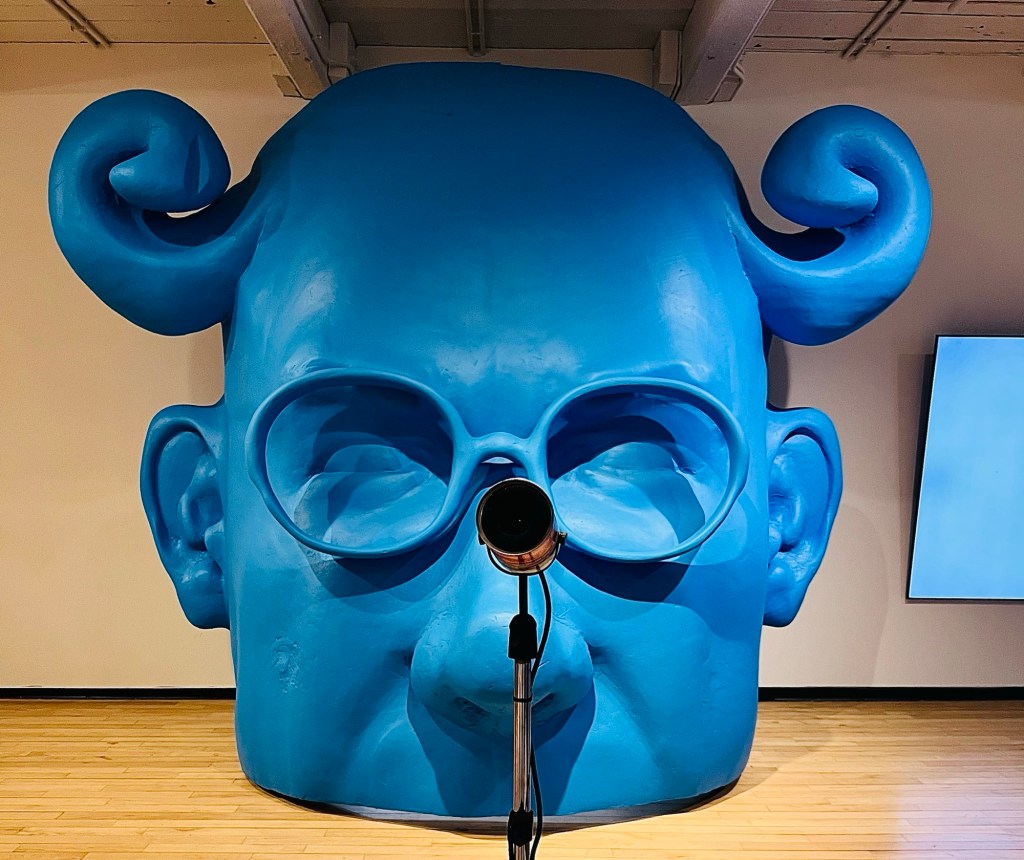
detail: Laurie Anderson, The Weather, Mass MOCA
What I’m Listening To:
Every night Oh, man What you pray? Look out the window It’s Hell out there


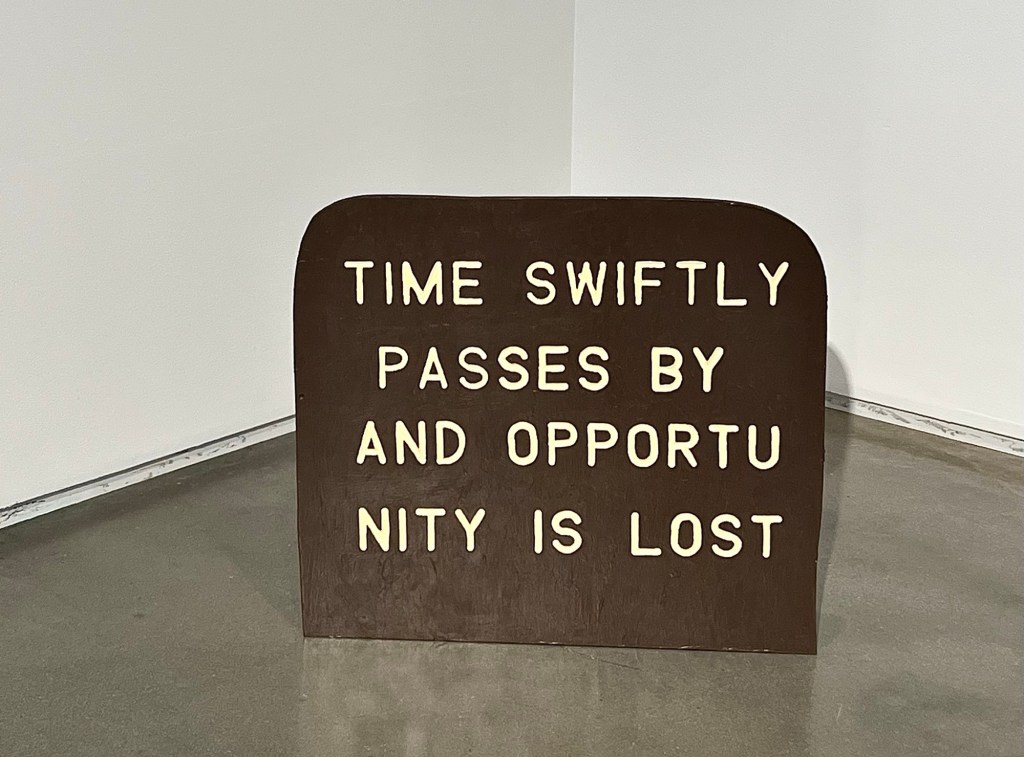

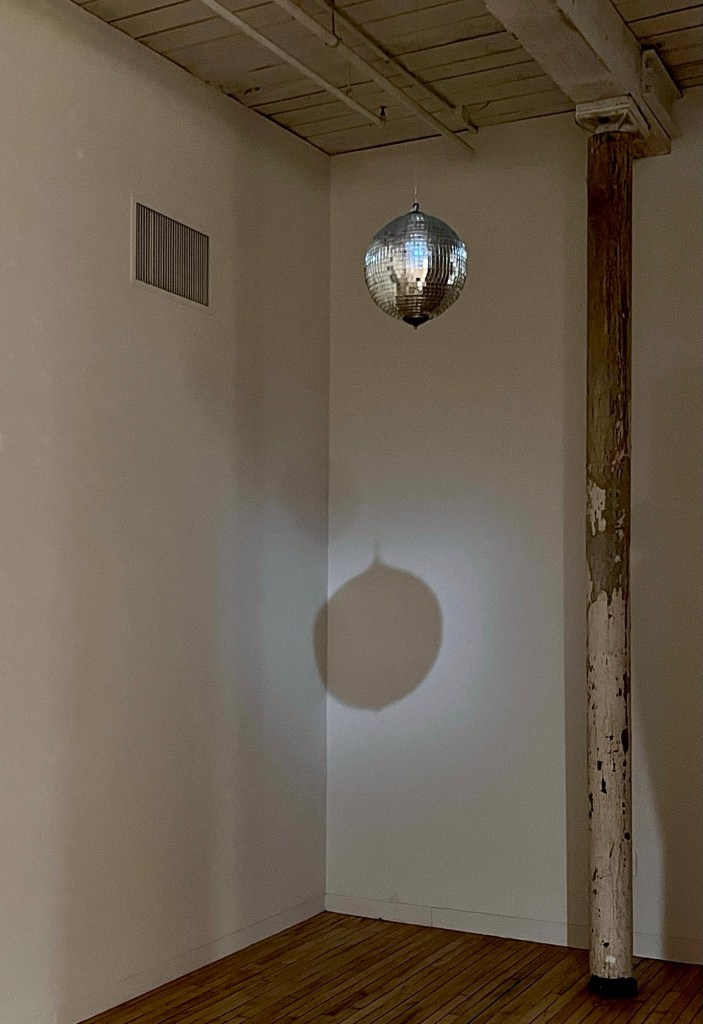




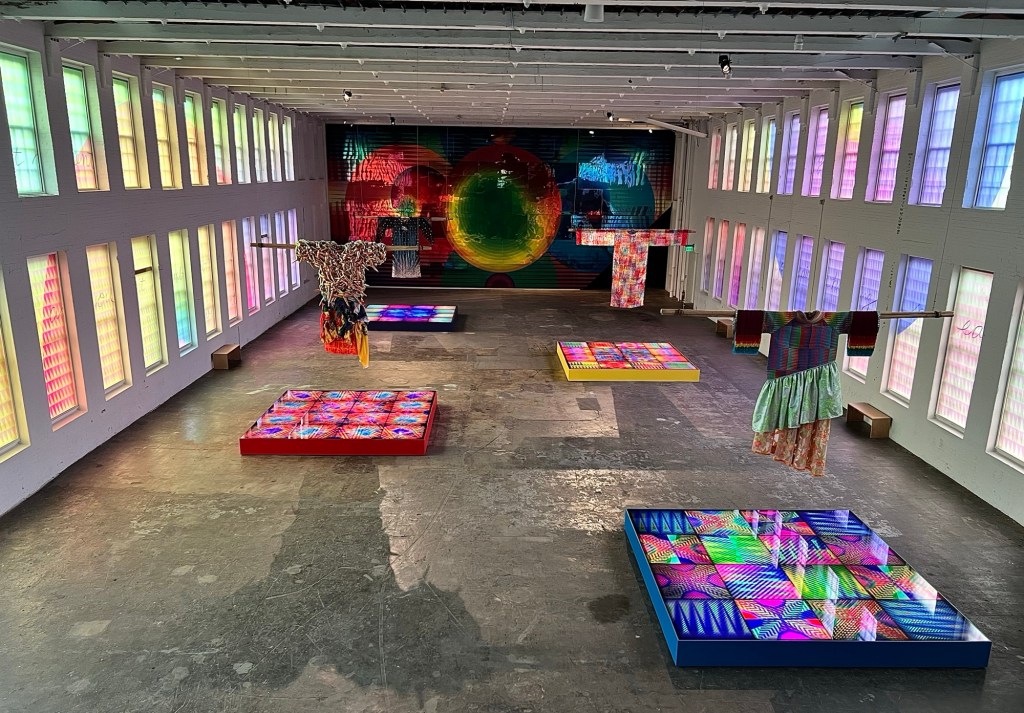

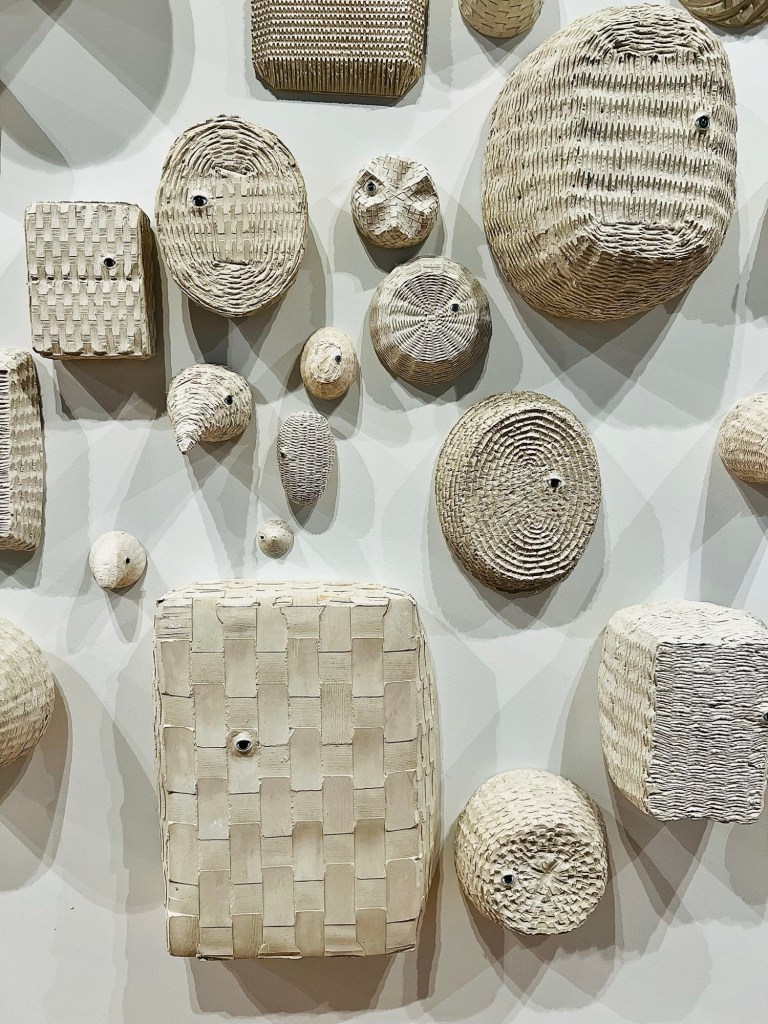
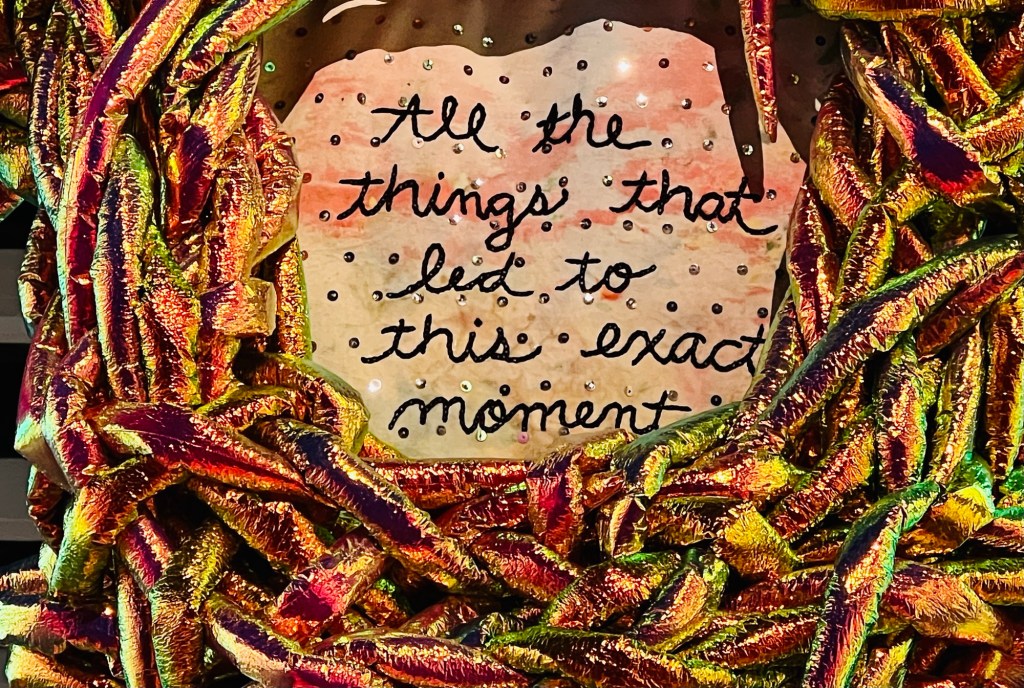
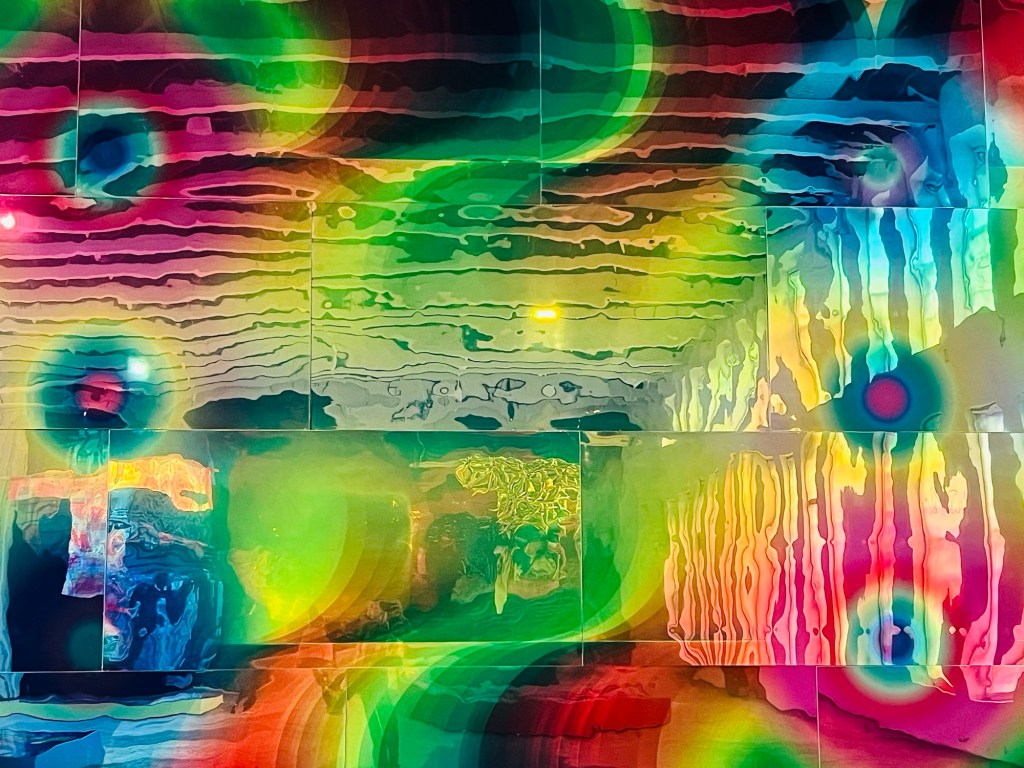

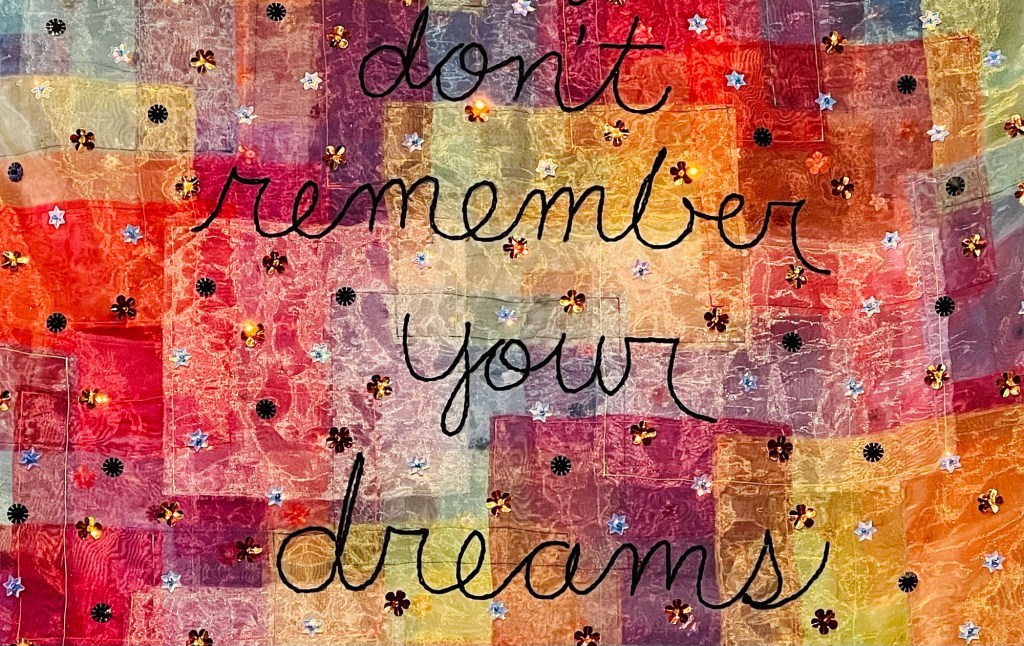





 thee istsfor manity reader