Americans are paying more for appliances, home furnishings, toys and shoes than they were a few months ago, and they could soon face higher prices on more goods as the Trump administration’s latest round of sharper tariffs kicks in.
The newest round of duties took effect Thursday, lifting the average U.S. tariff rate to its highest level since the Great Depression. The move solidifies the president’s trade policy after months of negotiations, meaning more manufacturers and retailers are expected to begin raising prices in short order.
— Jaclyn Peiser / “Cars, coffee and clothing are poised to get pricier with new tariffs” / Washington Post
warp thru the weft wed with the grain watch the disappear(er) nearer to bone than blood
i fit flatly thru thee wall
fall into this encasement incandescent with skeevies sockets of the eyes im defective im deflective listen as i fade out to hiss
What I’m Reading:
Immigrants showing up for court dates in Manhattan must now navigate past rows of masked federal agents … Since the spring, at the federal courthouses in downtown Manhattan, hundreds of officers from ICE and other government agencies have lined the hallways and lobbies, waiting to detain some migrants as they leave their immigration hearings. Many of the agents are masked and armed, and they are dressed in tactical gear, even though all visitors to the buildings must pass through airport-level security.
Dozens of observers, migrant advocates, and members of the press show up each day to witness the arrests, which often take place with little regard for due process. It might not even matter how a judge rules in someone’s case. Migrants seem to be in shock as agents approach; family members might scream or sob as their loved one is taken away.
… A growing number of migrants are now skipping their court dates altogether—and setting themselves up for deportation—because they would rather go into hiding than face the danger and humiliation that Federal Plaza may bring. One can only imagine that this, too, is part of the point.
— Jordan Salama / “ICE’s Spectacle of Intimidation” / The New Yorker Daily
In history there are no control groups. There is no one to tell us what might have been. We weep over the might have been, but there is no might have been. There never was. It is supposed to be true that those who do not know history are condemned to repeat it. I dont believe knowing can save us. What is constant in history is greed and foolishness and a love of blood and this is a thing that even God-who knows all that can be known-seems powerless to change.
— Cormac McCarthy / All the Pretty Horses
will we inherit everything on the internet: miles of sand melted into windows, click
— Nell Wright / “the future”
It’s hard to be knocked down when you’re on all fours.
— Miranda July / All Fours
The smiling moonwoman dips in cloudy swells, And my wan, suffering psyches know new power, Finding their strength in conflict’s tortured hour.
— Else Lasker-Schüler / “Sphinx”
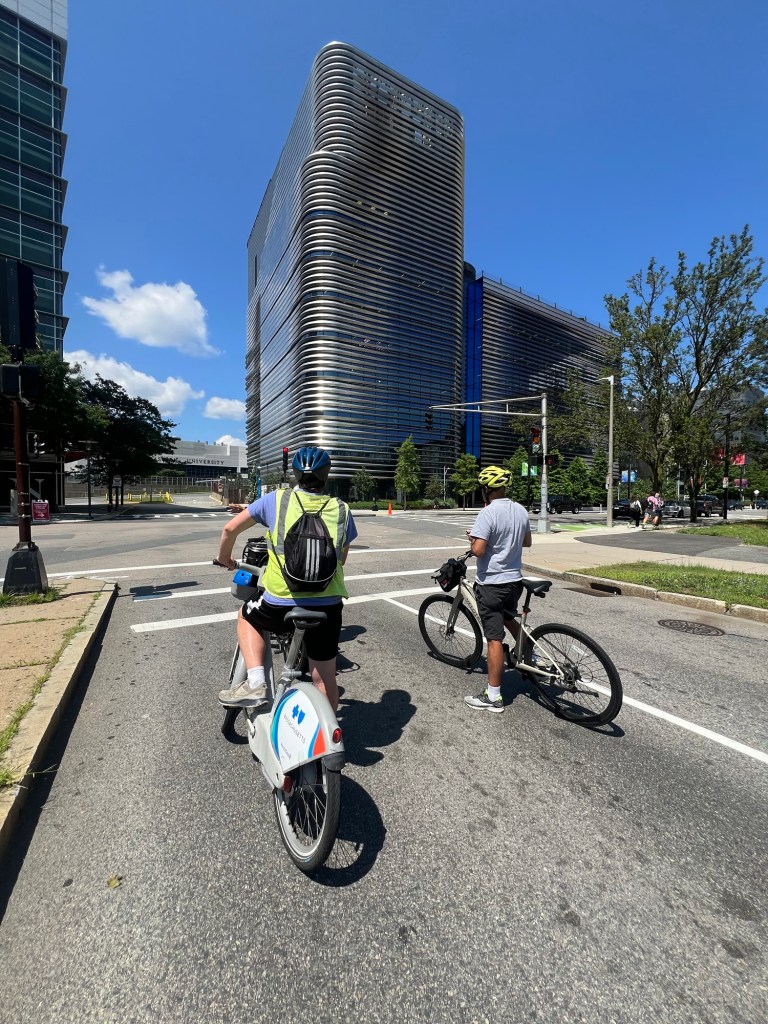
Research shows people break traffic laws across the board—drivers, cyclists, even pedestrians. A 2020 Colorado study found 7–9% of both cyclists and drivers commit infractions. The difference? Motivation. Cyclists often roll red lights for safety—to stay visible, or ahead of overtaking traffic. Drivers usually do it to save time.
And the consequences? A missed signal on a bike might annoy someone. The same in an SUV could be fatal. Context—and mass—matters.
— Ron Johnson / “Your Comeback Guide to all the Anti-Cycling Arguments You’ll Hear This Year” / Momentum Mag
We met ourselves as we came back, And were happy in mist and rain. Our old souls and our new souls Met to salute and explain— That a day shall be as a thousand years, And a thousand years as a day.
— Vachel Lindsay / “Meeting Ourselves”
In the end we all come to be cured of our sentiments. Those whom life does not cure death will. The world is quite ruthless in selecting between the dream and the reality, even where we will not. Between the wish and the thing the world lies waiting. I’ve thought a great deal about my life and about my country. I think there is little that can be truly known.
— Cormac McCarthy / All the Pretty Horses
What I’m Listening To:
Search for conviction With eyes open wide Feeling so restless So empty inside
— No more talk of fish. — Let’s talk about the month long break from writing. — Let’s not. — Let’s write about the month long leave from writing. — Let’s not. — Let’s consider the month long abstinence from writing. — Let’s not. — Let’s… — Let’s not. — Stop. — No need for a post-mortem. — Well… let’s start writing again? — Yes, let’s do that. — Haven’t we already done that by doing this? — This here? — Um… yes. — Yes, I think we have. It’s a start anyway now, isn’t it? — Yes, I suppose it is. — Is that what you think, too? — Yes. Yes, I suppose I do. — Well? — There! — We’ve done it. — Yes. — Yes. We have. — Please pee on me…
What I’m Reading:
What the sadness is like:
You are a sculptor and you cannot move your arms. The marble stares the way desire waits.
— Hossannah Asuncion / “Suspending Disbelief While Brown, Part II”
several dozen residents in 16mm flesh pray tell of inexhaustible human folly
from crossbows and smokes to choral singers and amateur potters
hive terminology in a six- example drawing-room
youve got british east india co. tea ive got ill-fitting small pox blankets
the flesh is a synecdoche of puritan america
all cudgel and capitalist malice without explicit commentary or voiceover
an endlessly hilarious tribute to self-deception and craven will
a particular geographic conceit and manifest delusion
What I’m Reading:
He stood at the window of the empty cafe and watched the activities in the square and he said that it was good that God kept the truths of life from the young as they were starting out or else the’d have no heart to start at all.
the travails of a proletarian exquisitely composed of static fucks
he had none to give
breathing with slow regularity descending into some deeper illusion
trips dark saturated depictions of netherscapes underground in sooty color palettes
all stench and subterranean rank and sweaty
a show fortune trigger finger frozen in time
What I’m Reading:
Looking over the country with those sunken eyes as if the world out there had been altered or made suspect by what he’d seen of it elsewhere. As if he might never see it right again. Or worse did see it right at last. See it as it had always been, would forever be.
1 A hot wattle thing of the new wave—a heel trestle tactician of new sex.
2 A treble tabernacle template … condolences!
3 Heathen tree table temple—tinplated condom.
4 The hot new textile and treetop heating tableau concluded. (normal tempos at operettas not included)
5 The necessary texture of watermarks and towropes. A trek of heaved temptation. (opiate condor forward)
6 The advised necessary heaven tenancy. (refill the tablespoon of conclusion)
7 The hot heavyweight tremolo of the opossum conductor.
8 Thatcher and heckler tremor of the tablet concluded. (tendencies normalized going forward)
9 (a. – e.) Your waterspout trachea. Your tender tabloid resignation. Your conclusive and necessary thaw. Your hectare trench. Thee conduit opportunist.
10 A tendon that should be taboo.
11 Hedge proctor trend-setter, tendril tabulator, theatregoer waterspout in the guise of a chancellor of the exchequer.
12 Hedgehog trespasser—tenement confessor at default opposition.
13 As hot tether and heater treaty—a tempest as scheduled maintenance.
This transmission has concluded.
What I’m Reading:
I go among the stones stooping and pecking like a sparrow, imagining the glacier’s final push resounding still.
where i dont upbraid myself continuously—where john currin paintings dont come to life—where id like to be in some remote place like yellowknife—but as the earth is burning there—and there remains no place to go—that isnt burning—and there remain too many places to go to upbraid my fellow man—because life is one endless upbraiding—i unbraid myself some more—upbraid my boulder—upbraid existence—upbraid the cure— because they remind me of camus—with that song—i even upbraid myself—again—i dont upbraid my curry chicken—because its ethiopian—or should i say eritrean—but as im not certain i upbraid that as well—im upcycling my upbraiding—im braying in my seat right now—as i mute my video and sound on zoom—which i often upbraid—which brings me joy—oh joy—
What I’m Reading:
The whole time you were rising you could not imagine what came next in your particular, unique journey; you could not see around the corner. Whereas falling ended the same way for everyone.
Nobody knows what’s going on. We are thrown across our lives by winds that started blowing millions of years ago.
— Miranda July / All Fours
Yet amid this atmosphere of nationalist triumph, Remnick identifies a submerged sense of dread—and a glimmer of resistance. The writer Etgar Keret attends weekly protests against the government, even as he acknowledges the “nonexistent” political influence of liberals like him. “When we go to the beach, you can hear the booms from Gaza. When you eat a lollipop or an ice cream, you hear things being blown up,” Keret explains. “We are doing horrible things, and it’s important for me that people know I oppose this.” Such expressions of moral clarity are rare, though, in an age of confusion and endlessly contested facts that has been harnessed by the Netanyahu government, which speaks a fluent dialect of the MAGAlanguage of politics. “Not only is reality horrible,” Keret notes, “you also don’t know what the real story is.”
— Ian Crouch / “Israel’s Zones of Denial” / The New Yorker Weekly
I write, “The rope dangling from darkness will execute the enjambment of everything.”
— Garous Abdolmalekian / “How Can I Bring This Poem to a Halt?”
On Tuesday, the Ukrainian president “gutted the independence of his country’s anti-corruption agencies,” Franklin Foer writes. “In the world Trump is building, there’s no need for disguise—corruption is a credential, not a liability”
— Franklin Foer / “Zelensky Learned the Wrong Lesson From Trump” / The Atlantic
Last night the fire died into itself black stick by stick and the dark came out of my eyes flooding everything.
— Philip Levine / “Breath”
Living a moral life in an age of bullies requires collective action; it cannot be done alone. Each of us must organize and participate in a vast network of moral resistance.
This is what civilization demands. It’s what the struggle for social justice requires. It’s why that struggle is so critical today, and why we all must be part of it.
— Robert Reich / “How do we lead moral lives in an age of bullies?” / The Guardian
There was no way to fix it, nothing to open-source; life was just a struggle. It was supposed to be.
— Miranda July / All Fours
What I’m Listening To:
“You’ll figure it out,” is what they say What they say You’ll figure it out But when? But when?






 thee istsfor manity reader