seething altered state

image

film drama is the opium of the masses

dziga vertov’s camera eye
detaches its retina –

click, whir –

a reddish yellow mass
of seething altered state

kino-kism: glowing
white-hot to-blue eye,

the whirring swallows the gray
incandescent sky

“What we remember from childhood we remember forever — permanent ghosts, stamped, imprinted, eternally seen.”

Cynthia Ozick / “The Shock of Teapots”

Posted in Writing | Tagged , , | Leave a comment

eating the universe (redux)

Exiles In the Land of Kakistocracy

I.  A Conversation in the Time of Galamatias:

Our salad days are filled with bitter herbs and intractable roots —
Not so much a salad, but a melange
Of weeds and thistles —
Indelicate things in our mouths.

Every bite a mouthful of rot and offal —
Awful offal.

The kakistocracy is installed in the cupboards
The cups are off on a two week vacation in Wuhan.
We are mystified and malnourished.

Now I’ve had my wine…
And you look better than you did twenty minutes ago.

And you say:
The sky is a massive hole tonight —
My precious lucida is eating the universe:
Inside-out.

I can lay down and go to sleep.

The lights are receding
And the darkness is strangely pleasing.

II.  The Death of Tane:

Then there was the sickness —
So hot.

The vault of heaven darker —
Then darker —
A black sun —
At end.

It was succeeded by the shadow
Of the shadow —
Spreading —
Nearer and nearer to the pin prick
Of light —
Destroyed.

To the west—
distant—
A white effluent
Soft and yielding
Bounds off.

III.  Passage:

Crossing guards cane a woman.
She stopped traffic —
She wore a mask
She needed a cuddle —
She shook —
She hollered:
“You there, take this…”
Her eyes closed.

The wind appeared pink.

“Your mother buggered 
little boys and girls!”

“She’s a ghost,”
My mother said —

“Alone —”
As she squeezed my neck.

“Goodbye,” I cried.

IV.  Coulrophobia In The Land Kakistocracy:

Clowns are spotted in the Carolina gloaming —
Clowns with knives at the edges
Of dark woods.

I met an old man who loved
A woman who —
In whispers —
Had recently died.

He recounted his harrowing nights
Raising his hands at
An unfamiliar country.

Without spotting an actual person —
He spent lonely days
Encircled by clowns —
And a stranger…
We can not discuss.

Painful moments in our pockets.

I saw groups staring up —
Untethered —
Lost —
Exiles.

They looked small in comparison with
This Curious Refraction.

V.  A Violent Force:

Corybantic priests run —
Amuck through prickly weeds —
Bloody hands full of entrails
Chased by their sacrificial lambs and
Headless corpses —
With empty chest cavities —
Whose names were not happily chosen.

Among the monticules of ashes —
Lie dismembered heads
Mouths stuffed with testicles.

And the stranger —
Bright and Barren —
Grows stronger —
Triumphant.

“And I wondered, not for the first time, what patriotism is, what the love of country truly consists of, how that yearning loyalty that had shaken my friend’s voice arises, and how so real a love can become, too often, so foolish and vile a bigotry. Where does it go wrong?”

— Ursula K. Le Guin / The Left Hand of Darkness

Posted in Writing | Tagged , , | Leave a comment

wha’?!

WTF just happened?

Wha’?!

Below you’ll find a book review I wrote yesterday when there was some semblance of normalcy in the ether. I spent the entire afternoon and evening doing what is most inimical to writing — watching history unspool on the tube. Please be wise.

Please be safe.

***

The Year of the Monkey / Patti Smith (2019)

Enjoyable enough memoir from Patti Smith. Spends a bit too much time segueing into dream states incarnate. But even ok Patti Smith is a good enough time with a book.

It doesn’t have the import of Just Kids or M Train, but it certainly has the art, remembrances of things past, literary allusions, loss of loved ones, and globe trotting, and photography of both earlier books (few memoirs do).

I was lucky enough to read my copy while listening to the audiobook (a practice I started with some books last year, and first with Smith’s M Train) because Smith’s voice and reading style are unmatched — well, except maybe William S. Burrough’s who makes a brief appearance here and Tom Waits (who doesn’t).

Another bonus of the audiobook is that where my hardback edition ended with the post-epilogue in 2017, the audiobook which was released in the spring of 2020 included an extra 45 minutes of material up to the pandemic’s early days in the U.S. in 2020, and obviously incidents between 2017-2020. A nice perk of the audiobook. / hardcover & audiobook, 01/04/21.

“I was still moving within an atmosphere of artificial brightness with corrosive edges, the hyperreality of a polarizing pre-election mudslide, an avalanche of toxicity infiltrating every outpost. I wiped the shit from my shoes again and again, still going about my business, that of being alive, the best I could.”

—Patti Smith / The Year of the Monkey


Posted in Writing | Leave a comment

thee only method

How I Became The Scarified Boy (a thingamajiggy)

This takes place everywhere and nowhere at once. At the center of a spin art piece before the paint reticulates out; in manifold dusty, dark spaces; in destitute backyards choked with crabgrass; and Gusman Hall in Miami, Florida.

A father. A son. Supporting players.

Illicit substances, vitriol, a gun, mind control techniques, married people that shouldn’t have been… married, that is.

And here, someplace, we join…

Son:

Don’t twang that pang of that Journey to Ixtlan at me. I believe the interregnum is better than the internecine, and neither are as good as interstices. What do you sing? What do you sing?

Father:

I sing of the sun going out. White dwarf? White dwarf? Pray tell, dying star, where was your fiery giant? This will all disappear someday after we’ve disappeared in an anthropocentric extinction — the sixth great extinction!

(He points savagely at the heavens.)

There will be nothing you can do… do be do be doo… do about that?

Son:

I think you mean to bring me down at the nascent end of the good new year! It’s 1979! Get with it.

Father:

Nope! Look around, look around, you’re already well into the first act of the end. Act two is a bitch! No one has ever seen anything like it.

(He adjusts his Pope’s mitre — a hat that never became him, always slipping off his shaved head. He flings the hat over the backyard fence. He recoups.)

Act three is acid, bitter, and terminal. The dènouement. So out! Out. Out in your bitter boy britches and fasten your seat belt, son. It gets harrowing from here. A goon’s new year to you, boy!

Son:

I fear my grip on reality is tenuous, at best. I grant you that. After all, you pulled a gun on me when I was eleven. You often pulled the same gun on my mother during those hazy rages in our smoke-filled living room.

(A paisley brocade sofa, a large stereo console, and field and stream oils materialize on the busted walls.)

The ash trays were always overfull — the butts were a dark prophecy of lost days to come. The record player always hiccuping from the stylus on the never ending last groove. Pop! Pop! Pop! Johnny Mathis did not soothe your savagery.

Father:

It’s best not to bog down in theories or paralyzing rationalizations. It was what it was. Just something. Your experience may vary, my mileage was fine. I’m here aren’t I? Buck up!

Son:

I never thought such displeasures were possible. Yours, hers, mine. We drowned.

Father:

Oh, yes we did! The best plan was none. Chaos undergirding all designs — it yielded the most mileage per trauma cluster. That hothouse in your skull is full of dendritic knots.

(He swings his arm out like a madcap magician and produces a silk scarf out of his sleeve.)

There will be cold and snowy days; there will be warm and sunny days. I’m here to make sure many of them will be a hell!

Hell— Hello. Helloooo!

(His voice echoes and bounces back from the corners of the warping room.)

Try me, sonny. Go ahead. Try and find me somewhere in the spring of 1981. I disappeared from your life for a reason. Try to shape my thinking. It hasn’t happened since Silva Mind Control — my method is thee only Method! I use it to pick up all the I women want, from 15 to 53!

Son:

Wait! You claim to use the power of mustard seed grain faith to move a mountain, and instead you use it to pick up women? Really?

You claim to control and harness your mind power to dissipate clouds and divert hurricanes. You claim to shoot lasers out of your third eye, and you’ve the power to lay hands-on to cure cancer, and instead of doing something truly useful you’re using it to pick up women?

Father:

It’s useful to me.

***

Two weeks later my father came to my high school graduation with his new wife — an 18-year old woman barely six months older than I was — and introduced her (left to right, in order of largest mouth-agape) to my mother and my gangster stepfather of three months; to my 60-year old grandmother-inquisitor and her mute husband of 6 months; and to my drug dealer uncle and his pregnant 16-year old mistress.

In that fitful din of graduates and families finding their seats, during the opening strains of Pomp and Circumstance, I took out my pocket comb and made the first gouge. The first of a thousand of gouges to come.

I resolved to never marry.

After the graduation ceremony, bleeding from the chest and thighs beneath my graduation robe, I drove to Tijuana and joined the Camacho Brothers’ Freak Show.

“The only unity in this story is, please God, an involuntary unity.”

— Samuel Beckett / Dream of Fair to Middling Women

Posted in Experimental writing, Writing, writing hybrid | Tagged , , | Leave a comment

title & such here

All that

and
the
other
stuff
goes
here…

“We die. That may be the meaning of life. But we do language. That may be the measure of our lives.”

— Toni Morrison / Nobel Prize Lecture

Posted in Uncategorized | Leave a comment

why not gag

erasure poem #1321

freedom, of course, is
meaningless, so worthless
that no one except you cares whether
you are free

others
fail
to care

why not gag?

***

The Left Hand of Darkness / Ursula K. Le Guin (1969)

I checked this ebook out on a whim, it was suggested by my public library algorithm. I wanted to read a full length Le Guin novel sometime this year — I’m was only familiar with a few of her short stories — and I’m glad I acted on the suggestion.

I was surprised by how much I enjoyed this.

I wasn’t certain at first as the opening chapters are full of unknown terms and the “spacey” sci-fi tropes I usually avoid. At first one has to trust that Le Guin will make all the odd terminology and language quirks pay off — and they do. While the narrative is dense with “neologistic” terms, through usage, analogy, and eventual explanation it all works out.

More than the high concepts it’s the story about two beings, Genly and Therem, and how they come to trust, befreind, and love each other, despite their mutual mistrust.

This evolves over a backdrop of space travel and potential alien conflict, but the tale is powered by existential concerns — especially around some very interesting gender issues unique to this new world.

I usually stick with the dystopia and post-apocalyptic sub-genre when I venture into science fiction — especially narratives centered on quasi-realistic earth/human-based scenarios — this book has broadened the possibilities. / ebook & audiobook, 01/01/21.

“It is good to have an end to journey towards; but it is the journey that matters in the end.”

— Ursula K. Le Guin / The Left Hand of Darkness

Posted in Uncategorized | Leave a comment

driving his inner child

Edenic Memories During Jailhouse Enemas

1. His mother and father died when he was 15, and his first super-8 film was of chalk drawings in darkened spaces: where he imagines the poses and places where his people died.

2. On forms and applications he checks the box “Other Disability:”

He writes in the explanation box:

“I’m moderately misanthropic. I hate crowds, and the excessive inane conversation of mindless individuals. It’s an attitude-disorder.”

3. He tells the barista : “l’m a multidisciplinary artist, working at the intersection of physical texture, shadow, and sound.

My works explore what could have been, by tracing the physical gestures and material qualities of everyday things.”

4. He tells the patrolman he’s driving his inner child home after the stabbing.

He talks to other policeman all night long, without stop.

5. When they ask him why he did it he says:

“ I’ve got the KetoFuelDoctor1 tracking me down. He fills my junk mailbox daily! What are you trying to say Doc? Do I look fat in these pants?

Well I am fat, doc! But I don’t want what you’re pedaling.

What the hell is he pedaling?

I’m not clicking on the links in his emails!

But I read the subject lines…”

“The only thing that makes life possible is permanent, intolerable uncertainty: not knowing what comes next.”

— Ursula K. Le Guin / The Left Hand of Darkness

Posted in Uncategorized | Leave a comment

end all couplets

New Year’s Dissolutions:

January

1. The aphelion of milk is me at 4:33 a.m. on January 1st.

February

2. Soliloquies and obloquies in trance and dance at noon on Presidents’ Day.

March

3. The recalcitrance of hair in the alimentary canal on the Ides.

April

4. A Ponzi scheme you will love.

May

5. An internal rhyme to end all couplets.

June

6. Take, take take.

July

7. Graphic blandishments in the Charles Schulz style.

August

8. Spindly spirals of sassafras chutney on Mondays, Wednesdays, and alternating Sundays.

September

9. Scrape out pores… and “Hark, there’s a cough. Oh, do your worst!”

October

10. The best plan is none.

November

11. The old man announces he’s a deterministic Darwinist. (Oh, yes he does!)

December

12. I can’t make sense of his design…

Better start working on next year’s dissolutions.

“The body itself has no use for hope.
It hardens in grief to live beyond hope.”

— Rohan Chhetri / “New Delhi in Winter”

Posted in Uncategorized | Leave a comment

pandemic year reading (pt.4)

A Pandemic Year in Books, (Pt. 4)

 A year in books. A pandemic year in reading.

I suppose that at a certain point this past year — during the second month of the COVID-19 lockdown here in Massachusetts — I must have felt like Henry Bemis, the Burgess Meredith character in the Twilight Zone episode pictured above. That show, appropriately entitled ” Time Enough at Last,”  remains one of the most popular and memorable Twilight Zone episodes ever.

But instead of having all that time available left to read voraciously because I was the last man on earth after a nuclear war, I was just one of the millions of people who suddenly had a surfeit of time to dispose of in whichever way they found fit within the confines of four walls. I chose to read the maximum number of books I could manage in a year’s time. 

I read more than I ever did at any time in high school, college, or graduate school: I read 185 books in 2020.  I finished the last one this afternoon: Poetry December 2020.  

185 books is nowhere near a record — look around on goodreads.com and you’ll find dozens of folks who manage to read 200-300 books a year — but 185 books in one year is my personal record. A record I don’t wish to repeat, because if I have that much time on my hands again,  it would be an augury of bad things afoot in our world. 

My reading resolutions for next year: again, is to read 100 books (2 books a week, really, so 104 books are acceptable) and that 50 of those come from the 185 tsundoku books arrayed about the house. Tsundoku are books that amass in one’s keep, sometimes for years, that go unread.

If you’re not already connected to all the benefits your local public library has to offer —  I strongly recommend availing yourself of services and apps that are offered free through your library such as Overdrive (ebooks & audiobooks), Libby (ebooks & audiobooks), Hoopla (ebooks, audiobooks, movies/tv, and music), RBG Digital (magazines & audiobooks) and Kanopy (films). You’ll never have to step foot in your library, especially helpful during a pandemic, and all you need is an active library card, and those services will provide countless hours of edification and entertainment. I used those services liberally this year.

Ray Bradbury’s advice got me through this most unusual year: “Just write every day of your life. Read intensely. Then see what happens.”

I wish you have a safe and happy new year. It is bound to get better.

Thanks for stopping by and reading in 2020. All the best to you in 2021!

***

Below I share with you what I read this year: by month, title, author, year of original publication, a brief response to the book, the format of the book, and the date I finished the book.

(Note: I often read 3-6 books simultaneously (sometimes more) — high school and college style — and that accounts for sometimes finishing fairly long books in such close temporal succession)

This is what I read this year.  This is Part 4, October – December:

October

A Burning / Megha Majumdar (2020)

What resonates most with me is that despite the specific locale and culture this book depicts situations that are universal. Raw political power, class chauvinism, and human determinism will steamroll over the unlucky and the unfortunate — it’s the same the world over. No matter the country or the “-ism” in practice. And it’s a very good tale to boot.

The braided story form is ambitious and very well done. The time Majumdar takes to develop the characters, add dimension, and allow the narrative to unspool on its own particular timeline, belies that this is a debut novel. 

So well done and deserving of consideration on the Booker Prize shortlist and the National Book Award. It’s heartening to see/read A Burning in light of some other underwhelming and overhyped books. 

I look forward to whatever Majumdar has on deck next. / hardcover, 10/01/20.

Zen Pencils: Creative Struggle / Gavin Aung Than (2018)

Enjoyable graphic retelling of inspiring quotes, life experiences, and “aha!” moments from some of the greatest artists, writers, painter, scientists, etc., including 8 helpful daily rituals from Than himself. / ebook, 10/06/20.

Upstream: Selected Essays / Mary Oliver (2016)

An excellent collection of essays, usually keeping the natural world in the forefront. Oddly, I found the only somewhat flat parts to be the middle section essays on writers: Emerson, Poe, Wordsworth, and Whitman — all good, but not what I wanted which was Oliver’s unique views on the natural world and juxtaposing it with the human condition. Great read. / ebook, 10/08/20.

The Body Keeps the Score: Brain, Mind, and Body Healing of Trauma / Bessel A. van der Kolk (2014)

Important book about the trauma/brain-behavior circuit. Effectively shows how trauma leads to physiological changes (re-wiring) in the brain, and how it leads to less than ideal outlooks and behaviors. The author provides different approaches/disciplines to dealing with these difficulties and how to go about achieving equanimity. / ebook, 10/09/20.

The Glass Hotel / Emily St. John Mandel (2020)

I really enjoyed the temporally disjunctive narrative and the convolutions of the plot, and how eventually all the loose ends come together in denouement. 

The trip back to 2008 and the Madoff-like ponzi was bracing — the horror as everything seemed to be in meltdown… wow, sounds familiar 12 years later.

Anyway, really well done. A gripping yarn. I like that we don’t always get what we want — tha’ anti-Hallmark is always welcome. Emily St.‘s got it going on. / ebook & audiobook, 10/10/20.

Catching the Big Fish: Meditation, Consciousness and Creativity / David Lynch (2006)

What’s not to like? Plenty of factoids about most of Lynch’s films, his meeting Fellini and Lynch’s favorite films; his time in art school; a great account of how TM has helped Lynch creatively and through life (this is not a how to meditate book or how to do TM, go elsewhere for that); and plenty of theory on how to be creative via an extended fishing metaphor. 

I read the physical book while listening to Lynch read it on Audible and it was a treat. Lynch’s deadpan quasi-whine is pitched perfectly over the proceedings. 

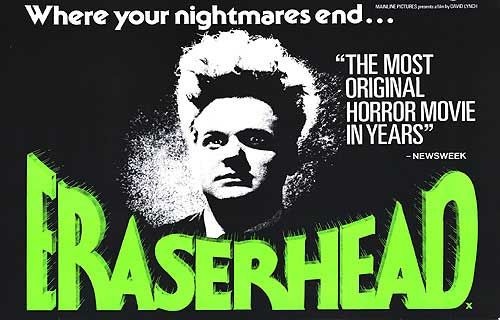
I’m a huge Eraserhead fan, and it was fun to be reminded that it was once Kubrick’s favorite film. 

Very quick read or listen, but concentrated with good stuff. Definitely “a must” for Lynch fans. / ebook & audiobook, 10/11/20.

Midnight in Chernobyl: The Untold Story of the World’s Greatest Nuclear Disaster / Adam Higginbotham (2019)

Very well researched and chilling story of the Chernobyl disaster. Deep background on the USSR’s secretive nuclear program and the culture that led to the disaster. Expertly told and written. Hard to put this book down. / ebook, 10/14/20.

Dada & Surrealism for Beginners / Elsa Bethanis, Peter Bethanis, & Joe Lee (2007)

Yes, for beginners, but still entertaining and has the added benefit of the graphic illustrations. / ebook, 10/15/20.

To You We shall Return: Lessons About Our Planet from the Lakota / Jospeh M. Marshall III (2010)

Very enjoyable ruminations of a Lakota childhood; sobering reminders of hateful hegemony; and a paradigm for living in unison with the earth and each other. I’m not hopeful, but I am grateful for those who are. / audiobook, 10/16/20.

Leave the World Behind / Rumaan Alam (2020)

For me this was almost a perfect novel. At its best it reminded me of what I love so much about Waiting For Godot, The Myth of Sisyphus, or even Eraserhead. Except the absurd and existential here is married to a novel of mores. There is never truly an ability (or need) to know everything when one finds oneself in an existential quandary, only that one has to act — or not.

Alam is masterful at brining an omniscience in on occasion to comment on what is going on — or maybe going — in the wider world. There are plenty of absurd moments, and a fair amount of serious social commentary implied. 

I don’t really enjoy how certain sex scenes are rendered — while I have nothing against such scenes — I don’t enjoy knowing how cum goes down a particular character’s throat, et al. This is market driven stuff, crass calculations made by a writer that doesn’t need to do so. I don’t enjoy Sex in the City intruding in this great narrative. These are the only jarring moments for me. The rest of the suspense (which I feel is of a literary, not potboiler bent) is expertly done. 

This is the first of Alam I’ve read. I have no interest in reading his first novel — it sounds precisely like the made for market tripe I like to avoid. And if going forward this is the sort of work and issues he takes on, I will be an expectant reader.

Really very good. It could also be a perfect work of theater or film (or limited series) if done well. I would be shocked if this isnt already optioned to be filmed or adapted. Doesn’t skrimp on intelligence or excellent characterization. 

A near classic, and certainly a perfect work for our times. 2020 in a nutshell. / ebook & audiobook, 10/17/20.

The Sun Is a Compass: A 4,000-Mile Journey into the Alaskan Wilds / Caroline Van Hemert (2019)

Amazing adventure. The sometimes super-heavy navel gazing is tempered by the truly expert nature/expedition narrative. 

I learned about birds I never knew existed — E7 the legendary godwit? seriously?! — and what true affinity to one’s calling can be like. And an incredible long distance adventure to boot — with some of the gnarliest close animal encounters I’ve ever read about. 

The images are great too. It’s nice that Van Hemmert sorted it all out. Btw/ she and Pat built an incredible looking cabin. He’s got some serious design chops. / hardcover, 10/18/20.

Tender is the Flesh / Agustina Bazterrica (2017/2020)

First translation in English. Memorable book. Memorable characters. Memorable scenes.

There are a handful of chapters in the first third of this book that are among the most hair-raising and creeped-out pages I’ve ever read. I don’t think this is merely a genre book (horror/sci-fi) that would diminish it. 

This is a book about big ideas akin to 1984, but its main conceit, I think, holds it back from being a classic in the same vein — it’s just so unsettling on a visceral level.

But it is an outstanding book, and it’s guaranteed to stay with you long after reading. The deadpan declarative approach makes it all the more unsettling. 

“Soylent green is people!” will, in retrospect, seem merely a cavil after this. 

Great mind. Great writer. / paperback, 10/20/20.

Dream of Fair to Middling Women / Samuel Beckett (1932/1992)

This took a month to read. It was a virtuosic slog.

It’s hard to believe that the same man who wrote Godot, Endgame, The Unnameable, anything post-1946-48, is the person who wrote this.

The first section reads at times like a dada confluence of glossolalia & logorrhea meet Gertrude Stein. Wow! The prolixity, the dam break of allusions and proto-eurotrash pre-jet set flotsam… seriously, it was a slog — five or six pages at a time.

Imagine The Wasteland without the end notes over 241 pages. No wonder he didn’t want this published during his lifetime. 

It’s not bad at all, but it defies Beckett-ian expectations. My favorite work of lit is Waiting For Godot, and while this has some of the same sensibility it has none of its economy or deadpan style. It’s funny, yes, but in a sophomoric way. 

It is such a showy work — in modernist style: disjointed narrative, excessively allusive, stylistically disjunctive. I would have enjoyed this as an undergrad if it had been published then.

I mostly enjoyed it because it’s Beckett. It’s at turns intelligent, funny, and flummoxing. Did I mention it was a slog? / paperback, 10/21/20.

Beckett in 90 Minutes / Paul Strathern (2004)

I read this because I love Beckett’s work, but mostly because I’d just finished Dream of Fair to Middling Women. I wanted more insight on that work. I got it; it’s a short passage, and then I was reminded why I love Beckett so much. And I learned some great new stuff too, especially about his life and the manner in which Suzanne Dechevaux saved his career and by extension his life which seemed at a complete standstill. A very good introductory look into Beckett’s life and work — warts and all. / audiobook, 10/21/20.

Journal of a Trapper: Nine Years in the Rocky Mountains, 1834-1843 / Osborne Russell (1921)

One of the rare books of this type that admits that the depredations inflicted by white men on the fauna of the west was a terrible mistake, but it’s only one sentence toward the end of his time in the western lands — and he certainly had no compunctions about killing the numerous Indian people already there. 

The main drawback of “journal” narratives is that in most cases they’re really not. They’re just a quotidian accounting of events, often laconic, e.g.,November 1 — camped by the Powder River. Eight inches of snow fell. November 2…

These books still offer a look back at the exploration (though it’s mostly extirpation of Indians, beaver, and bison) of a previously pristine and changing landscape, and that’s why they attract, but too often it’s a look back in horror. Nonetheless, it doesn’t detract from Russell’s intrepidness and determination at making a life for himself (at too great a cost, I believe). We can’t change history. We can only hope not to repeat our terrible mistakes. / ebook, 10/21/20.

Schopenhauer in 90 Minutes / Paul Strathern (1998)

I got more of Schopenhauer in this 90 minute gloss than I did in a semester-long undergraduate Intro to Philosophy course at a Jesuit University.

It’s a good departure point for further exploration if one is so inclined. It’s odd how the same mind can conjure such bright and exacting views on existence and still have room for misogyny, racism, and anti-semitism. 

It’s a good introduction that doesn’t really touch on much of the latter, but the older I get the harder it is to parse and rationalize any of that away. 

I did “jump off,” read a little more and found that I don’t need to spend more time with Schopenhauer than this.

This for me is the best of Schopenhauer:

“Our life is not only short, but our knowledge of it severely limited… our consciousness is a momentary flicker in the midst of night…”
— Arthur Schopenhauer / Parerga and Paralipomena

audiobook, 10/22/20.

Big Magic: Creative Living Beyond Fear / Elizabeth Gilbert (2015)

I haven’t read any other Elizabeth Gilbert. Eat, Pray, Love seems like the sort of book tailor made for the Hallmark Channel… no, thanks. Someone suggested I read this. Gilbert has a lot of intelligence and experience when it comes to creativity and the discipline of writing. I enjoyed her take on art. / ebook-10/24/20.

Averno / Louise Glück (2006)

Amazing poet. Now a Laureate. Fantastic collection. “Telescope” is one of my all time favorites. paperback, 10/25/20.

Nothing to See Here / Kevin Wilson (2019)

An absolute hoot! Fantastic voice and persona throughout, odd characters, and absurdly surreal kiddies catching fire. Good stuff. I’m going back to read earlier Kevin Wilson. / ebook & audiobook, 10/26/20.

My Morning Routine: How Successful People Start Every Day Inspired / Benjamin Spall & Michael Xander (2018)

Curious to see what others do, but didn’t represent enough artists and writers — more CEO’s and business folk than engaged my full interest. Still full of some practical and useful info, and a couple of bizarre folks and routines. / audiobook, 10/31/20.

November

The Body: A Guide for Occupants / Bill Bryson (2019)

Bryson does as marvelous a job with our human bodies as he did with Australia, the year 1927, the AT, et al. He makes any subject engaging and witty — especially when it comes to his own life. An amazing mass of information reintroduced and made more interesting than any high school or college class on the same subject. / audiobook, 11/01/20.

Intimations / Zadie Smith (2020)

Life in the time of pandemic. The closing essay is astounding and worthy of canonizing. All dealt with the pandemic in one form or another, so it’s topical. But a few were slight. I did not enjoy the “Intimations” postscript thingamajiggy that does more for the writer than it does for the reader. Still good stuff overall. / ebook, 11/03/20.

A Field Guide to Getting Lost / Rebecca Solnit (2005)

Always an entertaining and educational experience reading Solnit. Loved the strands throughout the collection about her days as a youngster in San Francisco and being a denizen of punk and alternative film movements. All “The Blue of Distance” essays were excellent. Great book to get “lost” in. / ebook, 11/06/20.

Poetry October 2020 / Holly Amos (ed.) (2020)

Enjoyed the poems of Nathan Spoon, Adrienne Su, Katie Hartsock, and Nikki Wallschlaeger, et al. / paperback, 11/07/20.

Look: Poems / Solmaz Sharif (2016)

Excellent and difficult collection that reads like a litany of the worst types of iniquities and death that we rain upon each other — specifically as it relates to war and the delusions the US operates under as it moves through the world with its awful logic and nomenclature. Searing stuff. / paperback, 11/09/20.

Several Short Sentences About Writing / Verlyn Klinkenborg (2012)

Use this book as a soporific.
Successful?
Yes.

It’s loaded with good advice, tho… (just broke two rules) / audiobook, 11/14/20.

The Violent Bear It Away / Flannery O’ Connor (1960)

Has all the elements of O’Connor’s masterful storytelling ratcheted up to “11.” Imagine Wise Blood on steroids and you’ve got the Tarwaters of Powderhead, TN. She took many of the concepts she first explored in Wise Blood and took them to their (ill) logical and more violent conclusions here. / ebook & audiobook, 11/15/20.

The Harpy / Megan Hunter (2020)

Amazing narrative of the inexorable breakdown — and liberation (of sorts) — of the narrator Lucy Stevenson. Her husband Jake’s deception leads to Lucy’s quasi-surreal transmogrification that explodes every aspect of her acculturated life as a housewife / mother. Great counterpoint in the narrative. / ebook, 11/18/20.

Verge: Stories / Lidia Yuknavitch (2020)

This may be the most disappointing Yuknavitch book I’ve read — I’ve yet to read them all, this is the fourth I’ve read — it’s nonetheless an OK book. Some stories are excellent, strange, and evocative (exactly what one expects from Yuknavitch) — “The Pull,” “The Organ Runner,” “Cosmos,” “A Woman Refusing,” are examples.

Other stories in this collection feel bloated and overwrought, despite the short word counts. It’s up and down with this collection. Many more “down beats” (narratively repetitive moments) during the last half: “Shooting,” “A Woman Apologizing,” “Second Coming,” “How to Lose An I,” et al. 

I left with a feeling of tawdriness and underachievement I never felt during The Chronology of Water despite the similar themes and incidents. It read as “one notey” on the way out. / hardcover, 11/21/20.

The End We Start From / Megan Hunter (2017)

Nothing else quite like it. I’d read Hunter for the first time a few days prior when I finished The Harpy, which was very engaging with its quasi-surreal story and braided narrative approach. This is even more engaging (I thought) in its sparse narrative and poetic flourishes, and I enjoy how Hunter counterpoints the narrative here with mythological jump-cuts (of sorts). At times reminiscent of the best qualities I enjoyed in The Road (the narrative sparseness, the lack of a certain knowledge, and the wandering through an end times event with child) Children of Men and a touch of The New Wilderness which this is far superior to. Keen to see what Hunter cooks up next. / ebook, 11/22/20.

Poetry November 2020 / Holly Amos (ed.) (2020)

Oy! on the verge of cancelling my subscription to this journal.

I did love the Avery R. Young and Vanessa Stauffer. / paperback, 11/24/20.

December

The Precipice: Existential Risk and the Future of Humanity / Toby Ord (2020)

We’re in for some hard times ahead, and yet Ord ends up feeling more optimistic than not about humanity’s chances. The first five chapters are riveting, then the book loses steam in a chapter devoted to statistical analyses, and never really regains its form, despite some pragmatic ideas. Worthwhile read. / audiobook, 12/11/20.

The Orchard Keeper / Cormac McCarthy (1965)

Big fan of the author’s “mature style.” This reminds me of Samuel Beckett’s first novel, which I recently read, lots of flash and style (it’s painfully detailed natural descriptions here) and a far cry from the “weight” and ascetic quality of later work. Still, it’s McCarthy and worth the time. Just don’t expect No Country for Old Men or The Road style McCarthy. / papaerback, 12/12/20.

How to Break Up with Your Phone / Catherine Price (2018)

Practical advice about putting the blasted “devil machine” down… for a bit, anyway. / ebook, 12/13/20.

1968: Eye Hotel: A Novella / Karen Tei Yamashita (2014)

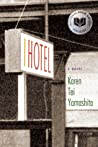
Interesting reading, great sense of time and place, and a very engaging look at this cultural milieu. Don’t know if I’ll read all ten, but will definitely read 1970: I Hotel next. / ebook, 12/16/20.

1970: “I” Hotel: A Novella / Karen Tei Yamashita (2014)

Engaging look back at the height and the start of the wane of radical countercultural philosophy and just how hard it was to make pragmatic. Riveting characters here. / ebook, 12/18/20.

1974: I-Migrant: A Novella / Karen Tei Yamashita (2014)

The most engaging section/novella in the first half of the massive I Hotel. The histories of numerous emigres, mostly Philippine in this section, overlaid on the the history of the first half of the 20th century. Rich characterizations and development. Very good. / ebook, 12/19/20.

MOME Vol. 10 / Eric Reynolds (ed.) (2008)

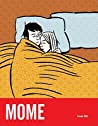
Interesting anthology, good variety of artists. Wonderfully askew. But admittedly hit or miss. Favorites were “The Five Oracles of Gossip” by Ray Fenwick, Jim Woodring’s “The Lute String, part 2,” and “Life with Mr. Dangerous, part 8.” Too much Sophie Crumb for my palate. I really enjoyed the interview with Tom Kaczynski more than I enjoyed “Phase Transition.” Good read. / ebook, 12/23/20.

The Best of America: Seven Classic Short Stories / Washington Irving, Nathaniel Hawthorne, Edgar Allan Poe, Louisa May Alcott, Mark Twain, Ambrose Bierce, O. Henry (2012)

All classics, indeed — except Alcott’s “Mermaids,” which was the only story here I was unfamiliar with, and better suited for an 8-year old girl, the reading was so treacly, and the story despite being a child’s story was as dull as could be. Most of it purple prose, but I suppose the best of American purple prose. / audiobook, 12/24/20.

Daily Rituals: How Artists Work / Mason Currey (2013)

Re-read. Piecemeal reading works best here, I spread it out over two months this time — reading about the working routines of others is very interesting but could make for a dull book if read in a two day session. Making a daily ritual of Daily Rituals works very well. Illuminating, intriguing, and always fun to compare others working routines to your own. / hardcover, 12/25/20.

The Writing Life / Annie Dillard (1989)

Re-read. A fitting bookend read. This is one of the first books I finished after the outgoing President’s inauguration, and one of the last I’ll read at the end of his pathetic term. Just to say, I enjoyed it so much more this time around in this cultural milieu. 

Dillard’s book revealed much more of itself this time around. I went into it the first time expecting a direct engagement with the writing life(as Anne Lamott, Walter Mosley, and Stephen King did in their books about the writing life) e.g., practicalities, how Dillard did this and that, her approach, etc., and there is that here, but in a more subsumed form. It is is a much more poetic book that engages creativity on a grander scale, not merely the practicalities of the art/discipline. 

As I was expecting this approach on the second read (nearly 4 years later) I was able to take more from it. It’s quite a marvelous book about the creative life, and naturally “the writing life” is part of that too. / audiobook, 12/29/20.

This Year You Write Your Novel / Walter Mosley (2007)

Re-read. I still consider this one of the best and most encouraging books on writing. Mosley’s focus is on the novel, but his approach to writing is good for any discipline one attempts. I think this re-read begs a re-read next year of Mosley’s Elements of Fiction, which I read earlier this year and was disappointed and confounded by — must have been the virus in the ether. This is a top 3 book on writing — along with Lamott & King’s entries in the subject.

Poetry December 2020 / Holly Amos (ed.)

That’s the way you finish out the year — with the best issue of the year! Noor Hindi’s “Fuck your Lesson on Craft, My People Are Dying” is the best among an excellent selection of poems from Brayan Salinas, Agne Minko, A.D. Lauren-Abunassar, et al. / paperback, 12/31/20.

“Oh, there is a hell coming that is incomprehensible to people—we’re going to lose a lot of people. And the government is not going to get us through, and the business mind is not going to get us through. We’ll have to learn to take care of each other locally and wait for that to spread from one community to another. But I think it’s possible.”

— Barry Lopez / Sierra, interview, August 20, 2019.

Posted in Uncategorized | Leave a comment

pandemic year reading (pt.3)

 A Pandemic Year in Books, Pt. 3

A year in books. A pandemic year in reading.

Above you see the the tsundoku pile that lived atop my nightstand for most of this year, and in the photo below: the bottom shelf of my nightstand, where I didn’t touch a single book in that tsundoku pile this year. They’re both there to be reduced next year.

The odd thing about the image above is that 7 of those 12 books I purchased this year — 3 of those were published this past summer. As I read books off the pile I acquired new ones that took their place, and therefore spun my reading wheels in place.

I purchased 2 of the books in the picture below this year, the rest I’ve owned anywhere between 2 to 28 years. A tsundoku 28- years old(!) and there’s yet an older book I own that I’ve yet to read. I know that’s the case for many book lovers — we’ll eventually get to them.

Working on this list some trends became evident. Starting in February and lasting through mid-summer I read many books about plagues, pandemics, epidemics, and infectious diseases; then sometime in mid-summer I segued into post-apocalyptic themes and dystopias.

And what I think is really odd is that I’ll get books I really want to read when they’re published and they’ll often sit on the shelf for a year (or more) as I’m open to reading whatever piques my interest at the moment, despite what I had set out to read. I’ll sometimes read half-a-dozen books simultaneously, and if I’m not enjoying a book I started at the beginning at the month, I might finish the five other books before the one I’m not enjoying s — and maybe drag it into the next month and finish 10 books before finishing the one I’m having issues with.

I really try to finish a book once I’ve started it. I’ve read the synopsis, maybe a couple of critic’s blurbs on LitHub or Book Marks, certainly the book jacket remarks — so I know I want to read it. But on occasion I hit a wall with a book that I just can’t finish because it feels like a waste of time and there are so many books out there (mostly on my nightstand and bookshelves) waiting to be read. So a couple of times a year I DNF (do not finish) a book — but only after I read well past halfway (usually 65%) — because if you get that far into a book and you’re still not wringing anything from the experience it’s time to move on. That only happened twice to me this year with People of Paper and Vernon Subutex, two books that seemed to be right in my wheelhouse.

Anyway, below is what I read this summer trimester; a summer of no travel but lots of reading.

And even if there were travel and vacations there would have been plenty o’ reading — just not this much. I believe reading is an imperative. The great Werner Herzog said it best:

“Read, read, read, read, read. Those who read own the world; those who immerse themselves in the Internet or watch too much television lose it… Our civilization is suffering profound wounds because of the wholesale abandonment of reading by contemporary society.

***

Below I share with you what I read this year: by month, title, author, year of original publication, a brief response to the book, the format of the book, and the date I finished the book.

(Note: I often read 3-6 books simultaneously (sometimes more) — high school and college style — and that accounts for sometimes finishing fairly long books in such close temporal succession)

This is what I read this year.  This is Part 3, July – September:

July

Fruit of Knowledge: The Vulva vs. The Patriarchy / Liv Stromquist (2014)

Chock full of recondite knowledge: some funny and plenty that is enraging. How stupid we (men) are — or really, the patriarchy is. So much useless pain and loss, but presented and drawn fantastically by Stromquist. Really well done. / e-book, 07/02/20.

Devolution / Max Brooks (2020)

I suppose this is more disappointing than not due to my expectations. I was a big fan of his previous book World War Z.

A very clunky structure here, very limited and strained POV (given what Brooks is trying to do) and the narrative flow suffers for it. It feels filmic (was there an eye to a film deal already roiling in the mind) and not very literary. But that’s OK if it’s done well. This isn’t that well done.

It’s hard to conceive that especially into the second week of the siege that Katie would still be journaling in the fashion she does, but it’s not just that it gets in the way of willing suspension of disbelief it’s also the unlikely changes in character so many of these people undergo, without justification. 

The characterizations are mostly flat — and there have been many central characters in lit that have been unsympathetic, but most of these characters (except maybe Mostar) are so one dimensional — due to the structural conceit — as to be uninteresting. 

I was hoping they’d all get drawn, quartered and consumed quickly so that maybe Katie might become truly dimensional via the intense self-reflection (that most journaling becomes) as opposed to a mere journaling narrative.

And many of the McCray and Schelling “interviews” are shoehorned in at such inconvenient places — ostensibly to add context — but become narrative burps. So much that what should be narrative becomes quick exposition. 

And that pages long IDF book quotation/insertion so late in the story is really incongruous, it may be thematically congruous, but it really sticks out like a Frankenstein suture.

But Brooks knows how to write thrilling scenes and set up good cliff hanger like episodes. It didn’t matter that I knew I was sometimes reading cheesy writing he still had me hooked — and that’s worth something. The sign of good craft, despite of all the “sewing mistakes” and obvious suturing. 

I read it in two sittings and I wanted to get to the resolution — that’s the sign of a writer who is on to something. It’s just not really very good literature — but a good yarn told at turns well and very “clunkily.” / hardcover, 07/04/20.

Pale Horse, Pale Rider / Katherine Anne Porter (1939)

An excellent Modernist fever dream. / e-book, 07/05/20.

Midnight’s Children / Salman Rushdie (1981)

Too many notes…
Baroque-o-rama…
So-o-o-oh-oh Rococo…
At turns masterful, brilliant and amusing and yet wearying, taxing, and so full of its own unusual self. Quite an experience. Quite unlike anything else — like G.G. Marquez on steroids! Amazing and frustrating all at once. Oy! / ebook, 07/07/20.

Vernon Subutex / Virginie Despentes (2015)

DNF’d 16 chapters in — about 65% of the book. More and more vapidities, torrents of insipid characters, and just plain “dumbassness” caught up in a eurotrash toilet bowl eddy. I had to bail out on this, there are too many good and middling books out there to justify spending any more time with Vernon’s traipsing through the vacuous Paris scene. 

Yeah, we get that these people / “scenesters” are supercilious and shallow but make the damn thing interesting! Wait, don’t tell me, all the interesting characters and situations show up in Chapter 17. Ah, well…

God damn! this was insanely imbecilic. Frustrating.

And the worse thing transgressive lit. can afford to be is dull. And this got dull quickly! Not a whiff of Burroughs, Acker, or even Allemann about.

For all its purile reaching and trying this was just incredibly stupid. Booker short listed?! (what acid was passed out on that jury?) 

This got worse and more uninteresting the further it went along, until it became like an abscess on the back of your throat that you just have to lance immediately to stop the pain… unfortunately some of the pus manages to dribble its way down your esophagus.

I stuck around waiting for the pivot… it never came through 16 chapters… and… I didn’t want to devote anymore time to this abortion. I can’t say “stupid” enough in relation to this “schlocky turd.” / ebook, 07/08/20.

Little Brother / Cory Doctorow (2008)

The concept was great. The writing and situations at turns good and sophomoric. And the deus ex machina in chapter 20 and the lacking denouement — but then again the multipart series is paramount — nearly ruined a decent yarn. Not a good enough flourish at the end to interest me in the rest of the series (won’t be reading it) but a topical tale in its time. / ebook, 07/09/20.

Revolt. She Said. Revolt Again. / Alice Birch (2017)

This Play Rages! This is righteous. This is anarchic. This is absurd. And this deserves to be seen (it reads like it), but alas I’ve only read it… maybe it’s out on the intertubes somewhere? Anyway, very good stuff! Ends brilliantly, especially Acts 3 & 4.

“It failed. The whole world failed at it. It could have been so brilliant. How strange of you not to feel sad. 
Who knew life could be so awful.”

Nails it all! / ebook, 07/10/20.

Thank You for Voting: The Maddening, Enlightening, Inspiring Truth About Voting in America / Erin Geiger Smith (2020)

If this were more of a deep dive about the history and machinations around voting then it would be a really solid book. It does some of that around historic voter suppression, gerrymandering, and Supreme Court cases but not enough. 

A lot of space is devoted to how recent organizations go about working up voter aggregation, how social media is used by various players, and even how a documentary film about voting came to be at the Tribeca Film Festival. 

It does provide factoids, but do I need a checklist? I was looking for history and substance, and that’s not the primary focus here. I guess I didn’t read the book synopsis closely enough. 

I did appreciate the nonpartisan approach!

This book maybe best for first time voters, or completists amassing a shelf devoted to books about voting. 

Most engaged voters don’t need guidance on how to distinguish viable news sources or how to figure out how to sort out voting. 

I loved the Electoral College chapter. One whole star for that alone.

Props for being so topical that it manages to include a mention of how Covid-19 might potentially impact voting. Great book for a novice voter. An OK book. / ebook, 07/11/20.

Lost Girls / Robert Kolker (2013/2019)

I don’t read much in the “true crime” genre, but if it’s all this good perhaps I should be paying more attention. 

I came to this because I enjoyed Kolker’s new book Hidden Valley Road so much last month. I took this all in in two sittings. A page turner. 

I don’t follow true crime on TV either, but one had to be under a rock in 2010 not to be vaguely aware of this story. 

Kolker covers it well, and the added bonus is that the e-book version included a 2019 “Afterword” that tied up some loose ends nicely. 

After reading both of Kolker’s books it is obvious that he is a top notch nonfiction writer with an amazing ability to braid multiple narratives into a solid engaging whole. Looking forward to his next work. / ebook, 07/13/20.

The Great Mortality: An Intimate History of the Black Death, the Most Devastating Plague of All Time / John Kelly (2005)

Another really good, and very well researched, narrative history of the great plague of the mid-1300’s. I’ve read well over half a dozen in the past few months — plague reading through a pandemic. 

Along with Barbara Tuchman’s Distant Mirror (which was about so much more than the plague, but spent a good deal of time of the book focused on the numerous outbreaks during 14th century) — those two are the best books on the subject I’ve read yet. / ebook, 07/15/20.

Life Is Short — Art Is Shorter: In Praise of Brevity / David Shields (2015)

Over three dozen micro fictions, micro nonfictions, and hybrids in between. 

Varying qualities: some old, some new, and without doubt every section annoyingly preceded by the editors providing a synopsis and “writing assignment” on what you’re about to read. 

This was so intrusive that I read the book sections from back to front after the midway point. So instead of being told what I was to read, it became a recap. 

Some gems here, and some duds. / ebook, 07/18/20.

Break It Down / Lydia Davis (1976)

Great collection of micros, short-shorts, flash fictions and any other diminutive one can imagine. Davis is a master of the short form. Among my favorites were one of the longest (at 10 pages) “The House Plans” and one of the shortest (at 9 lines) “The Mother.” / paperback, 07/20/20.

An African American and Latinx History of the United States / Paul Ortiz (2018)

I wish there was more contextualization of the history recounted here into the wider history we’ve been told. It should have been more engaging because it’s such an important subject. 

I was happy to hear a different take on some of the Cuban history I grew up with, but overall while this is good, it’s merely a starting point on getting a more rounded understanding on how Latinx and African Americans impacted dominant US History. 

A more cohesive narrative and dovetailing into the hegemonic history is still needed. Good. / ebook, 07/21/20.

Notes from an Apocalypse: A Personal Journey to the End of the World and Back / Mark O’Connell (2020)

I enjoyed the eschatological bent of this book, which was made all the more engaging due to the dark comic undertones — which were often overtones. 

It softened up a bit and became a tad lachrymose during the last chapter “The Redness of the Map.” Otherwise I enjoyed the unusual characters and situations from South Dakota to Chernobyl, and really enjoyed O’Connell’s writing. 

Looking forward to his next book… if we’re still around. / ebook, 07/22/20.

How to Be an Antiracist / Ibram X. Kendi (2019)

Staggering. Another necessary tonic for everyone in this country, and in the Western world by extension. I’ve got Kendi’s earlier books on my to read list now. 

What a personal story, too — beyond the theorizing and historical context. Amazing. 

This is a necessary discomfort. / ebook, 07/23/20.

The Middle Road: American Politics: 1945 – 2000 / Christopher Collier (2001)

Entertaining history of US in the latter half of the 20th century. 

Less obscure surprises for me here (as I wind down with the 22nd book of this 23 book series) as many of these events took place during my lifetime, and I read differing opinions about them in real time. 

One more book to go. This is a YA U.S. history series, which is informative and entertaining for adults as well. Very quick read. / ebook, 07/25/20.

Undiscovered Country Volume 1: Destiny / Scott Snyder (2020)

I checked this digital version out on a whim. 

The synopsis read: “Journey into an unknown region that was once the United States of America — a land that’s become shrouded in mystery and literally walled off from the rest of the world.” 

I thought this might be topical dystopia. Why not? We’re living through one. 

The first 6 issues at once… sure!

How do I get my two hours back? Oy! 

Suffice to say, on a good year I might read a dozen book length graphic novels, and I tend toward the memoir or halfway plausible material. So I’m not the intended audience for most of this genre.

At he tail end of this, Valentina — a journalist, says: “I want to see where the road leads.”

Not I. 

I disembark here… ain’t coming back for more. / ebook, 07/26/20.

Poetry June 2020 / Don Share (ed.) (2020)

Kudos for the Rita Dove, Cynthia Guardado, Rodney Gomez, and Divya Victor. Pages 249-276 are utterly forgettable. / paperback, 07/29/20.

August

The Painted Bird / Jerzy Kosinski (1965)

Searing, strange, and unforgettable — in all the best ways. / ebook, 08/02/20.

Forget Sorrow: An Ancestral Tale / Belle Yang (2010)

A multigenerational family tale replete with lots of Chinese history — both nuggets of ancient history and mostly 20th century Chinese history. 

But this is not a “history” graphic novel, it’s the story of multiple generations of one family living through the upheavals of family intrigue and unfolding historic events in China — and the US in parallel sweeping jump cuts. 

Enjoyable artful graphics and an excellent story — kicks into gear about 2/3’s of the way thru. / ebook, 08/06/20.

The Cold Vanish / Jon Billman (2020)

A compelling and fascinating book for any day hiker or wilderness backpacker. 

The thread organizing the narrative is the heart rending search of the Gray family, especially that of the paterfamilias — Randy — for his son, Jacob, who disappeared on a bike ride through ONP in 2017. 

Author, Jon Billman, was an active participant throughout. 

Because of the dearth of logical details about the numerous other disappearances Billman relates — a fair amount of time is spent entertaining Sasquatch, alien abduction, and preternatural vortex theories (more than I appreciate) — and maybe one too many cases are considered. 

A solid book. Enlightening about Search and Rescue methods and entertaining to boot. / hardcover, 08/10/20.

S-27 / Sarah Grochala (2009)

Sparse and short — a terrifying play. 

Terrifying in that it is based on true accounts of a handful of survivors at S-21, the former Cambodian high school turned torture prison by the Khmer Rouge in the 1970’s.

“Beckett-ian” in its sparse but evocative language and stage direction. 

A powerful work, and made all the more horrifying because it is recent history. / ebook, 08/12/20.

The Lorax / Dr. Seuss (1971)

Just read it for the first time, didn’t read it when I was a kid. 

I read it because Mark O’ Connell (in his terrifying book 
Notes on the Coming Apocalypse…) wrote so highly of it, and how the book had transformed his relationship with his son.

I’m glad I read it. I love its message:

“UNLESS someone like you
cares a whole awful lot, 
nothing is going to get better.
It’s not.”

And I love the classic Dr. Seuss drawing style and language. Better late than never! / ebook, 08/17/20.

Remain in Love: Talking Heads, Tom Tom Club, Tina / Chris Frantz (2020)

The most enjoyable aspect of this book is the “inside stuff” I never knew about, despite having read a few books and many articles about Talking Heads — and obviously having all their records. By “inside” I mean how certain songs and records were conceived, the dynamics of the NYC scene from Frantz’s POV — much of this is well known, but there were a few obscure and sharp nuggets offered here by Frantz. I also enjoyed hearing more detailed info about his experience at RISD.

What I didn’t much enjoy is the personal sniping (which seems to border on vendetta), or hearing about who did what drugs with who, how often Frantz had “love interludes” with Tina Weymouth, of what he was wearing or eating (to a painful degree of minutiae) 50 years ago, 37 years ago, or 10 years ago — seriously? Who remembers that shit?! 

I’m aware that “gossipy” type anecdotes sell some books, but for someone who constantly takes pains to tell us to what lengths TH went to be “outside of the mold” — some of the more prurient details are straight of of a Kitty Kelley biography or takes from TMZ. Some “color” is good, too much is…

Frantz is not a rocker/writer in the league of Patti Smith or even David Byrne, which in my estimation are better writers of memoir / nonfiction — it doesn’t detract from his right to tell his story (I was glad to find, in theses pages, that Tina is writing her own memoir) — but Frantz tells it in a sophomoric manner/style of rote personal essay. He could have used some more editorial guidance — especially around cliche, triteness and treacle.

It’s, nonetheless, a mostly enjoyable read — beyond style, beyond the areas of anachronistic lack of clarity, and some spots of sheer dullness.

It’s also a reminder of how talented these four players (and the supporting cast) are, and a reminder that no matter how successful all the Heads have been on their own, and how enjoyable a lot of that work has been — it’s never completely attained the same level of what they were able to accomplish together.

I hate hearing how so many of the artists I enjoy are assholes in their full-time lives. I guess it’s better to know than not. 

I don’t think I’d read this again, but I’m glad I read it. / hardcover, 08/19/20.

Earth Abides / George R. Stewart (1949)

Interesting and mostly entertaining take on a post-apocalyptic cataclysm — and unusually topical during today’s pandemic.

The second-third of the book, as well as the tail end of the first section, was a slog. Endless vacillation on a number of issues by Ish, a dull settling in the narrative, and some characters I didn’t care for, especially Joey. 

I also didn’t enjoy Stewart’s italicized parallel narratives — sometimes heavily biblical, sometimes forward looking, often intrusive to the unfolding narrative.

Gimme The Road every time over this.

Chock full of good ideas hampered by mediocre execution. / audiobook, 08/20/20.

Atomic Habits / James Clear (2018)

Read it all before in other guises. To Clear’s credit, he repackages and presents anew all those self-help books of previous decades — now here for millennials. A bit of a “jock” mentality, but nonetheless “punchy” and crisp in presentation. No new concepts here — they’re just called something different than what you’ve heard before. / ebook, 08/21/20.

Poetry July/August 2020 / Don Share (ed.) (2020)

Really enjoyed his edition of Poetry — including the Edwin Morgan Portfolio & Poetry Award sections, and the Comment section. 

Outstanding poems from Roseanne Watt (“Nightingales”) and Penny Boxall (“Fabric”) and James McGonigal’s “Edwin Morgan…” essay.

All five poems by Eduardo C. Corral were excellent (“God is circling like a vulture…”). 

Joyce Carol Oates’s “The Blessing” was a treat — of sorts. / paperback, 08/23/20.

The Dog Stars / Peter Heller (2012)

Very well imagined and written. Such an improvement over Earth Abides, which I recently read. The first half was taut and engrossing. It’d been a long time since I’d come across passages in a book that were so riveting that in a couple of sections I couldn’t read fast enough to get to the resolution of tension. Heller does that very well.

The book’s soft spot — is literally its soft spot — the unspooling of a love story, and the attendant sexuality, which to my palate was neither credible or necessary… Heller’s prerogative, it’s where his muse took him. But it seems out of place to delve into an annoying (or was it a crass editorial ploy to engage a certain readership?) romance novel” diversion. Truly off-putting and a tear in the fabric of the narrative.

Otherwise, it’s full of well rendered characters and situations — pulse-pounding in places, surprising, and a very good entry into the post-apocalypse sub-genre. / ebook, 08/25/20.

The Changing Face of American Society: 1945-2000 / Christopher Collier (2001)

Started this series two years ago, and 23 short and entertaining volumes later… I’m done.

Oddly, I found the books less interesting the closer I got to the period which I actually lived through. Again, being a YA series, you get short, punchy writing, and some serious glossing over is done.

The series does an excellent job providing a primer and in a number of cases a first exposure — even to a fan of history. 

Well done series of books. / ebook, 08/26/20.

1984 / George Orwell (1949)

Re-read in 2020. Fourth time around with this one, and ever more prescient — now more than ever… (if you say it enough it becomes truth?)

The best book I’ve ever read to get at the gist of political power and the human condition in relation to that power. Just astonishing in the complexity ensconced within the simplicity of the writing and the stark situations portrayed. 

Amazing.

Still at the top of my reading heap — up there with Beckett’s Godot and Camus’s Sisyphus. Will return to these works time and time again as long as I can read. Although 1984, in my estimation, is the bleakest of the three — but the most palpably possible. 

First They Killed My Father: A Daughter of Cambodia Remembers / Loung Ung (2000)

Amazing what Ung lived through. The story is amazing. 

The writing choices and style are a hinderance and a burden on the narrative. Too many times I was taken out of the narrative flow by the 1st person present tense POV, ostensibly a 6-10 year old? The adult observations were jarring.

More power to Ung for surviving it and doing such great work as an adult, but an editor or better editorial guidance would have made this a classic. 

Congratulations on the film, which I’ll see soon, and the series of memoirs. An amazing story, imperfectly told. / ebook, 08/28/20.

Marbles: Mania, Depression, Michelangelo, and Me / Ellen Forney (2012)

Engaging graphic novel. Good pen work. 

Too long tho, spun its wheels about 3/4 of the way through. 

As a BP2 individual I know how long it can take to sort through everything Forney went through after a diagnosis — we just don’t have to live and relive every med recalibration. 

A tighter edit would’ve made this very good. Still enjoyable (to the extent someone else’s difficulties could be empathized with) and enlightening — especially to those who may be starting down the potentially long path to balance, and understanding for family members. But not a “second read-thru” or ownership candidate. 

Still glad I borrowed it from the library. Good. / ebook, 08/20/20.

Arctic Oil / Clare Duffy (2018)

Interesting intersection where the maternal dynamic, environmental terrorism, and North Sea drilling intersect.

A couple of moments of melodrama and pendantic sloganeering that detract a bit, but this is a good short play.

Evocative line: “Did you know that every dawn is an apocalypse?” / ebook, 08/30/20.

438 Days: An Extraordinary True Story of Survival at Sea / Jonathan Franklin (2015)

Well written recounting of Salvador Alvarenga’s hellacious 438 day drift across the Pacific Ocean from Costa Azul, Mexico to Ebon, in the Marshall Islands, in a 25-foot long “sharking” launch.

Truly one of the greatest feats of survival I have encountered in a book. Franklin did meticulous research and fashioned a crisp and direct narrative, continually incorporating expert accounts and other instances of forays into the doldrums in the Pacific. 

He detailed and provided background for just about everyone who who came into the orbit of Alvarenga’s drift into castaway history. 

Amazing story. Very good book. / ebook, 08/31/20.

September

Night Sky with Exit Wounds / Ocean Vuong (2016)

The first section of this collection is among the most evocative poetry I’ve encountered. Amazing juxtaposition of images and unusual allusions. At turns violent and searingly beautiful. Well worth repeated readings. / ebook, 09/01/20.

One Man’s Wilderness: An Alaskan Odyssey / Richard Proenneke & Sam Keith (1973)

Enjoyable journal narrative of Richard Proenneke’s year and a half in the wilds of Alaska as he built his cabin, refined it, and stayed 16 months — venturing out to spot wildlife, fish, fell lots of wood, and generally enjoy the pristine scene at his lakeside setting nestled within the rim of a mountain range.

Sam Keith did an excellent job of editing through the narrative and creating an engaging story. Unfortunately the slight problem with this stylistic choice is that a lot of journal writing focuses on some of the dullest quotidian stuff in a person’s life, e.g. what he eats, how much wood he saws, how he cooks, what packages are flown into the cabin, et al. So there is a fair amount of repetitive and uninteresting information among the thrilling wildlife encounters (including a near death experience).

But it’s such a grand endeavor that Proenneke sets out on, and lived through, that it more than obviated the diaristic approach. Good read! / ebook, 09/03/20.

Down and Out in Paris and London / Geroge Orwell (1933)

Mostly very enjoyable reading. 

Intending to read the Orwell oeuvre — being only familiar with a smattering of essays, Animal Farm, and 1984 (four times) — I was surprised by the strength of his first book, but also put off by some wisps of anti-semitism (that I’m not certain is only a “put-on” projection for the narrator) and some of the judgmental “class chauvinism” I detected.

I always considered the “Goldstein” caricature a necessary narrative trope in 1984, to illustrate the lengths totalitarian states go to vilifying “the other,” but in conjunction with some of the vitriol here in his first complete book it makes me curious.

The narrative here, in this fictionalized memoir (as best I can tell), is very good. Typical clear simple prose conveying complex ideas, great roman a clef conventions, and some very funny episodes in both Paris and London are illustrated, but there is a darkness in Orwell’s class and race observations that is off-putting to this 21st century reader — especially here, where it is unclear to me where the author’s POV ends and the narrator’s begins. One in the same? How much is fictionalized in this ostensible memoir, and just how much of this did Orwell believe himself?

Still a worthwhile read. And still looking forward to the rest of the Orwell shelf. / ebook, 09/04/20.

Fight Club / Chuck Palahniuk (1996)

All I expected and more, having seen the film ages ago, and already having read Pygmy and Damned. (Consider This is the next Palahniuk I read.) What a brilliant way to start a literary career. The tsundoku list is one volume shorter! / paperback, 09/05/20.

Endurance: Shackleton’s Incredible Voyage / Alfred Lansing (1959)

Fantastic read. Lansing did an amazing job weaving a solid narrative from many sources. 

Amazed that there isn’t the slightest afterword mention of expedition members lives post-rescue — just a couple of paragraphs?! 

Gripping stuff. / ebook, 09/07/20.

Good Citizens Need Not Fear / Maria Reva (2020)

Very good debut collection of short stories. Novelistic in that they are linked — a number of characters make repeat appearances in the stories, and a crumbling apartment block (pre and post Perestroika) are the common link to these darkly comic and absurd stories. I’d definitely read Maria Reva’s next book. / hardcover, 09/09/20.

Blue Ticket / Sophie Macintosh (2020)

I found this at turns interesting (conceptually) and flat. In the abstract I enjoyed the ideas, the narrative was a bit on the “meh” side. I enjoy some of the amorphousness — enough space to allow the reader to bring in their propensities in exegesis and prejudices, and fill in the narrative; but after thinking about it at length, I think that it was too decontextualized to be the type of book I would want to re-read, though I truly appreciate the ideas about freedom / control therein. / audiobook, 09/11/20.

Darkness Visible / William Styron (1990)

Moments of sheer desperation tempered by the same flatness in the narrative that affected Styron in life. It’s tremendously intimate with odd moments of being held arm’s distance away from his experience. He captures depression so well and yet oddly oblique. / ebook, 09/16/20.

Horizon / Barry Lopez (2019)

(Barry Lopez passed away last week, on Christmas day. Barry Lopez’s righteous voice will be sorely missed.)

The writing and sensitivity are virtuosic. Impressive look back at a peripatetic life, through numerous visits to the same places layered over each other. “Palimpsestic.
Quite a vision of the world.

But on occasion there are one too many tangents, one too many notes, and one too many navel gazes. I loved everything but the middle “Jackal Camp” section. 

This is incredible volubility of mind. 

I’m a newish fan of Lopez’s, this is only the second book of his that I’ve read. I’ll obviously be back for more. / hardcover, 09/18/20.

The New Wilderness / Diane Cook (2020)

An astounding melodramatic mediocrity made all the more disappointing by its shortlist for the Booker Prize, and all the hype surrounding this book.

Half-baked soap opera in the wilderness state of a nebulous dystopian society. Full of unsympathetic characters — I can’t tell you how often I wished Bea, Agnes, Carl or Glen would have been dismemboweled by wolves, felled by falling trees, swept away during a river ford, or ingested toxic mushrooms. 

Hallmark Channel Dystopia.

This may be all the more disappointing because I’d been mildly disappointed by Blue Ticket, a dystopian Booker Prize longlister. I may ignore next year’s Booker list. Oy! / hardcover, 09/19/20.

Walking / Erling Kagge (2019)

Meandering meaditation on the central act of walking and its connection to just about everything else in our lives and culture. Covers a lot of ground — family, epistemology, exploration, philosophy, the arts & writing, and how these are interconnected with walking. As varied as the author is peripatetic, and he walks a lot. Uplifting and engaging slim volume. / ebook, 09/21/20.

Rachel Carson / The Sense of Wonder (1956)

A lovely exploration of childhood wonder. Should be required reading for any parent — and any adult that wishes to rekindle that glorious state of approaching the world. Truly lyrical and a touch rueful that Carson didn’t get to complete this fantastic little book. / audiobook, 09/25/20.

Hiroshima Mon Amour / Marguerite Duras (1959)

I can’t imagine reading this in a vacuum, i.e., not having the Alain Resnais film as context. While the images here are helpful they don’t capture the true genius that was the film, and neither does this script on its own. Very nice that appendices are included with the scenes that were cut from the film, including the character studies and background. / ebook, 09/27/20.

Red Pill / Hari Kunzru (2020)

Mind-warpingly good. Intelligent and dense high concepts. One of the year’s best books.

What seems an odd and meandering tale of recondite academicism and lassitude, during a writing fellowship in Wannsee, turns into a slide into the heart of darkness. 

One of the best depictions of a descent into acute madness I’ve ever read. 

Foreboding and cautionary (in the best way) and darkly humorous to boot. More Kunzru going on my reading list! / ebook & audiobook, 09/28/20.

Dream Work / Mary Oliver (1986)

Very good collection of poetry. Oliver is masterful at pulling out the analogues of natural world situations and juxtaposing them with human situations, and then presenting it in a very original and distinct manner. 

“Dogfish,” “Rage,” “Wild Geese,” “Storm in Massachusetts…,” and “1945-1985…” were especially resonant.

“… in your dreams you have sullied and murdered,
and dreams do not lie.”
/ ebook, 09/30/20.

“Our children and grandchildren, seeing how tentative our response has been to global climate disorder and to whatever else might conceivably be coming along—the sudden collapse of an international financial institution like Deutsche Bank or a pandemic for which there is no immediate cure—have framed already their objections: Why did you not prepare? Why were you so profligate while we still had a chance? Where was your wisdom?”

— Barry Lopez / American Geography, Introduction

Posted in Uncategorized | Leave a comment