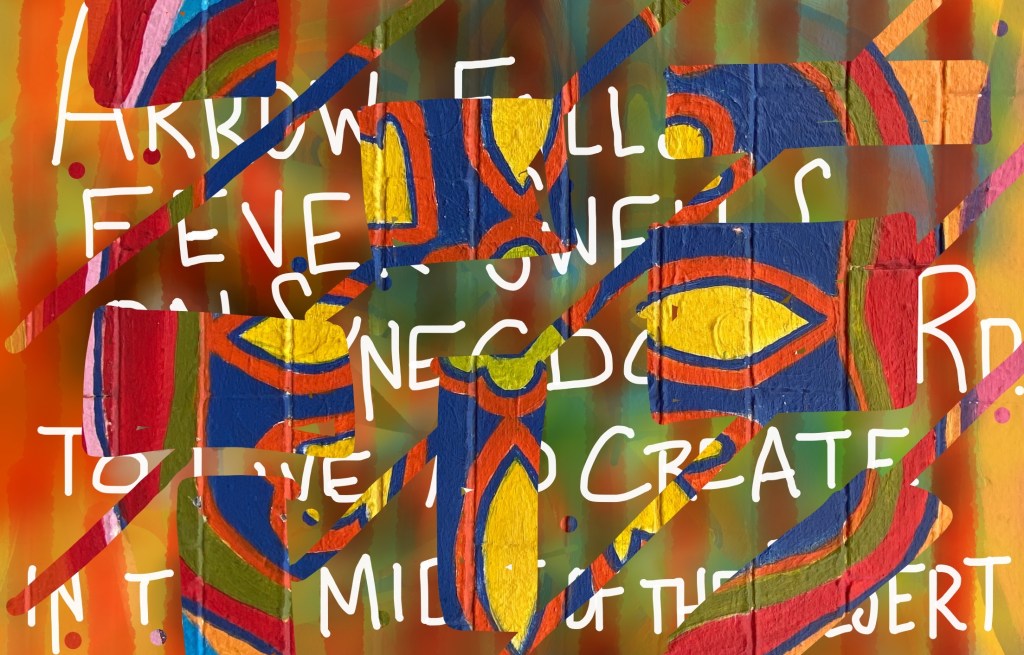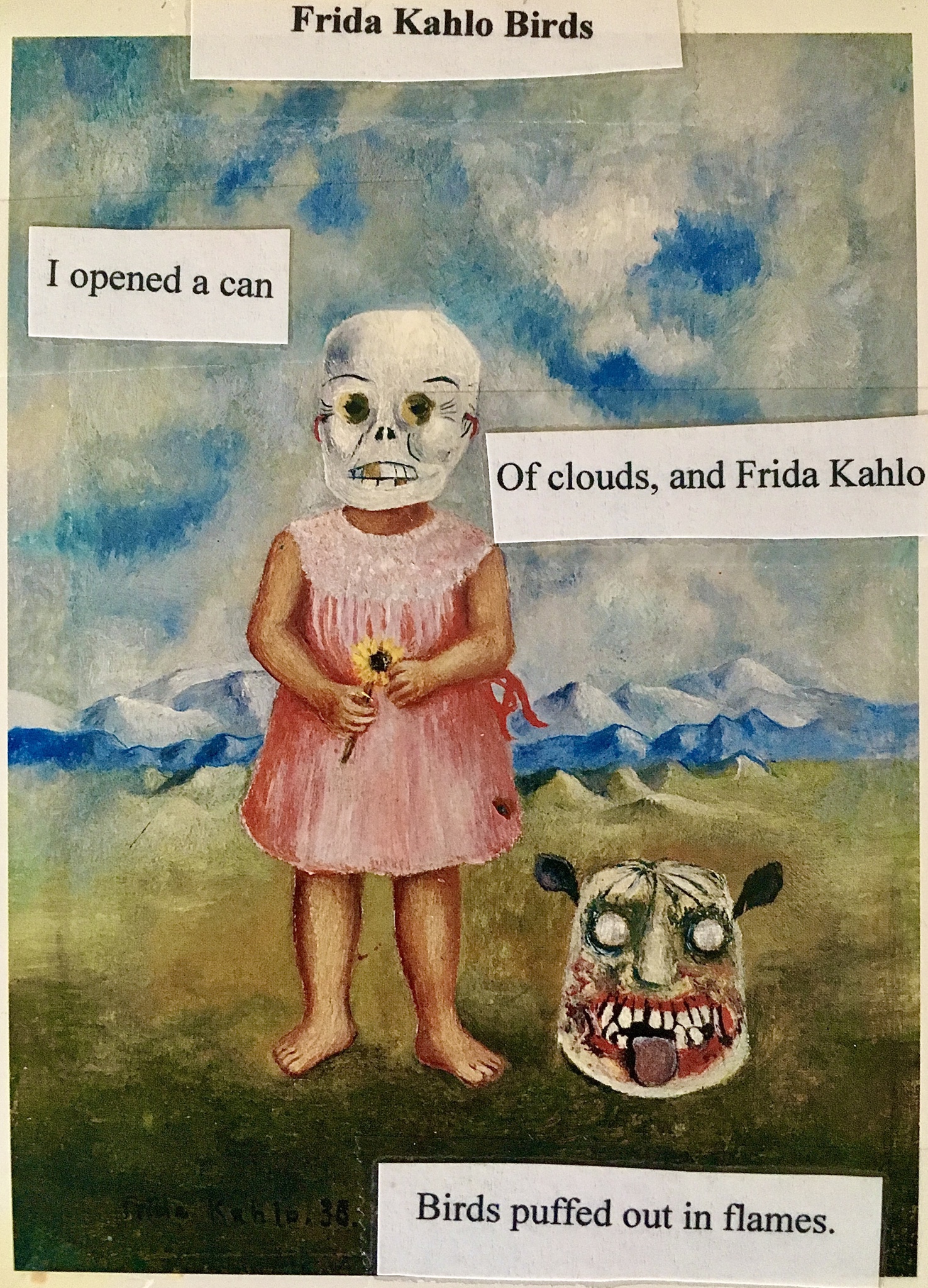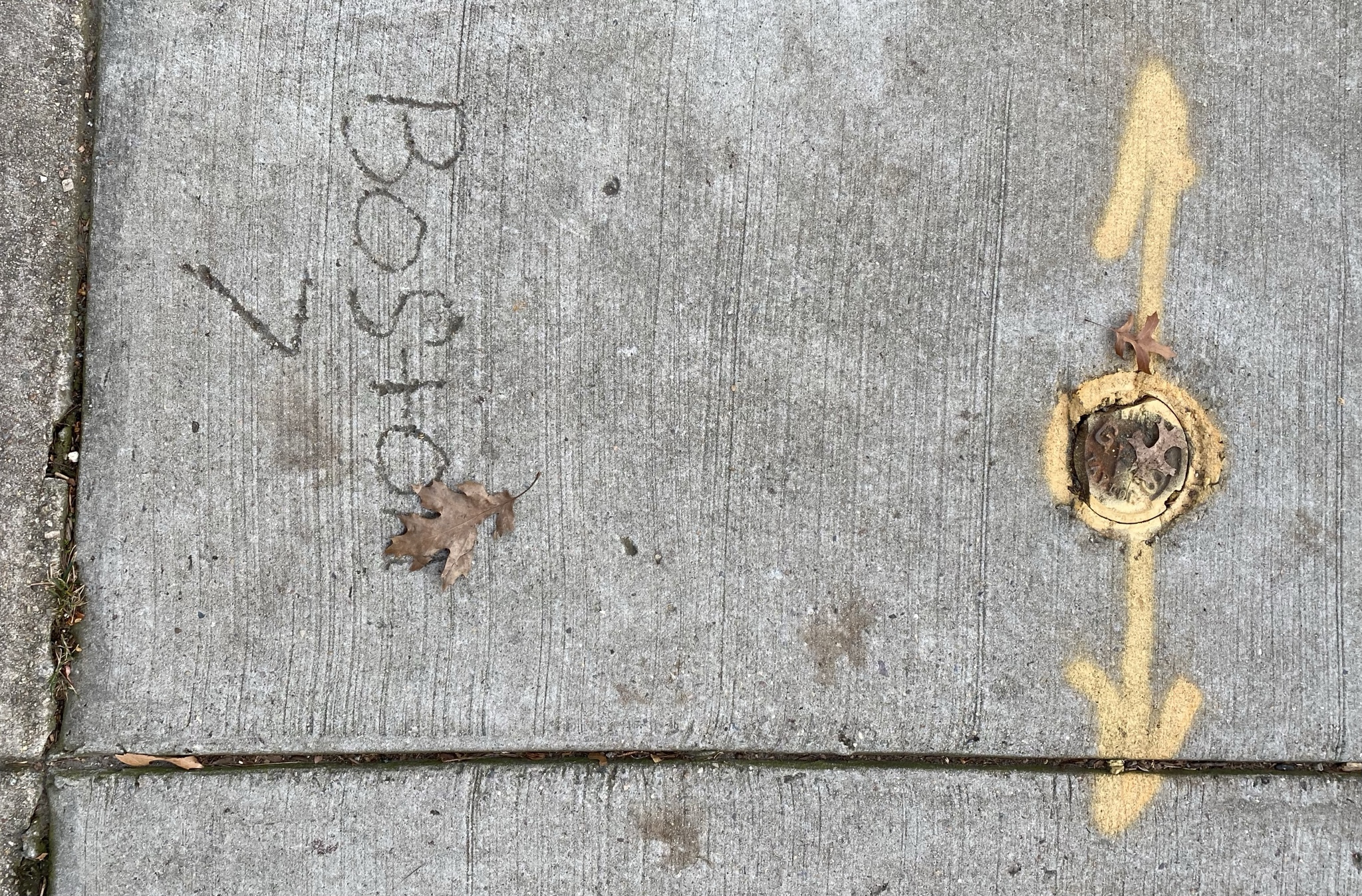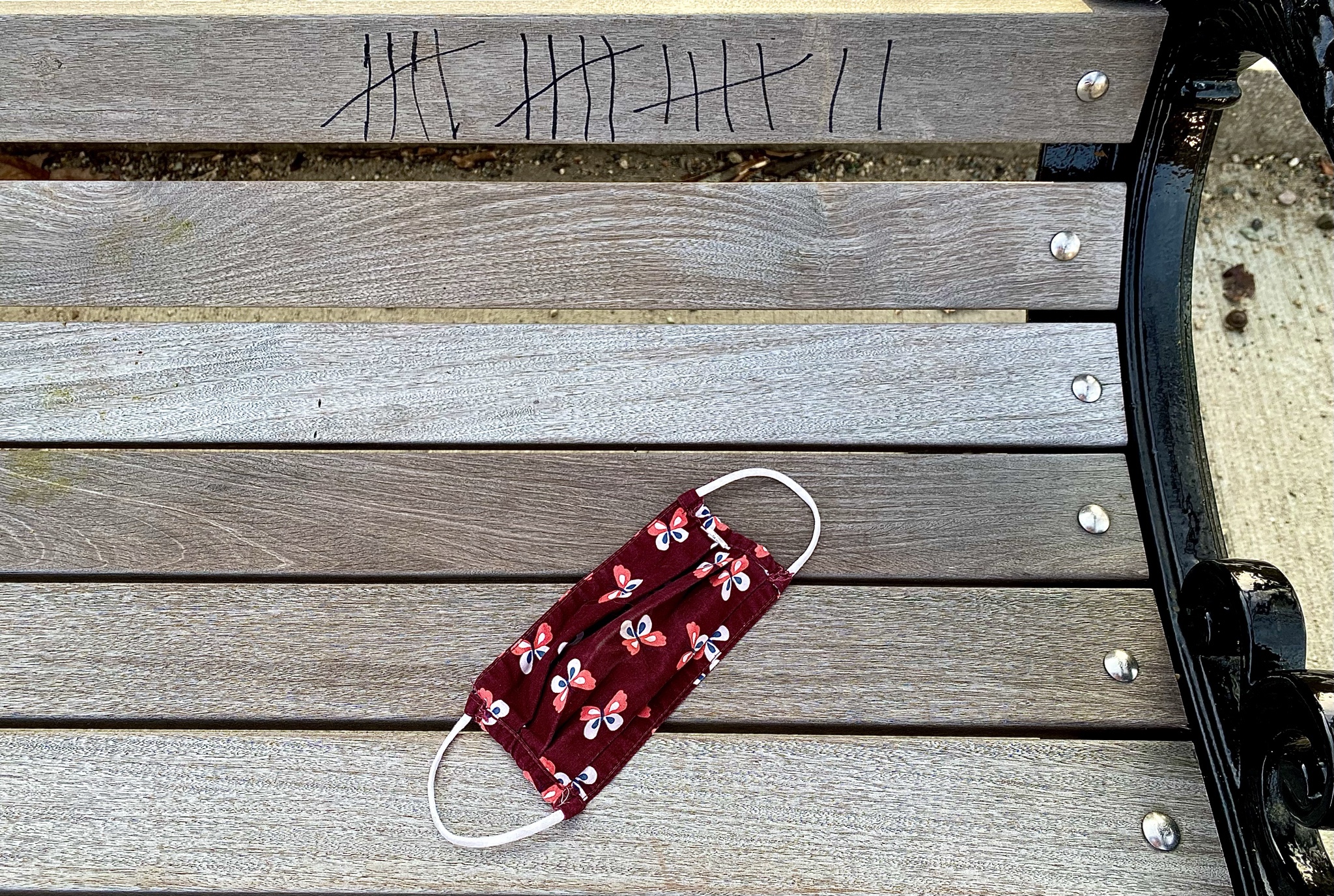

Render to paste the place where you live Before your time runs short— And it does run short with each passing Day. Apply that paste Of emollient sorrow To your face scoured by experience. Human sickness never quells— The condition remains—no one Will come to succor Before the timer runs Out.
“Advice? I don’t have any advice. Stop aspiring and start writing. If you are writing, you’re a writer.”
Wrack & wreck & rook That emprise begets another & again We are out of time, this world not keen On us but wishing to push us back Back to glossolalia—an echolalia Pangloss-ian & Martin-esque— The sound of a mouthful of wasps
Say what you mean to say & carry It off, as if that was your intent all along All along the abyssal sea floors Beyond 3000 feet Beyond where the wisps Of blue light are choked black
“Perhaps there is nothing more beautiful than sound; and yet, attached to a police car with flashing lights in the form of a siren, sound can ultimately alter the landscape of one’s physical existence, literally in a finger Snap.”
—Randall Horton / on “preface to a traffic stop: sound”
Keening and careening she went. You’ve made the supreme sacrifice, she reasoned. Not for financial gain, but because the pursuit of knowledge is itself noble. Or was it that she was listening to Dead Can Dance too loudly in her earbuds? It was probably a combination of both, she presumed, and went on in her masturbatory mood—idylling from brook to the barren gnarled apple trees, in this scruff of a hollow.
“… you can be hurt by people who look just like you. Not only can it happen, it probably will, because the world is full of hurt people who hurt people.” — Carmen Maria Machado / In The Dream House
“I suffered from a severe case of leopard spotting, it led to a loss of jobs, family, and friends. Reading the thee istsfor manity reader every morning was directly responsible for my adding 20 lbs. of muscle and losing 2 inches off my waistline. I recommend the thee istsfor manity reader to everyone I meet. Granted, I’m still spotted and alone, but I’m now full of vim and vigor and look forward to each daily installment of the thee istsfor manity reader.” — Frank Relish, author of The Submariners: The Leaky Years, 1887-1902
“I don’t understand a lick of it. I just drop by occasionally for the nudie pics.” — Jean-Jacques Perdefue, former cruiserweight champion
“Despite the lacerations and the poorly done stitches, I read it daily for the Frankenstein-ish aspect of it. It’s got abnormal reasoning, it’s put together on the slap-dash, and it runs away from fire. Nowadays, one can’t experience that much underachievement, in such a concentrated form, from a single blogsite. It’s blatherskite. Uniquely trashy and crass.” — Abby Feldman, editor of The Journal of Psychiatric Dissociation and Acute Bacterial Prostatitis
“I fled communism nearly 60 years ago. I know unvarnished shit when I smell it. The thee istsfor manity reader STINKS like a totalitarian turd.” — Dr. Panfilo Sobrenada, Psychiatrist and Family Counselor
“I have flown under the power of my own wings, without setting foot on land — nonstop — from Alaska to New Zeland in 8 days. I would gladly crash and burn upon my next take-off if I were subjected to another post from the thee istsfor manity reader. Please stop it!” — E7, the Legendary Godwit
“Ars poetica: I ate the white chickens and left the red wheelbarrow out in the rain.” — Charles Simic / The Monster Loves His Labyrinth
“The absentminded conservator left the bestiary door open on his desk … the cavorting beasties escape one by one.”
– J. Ignatius, “The Revolt of the Bestiary”
Horacio Sobrenada was the owner of an absurd flea circus.
He inherited the circus from his father, the formerly esteemed phrenologist, Dr. Cresencio Sobrenada. It was a bequest rich in penury. On a wretched August afternoon in 1956, under the light of the diabolic sun, Horacio renamed the flea circus “El Espectacular Circo y Orquesta Sinfónica de Las Pulgas Absurdas de La Habana.”
This piqued a number of the fleas whom did not agree with the name change. True, the fleas had a thirty-eight piece chamber orchestra that favored the Russian Romantic composers—it wasn’t a true symphonic orchestra—but that was not their cavil. A number of fleas claimed they had not been consulted on the name of the circus, and were anathema to the premise upon which Horacio had based the name.
Many other fleas thought it was a perfectly good name in a post-war world where life was bereft of meaning.
The fleas in opposition objected—they were neither from Havana, nor were they Absurdists. In fact they despised Camus and the mid-century strain of existentialism. These fleas were Jesuits and staunch Augustinian Neoplatonists.
Whereas, the Absurdist fleas were chiefly existentialists, and some of them nihilists; and furthermore, they thought it was a most appropriate name for the enterprise.
And this is where the troubles began.
Two weeks into the 1956 tour of the southern provinces the unhappy fleas, most of them strict Posttribulationists, went on strike and naturally the Postmillennialists followed. After a unanimous vote among the strikers, they demanded a name change to “Las Pulgas del Opus Dei Cubano.” And despite the support of the Jesuit priests in Oriente province, the home office of the Opus Dei in Spain disagreed. The devout fleas compromised among themselves and settled on “St. Augustine’s Eschatological Jumping Circus and Chamber Orchestra.”
This new demand vexed the souls of three Kierkegaardian fleas and they went scab. They took the leap of faith, switched allegiance, and joined the strike. The Phenomenologist fleas were flummoxed and remained on the job.
Without the strikers playing in the critically acclaimed and newly minted “Siphonaptera Symphony”—or performing on the high wire and flea trapeze—the Absurdist fleas resorted to playing Schoenberg’s latter day twelve tone compositions, and on occasion some improvisational jazz in the vein of Thelonious Monk.
The show now had to increase the frequency of the daredevil fleas fired out of the canon routine. The public demanded it, but the routine soon tired, and was noted as “one of the top ten ‘vapidities’ of 1956,” in the year end issue of Vanidades.
The public, as all “publics” are inclined to, favored popular music and entertainments that were easy to understand. They stayed away and attendance dropped precipitously. Two months after the strike began Horacio was forced to lay off the dancing cats. One week later the circus was bankrupt and disbanded near Santiago de Cuba.
The fleas were scattered in their wingless diaspora to all corners of the island that now convulsed in revolutionary fervor and had no time for confectionary entertainments.
Then in midyear of 1957, as the guerrillas gained a foothold in the Sierra Maestra mountains, the Marxist-Leninist contingent of the Absurdist fleas decamped and joined the rebel forces. This cadre eventually made their heroic way to Havana in Fidel Castro’s and Che Guevara’s beards one year later.
To this day some of those fleas remain as party functionaries and leaders in the Committees for the Defense of the Revolution — although naturally, at this date, most of those fleas have retired. Two of these aforementioned fleas reportedly coined the most iconic revolutionary slogans: “¡En cada barrio, Revolución!” and “¡Socialismo o Muerte!” (Research is currently underway as to the veracity of these claims. The provenance, at this time, seems promising.)
Meanwhile, Horacio became the chief propagandist for Radio Rebelde in 1960, and led a privileged life, but during the 1970 “Ten Million Ton Sugar Harvest” fiasco, he met with an untimely death at the sharp end of a comrade’s machete after a falling out with the party.
The Neoplatonist fleas did not fare well. They were last seen fleeing to Miami on New Years Day 1959, in the thick coat of Fulgencio Batista’s German Shepherd. A rumor emerged that some of these fleas were part of the expeditionary forces at the Bay of Pigs invasion, and that after their defeat on the beaches they went in search of said pigs for a blood meal or two. But upon not finding pigs, anywhere in or near the bay, in opprobrium, they set sail into the Florida Straits. They have not been seen or heard from again.
Dr. Clodomira Garcia-Borges Cienfuegos, PhD, was Chair Emeritus of History at the Public University of Angola in Luanda. She was born in Kuala Lumpur, into a family of diplomats; her father was the Cuban Ambassador to Malaysia. She was the author of numerous history books and hagiographies of renowned despots, insects and philosophers. Her book The Polemics of Ammianus Marcellinus, His Parasites, and the Cuban Revolution won the Pan Caribbean Book of the Year award in 1982. She died in May 2017, in Kankakee, Illinois. Her posthumous work, Che Guevara’s Cyrenaics and His Congolese Chiggers, will be published by Raw Manifold Press in the summer of 2018.
“Cram your head with characters and stories. Abuse your library privileges. Never stop looking at the world, and never stop reading to find out what sense other people have made of it.”
I am relinquishing shallow pursuits I’m building a life off the grid I will emit no carbon Breath is superfluous Meat is murder Gluten-free mac and faux-cheese, please Drill, baby, drill Bury me in a hole up to my neck Press the eject and turn up the volume Let me melt & live with voles
“… No, trust died last century, along with truth, so we’ll have to think of something else to shake on. Not to our health. Our health is bad and only getting worse. Not to our wealth, because no amount of riches could heal our poverty.”