uncover your dusty radios you are two billfolds shy and your locutions are broken in the froth of the bulldozer black and yellow cysts, and marshmallow wheat sideswipes remain there’s too much red in the blue sky your wheels will be removed from the moors through the use of radiogram bullets on your broken locutions resort to your dystopia; or, if you don’t, you will soon have your lodge broken and be removed your voice may be paroled to the furthest bullfight ringlet except briefly during mopping season voice-over paroxysms include: frustration of the bullfinch; wheeler-dealer siege of the daffodil; two binges short of bilge then, the two views without perspective will have their frames broken and be removed these are :
still life of uncovered radishes on the plinth
fry of the bullfrog
moving forward: every violent binge must have a persuasion clearly displayed we need reinforcement stilts, otherwise, we have no way to reach the pacifiers thank you for your attention
What I’m Reading:
XIII
It was evening all afternoon. It was snowing And it was going to snow. The blackbird sat In the cedar-limbs.
— Wallace Stevens / “Thirteen Ways of Looking at a Blackbird”
I’ve got the blues: rhythm & write, political fuckery & objectionable calcification of the non-ossifiable and the non-frangible—that, in turns is un-mistakable in the homeostatic running of a life. No. No strife, nothing classifiable as such in any event—permutational. It’s the truth, it’s factual, everything is fractionated as long as the sirens doppler their way out of my life. No longer the subject of my consciousness, this infection non-fictional as it is. I’ll gas and bloat, as I need inflection points to function correctly. Let me ease into dysfunction disaffection and dislocation by dissociation — tra la la.
This is just between the two of us, rooster boy. You rotter. You were special to me from the very beginning. There’s a sort of acid-feel that plunges through your esophagus, pumped up out of your stomach like magma burbling to the back of your throat. In my opinion this is first class propaganda — the sort of invective that spews from true believers or the seriously unbalanced. Akin to a grenade going off in your head. Do you realize your maladies now? We’re talking about your stomach and your head. You are unwell, man. Next time? There will not be a next time. Don’t be a fool, man. Get your head correct.
Leave this planet.
What I’m Reading:
No one can say when the unwinding began— when the coil that held Americans together in its secure and sometimes stifling grip first gave way. Like any great change, the unwinding began at countless times, in countless ways—and at some moment the country, always the same country, crossed a line of history and became irretrievably different.
If you were born around 1960 or afterward, you have spent your adult life in the vertigo of that unwinding. You watched structures that had been in place before your birth collapse like pillars of salt across the vast visible landscape . . .
— George Packer / The Unwinding: An Inner History of the New America
“… Are you such a dreamer To put the world to rights? I’ll stay home forever Where two and two always makes a five
I’ll lay down the tracks Sandbag and hide January has April showers And two and two always makes a five
It’s the devil’s way now There is no way out You can scream and you can shout It is too late now because
You have not been paying attention, paying attention Paying attention, paying attention
You have not been paying attention, paying attention Paying attention, paying attention
You have not been paying attention, paying attention Paying attention, paying attention
You have not been paying attention, paying attention Paying attention, paying attention
I try to sing along, but I get it all wrong ‘Cause I’m not, ’cause I’m not I swat ’em like flies, but like flies, the bugs keep coming back Not, but I’m not
All hail to the thief, all hail to the thief
But I’m not, but I’m not But I’m not, but I’m not Don’t question my authority or put me in a box
‘Cause I’m not, ’cause I’m not Oh, go and tell the king that the sky is falling in But it’s not, but it’s not, but it’s not Maybe not, maybe not…”
— Radiohead / “2 + 2 = 5”
What I’m Reading:
— Mario Vargas Llosa / “The Art of Fiction No. 120” / The Paris Review
So this tiny endeavor that started as a writing lark — really as an assignment for a Creativity Lab class — went feral, all those years ago, and turned six years old today!
And herewith begins its seventh year. And so I’ll take the cheap opportunity to pander to the kiddies with the 6-7 vibe…
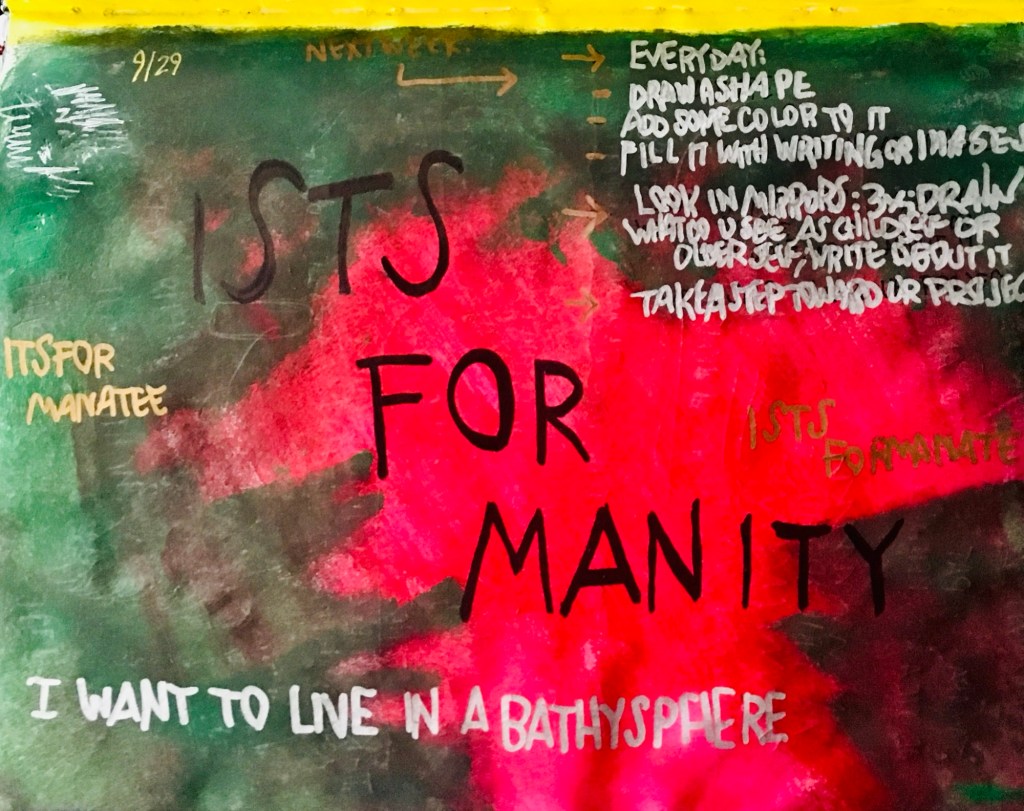
So a with pang of crusty nostalgia, below, you’ll find the first thee istsfor manity reader post from November 17, 2019. As opposed to a fine aging wine it merely seems to age gracelessly, balding and toothless, (and solipsistically) attuned only to its own insanity.
I thank you for stopping by and reading here and there on occasion, and partaking in the absurdity that is the human condition in the waning days of the Anthropocene.
May we meet here in another 6-7 years — please pantomime juggling here (for the kids!)
I couldn’t play the guitar. And I didn’t want to go about looking for drumsticks, and plastic tubs to overturn to drum. I didn’t have enough of my own poetry to read — so I came up with the idea to grab my boom box and speak some words over The Clash’s “Mensforth Hill” on the corner of N.E. 3rd Street and Biscayne Blvd. Midway through my spoken word someone dropped a $5 bill in my upturned cap at my feet saying, “thanks, you just made my day — Sandinista is my favorite Clash record.” This, unfortunately, was the only thing I had memorized that day — thee asynchronous voice over from my first film:
“This is now. The last war on drugs was a war on fructification. It was fruit batty, it was fatty bruit. I fructified on the crucifix cross and I crossed my own path when I got there. I got there when the darkness overtook me and I wrote a novel without writing a novel word. I chose something golden that sunk my Atocha. I fructified in Dar Es Salaam. I drive without opening my eyes on left turns. I sleep inside a mosquito infested tent. I tent on an assemblage of extracted teeth, and pull nothing but the difficult out of a magician’s top hat while the rabbit munches grass, oblivious, in the hallway. I pass summer away with the spring in your step failing me. I winter in the fog of your soulless fall. I scarify my soul in the humorless sun of a long night in a clean well lighted place — which is actually a bullet ridden cafe in Lesotho during a monsoon month of dust and quiet whippoorwills. I prune leafy trees leafless. I’m hot with fleas fleecing your sister’s sake. You said, “I got mine and you’ll be fine.” I said, “summer is your sister’s fate in her schizophrenic haze and her strength is the weakness in her occipital lobe.” You say my comedy was sublimely written, like it was written in Sumerian script in a Mandarin world. I said, “ it’s analog to a lime habit.” To which you plead, “let’s go to a limehouse,” moving your fingers in such a way that the air warps in pink swirls around your head and lights alternate in yellow and blue hues in your open mouth. The words you create signify tranches of truncheons and luncheons on the grass in half-naked Roman reclines. A bottle of wine stoppered ordering the sky and a jaunty basket opened to the prying June moon. Jejune. Then you produce wildebeests and hyenas from your bloomer pockets — pantaloons full of cavorting beasties. I produce a floral array of helium filled hydrangeas from my waistcoat pocket while a Berlin zeppelin flies drunken circles above us. The man from Madagascar stands and announces the sinking of the Diego Garcia Islands. I sing the song of hegemony of the albatross over other pelagic birds that abdicated when the penguins became kings of the universe…”
No one stopped to listen, most people kept walking (maybe annoyed by the distorted Clash song squelching from my speakers) then it occurred to me — they may not like my stuff, but if I pick up my hat and hold it out while scanning radio stations John Cage-style I’m bound to attract someone’s attention who enjoys what I’m playing. And I hit a veritable vein — a boon. A goldmine. I made three more dollars over the next five hours ($8 total!) the most money I’d had in two weeks by just happening to fall on someone’s favorite song or group playing on the radio, and therefore brightening their day just a tad bit in the fleeting screed that is our existence. About half hour in to my experiment I happened upon the college radio station playing “The Great Curve” by the Talking Heads and a woman in a black leather jacket that resembled Joan Jet dropped a dollar in my cap and said, “the best line David Byrne ever wrote: ‘the world moves on a woman’s hips.’ Thanks!” I got another dollar sometime around 3 o’clock when I started shuffling my feet to keep the blood flowing through my cramping legs while I happened upon the oldies station and “Mr. Bojangles” by the Nitty Gritty Dirt Band was playing and the man must have thought I was trying to do “the old soft shoe” and dropped 30 cents in the hat. Over the next couple of hours I increased my haul, and I had my summer job laid out before me. Fuck busking I thought. A smile, a fresh set of batteries, and some movement and I’d be rolling in dough.
And then it got good to me and in future days I started playing my favorite long instrumentals from my cassette collection and made up stories on the spot. I made a sign that read: “Extemporaneous stories extemporized just for YOU!” At your prompt. At your suggestion. Here were a few of my favorites from that first week before it all went sour. Someone would give me a prompt, for example: a portly gentleman in a black beret said, “make a story up about my CPA, Irving Katz;” a student carrying a copy of Naked Lunch said, “make a new story up about William S. Burroughs’s Eyeball Kid;” and a woman suggested I make a story up about a Cuban archivist named Clodomira. I enjoyed making up these stories to instrumentals by Throbbing Gristle, The Velvet Underground and Thelonious Monk :
Katz, CPA
He hovered out to cloudland in search of the end of the rope that would pull him through the morning. Up through wisps of cirrus, and further up through fat strato-cumulus — but no sign of the end of rope at the tail of an impossibly long length that receded deep into the sky’s bowels — where the cerulean gave way to indigo, violet and eventually blackness.
The countryside below was pleasant and undisturbed. Rolling hills pockmarked with bails of rolled up straw. A spearhead of geese briefly passed below him trumpeting surprise at his elevation.
Yes, in this fashion he learned that gravity had another end for him. The rope did not materialize, and in that one brief moment before he plummeted he wished he could stay up here forever…
Abruptly he thought of the placenta that trailed him out of his mother’s womb and how he missed its warm and comforting presence. He had never thought of the placenta he and his mother shared, but now for some reason he missed it with a gnawing in his gut.
He wished he could have the placenta installed somewhere in his home. Maybe floating in a vat of thick translucent fluid in a glass tank as if it were a new Damien Hirst installation.
Or maybe on a dark biomorphic pedestal as if it were a Louise Bourgoise piece. Then he settled on the vision of having a film loop of the placenta projected onto a white orb in Tony Ousler style. Yes, that would do. He took out a pad from his desk and did a photorealistic drawing of the placenta, a la early Chuck Close. He then drew the film loop projection environment as Ousler might.
He was pleased. He now harbored feelings for the placenta that he once felt for his wife.
In her place, in that space vacated by her memory, hovered the placenta. Beatific.
He couldn’t stop looking at images of placentas on the web. Fresh. Day old. Desiccated. Dog, cow, elephant, all types of placentas. He could not control himself. He locked his office door. He unzipped his pants.
Later, he called his mother and asked about the whereabouts of the now 37 year old placenta. His mother pleaded with him to get professional help. She told him never to call back.
His vision flashed. He was transported into another office, in another time, in the not so distant past.
It was the time of his childhood. He could feel it. It was this office. His office thirty years ago. Many of the buildings outside the window were the same, but the sixty story tower that now anchored the city, and other skyscrapers, were missing. The cars below were long and rectangular, of a mid-1970’s appearance.
And just as quickly he was back in his office. It was 2006. His computer monitor displayed the New York Times story about Saddam Hussein’s execution date being set, and the Decemberists’ “Crane Wife” was playing on iTunes.
He was panting.
The Eyeball Kid
The voice of Spice, the synthetic marijuana, told him to go and surrender himself to the firefighters down the street.
Then it was the voice of God echoing through the hallway. The fern transmogrified into a green anole that bit its own tail in half. The smaller tip began to speak in Aramaic, not that he knew Aramaic, but somehow he intuited it was Aramaic.
The tail said I have a gun. I will kill you if you don’t turn yourself over to the firemen across the street. Go now, man. Go! Go, before I smite you. Go and repent.
The tail writhed and grew in to a gherkin that glowed in the blue redeeming light of Jesus. He vomited the Bengali lentils and brown rice he had at lunch. He felt lighter, better now.
He was compelled to pee in the ficus bonsai on the coffee table, despite the perfectly clean bathroom down the hall. It was Dolores’s day to clean on Wednesday, and it had been freshly cleaned this morning.
He walked across the street to the firehouse and kneeled before the firefighters. He begged forgiveness and eternal fealty to all things firefighter related. The firefighters were surprised in the midst of a late lunch after a gnarly five alarm wildcat at noon.
“The hand of God compels me,” he cried. “Please!”
As the chief came sliding down the pole, Eusebio thought he saw the son of God descending from the heavens…
Clodomira
She wanted to stab her writing hand, but instead she focused on the portrait of Fidel Castro on the wall. She was long accustomed to falling into a meditative state by staring at Fidel’s philtrum. It was oddly naked, as if exposed in flagrante, by two quickly drawn curtains of wiry black hairs.
She had reworked the sentences for the eighth time. She was finding it increasingly arduous to make the connection between Epicurus, Batista’s foreign policy toward post-war Europe, and any of the 4,000 species of lice she was familiar with — especially the pubic louse. Her favorite.
She couldn’t reconcile the Epicurean school that thought by avoiding politics, gadflys, and avoiding involvement with gods or an afterlife, and by involving oneself with trusted friends and a life of simplicity one would achieve the calmness and simplicity of ataraxia.
She was desirous of the Stoics ataraxia now. It was, afterall, the key element in achieveing apatheia — a state of calmness and imperturbability — in the pursuit of virtue.
She wrote that Batista was a slovenly glutton and diverted US foreign aid to his coffers. She wrote about the pubic louse epidemic of 1975, and how it reached epidemic levels in Angola. The Cuban troops could barely sight their targets for the incessant scratching of their huevos.
“Coño, que metraca,” they were often heard crying, instantly giving up their positions to the South African mercenaries in the early days of the Angolan expedition. They were easily picked off. The State’s resources were diverted to deal with the pubic lice plague of 1975. It was either that or forgo the doctrines of Comrade Che Guevara’s early incursions into the Congo and Africa, writ large.
Clodomira was having such difficulty with all this unruly data, and she found herself gripping her letter opener — her bayonet from the Bay of Pigs — tightly and hovering just below the base of the knuckle of her ring finger. She stopped herself when she imagined Fidel recoiling at the sight of her hand. She was to interview with him next week for the Directorate of the Citizens Brigade in Defense of the Revolution.
No, she decided. I’ll keep the hand at least through then…
Even in our darkest imaginations, no one could have conceived of Gaza’s streets littered with the decomposing bodies and skeletal remains of our loved ones; that stray dogs and cats would be filmed feasting on those bodies; that Israeli soldiers would confess to driving their tanks over hundreds of living and dead humans and crushing them into mush; that parents would scour the streets looking for hacked pieces of human flesh to put randomly in plastic bags and consider each 10–20 kilos a child; that thousands of kidnapped Palestinians in Israeli “torture camps” would be systematically and routinely beaten, raped, forced to perform sexual acts on each other, forced to drink from toilets, starved to near death, blindfolded and chained 24/7 in crowded cages whose air is filled with the “putrid stench” of “neglected wounds left to rot” and amputated limbs, that the perpetrators would document and brag about their atrocities every minute of the day; and that the world would watch all this live-streamed and yet allow it to continue unconstrained.
— Muhammad Shehada / A Short History of the Gaza Strip
39 HATE GROUPS ARE ACTIVE IN ARIZONA AND 94 ACROSS THE COUNTRY USE THE WORD “PATRIOT” OR SOME DERIVATIVE IN THEIR DENOMINATION
— Giancarlo Huapaya / [39] from “Ley de la Feria/Law of the Fair”
Something changed in the world. Not too long ago, it changed, and we know it. We don’t know how to explain it yet, but I think we all can feel it, somewhere deep in our gut or in our brain circuits. We feel time differently. No one has quite been able to capture what is happening or say why. Perhaps it’s just that we sense an absence of future, because the present has become too overwhelming, so the future has become unimaginable. And without future, time feels like only an accumulation. An accumulation of months, days, natural disasters, television series, terrorist attacks, divorces, mass migrations, birthdays, photographs, sunrises. We haven’t understood the exact way we are now experiencing time.
— Valeria Luiselli / Lost Children Archives
the earth we are burning gives
the blossoming scent of oranges
I peel and eat over the sink. The teacher is burning.
— Mary B. Moore / “The Teachings of Naranja”
There’s a direct link between the poverty Gates claims to care so much about and the wealth he fails to mention. In the US, homelessness is breaking records, and so is the share of assets owned by the top 0.1%. While this might not be Gates’s own business model, by holding down wages, racking up rents, busting trade unions and winning tax and spending cuts, the ultra-rich thrive on impoverishing other people.
— George Monbiot / “I wish we could ignore Bill Gates on the climate crisis. But he’s a billionaire, so we can’t” / The Guardian
Disasters don’t show up one at a time. They arrive in legions like a starving hoard. A poet said this then died. For example, half my family died and after I celebrated the end of that year my father died.
— Asmaa Azaizeh / “Reflection”
How, then, is one to understand this total war? How far back into history does one need to go to judge these actions? Is it sufficient to look at the atrocities committed on October 7, 2023? What led to that fateful day unfolding? Does one need to go back to 2007, when Israel officially imposed its siege on Gaza? Or to Hamas’ violent takeover of Gaza right before that? What about the group winning a democratic election in 2006? Israel’s 2005 unilateral “disengagement” from Gaza? The second intifada? The 1993 Oslo “peace process?” Israel’s closure and separation policy in Gaza since 1991? The first intifada? The 1973 war? The 1967 war? The 1956 war? The 1948 Nakba? The 1947 partition plan? The 1917 Balfour Declaration? Or even further? And why does virtually every Palestinian have those dates memorized by heart? What terrible significance do they hold?
— Muhammad Shehada / A Short History of the Gaza Strip
What I’m Listening To:
Y nacerá un mono del huevo de una piedra Y aunque seas inmortal Hijo del sol, del cielo, la luna y la tierra Tú jamás aprenderás Aprenderá a andar, a trepar, y agradecerá Nunca alcanzarás la paz
— Juana Molina / “desinhumano”
And a monkey will be born from the egg of a stone And even if you are immortal Son of the sun, the sky, the moon and the earth You will never learn You will learn to walk, to climb, and you will thank You will never reach peace
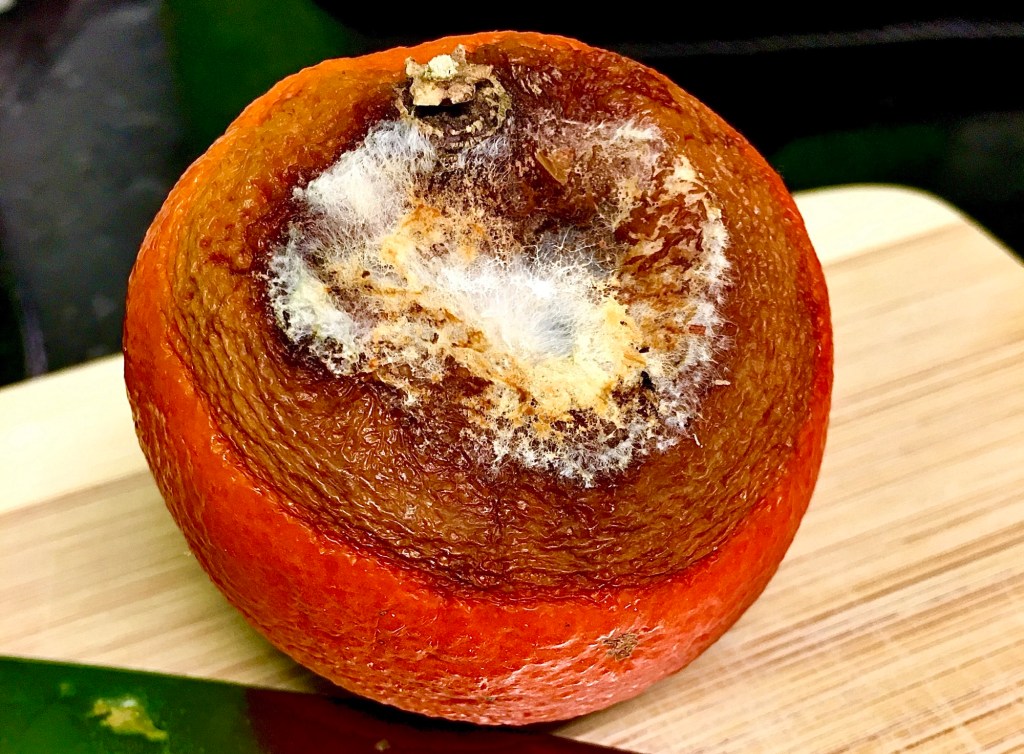
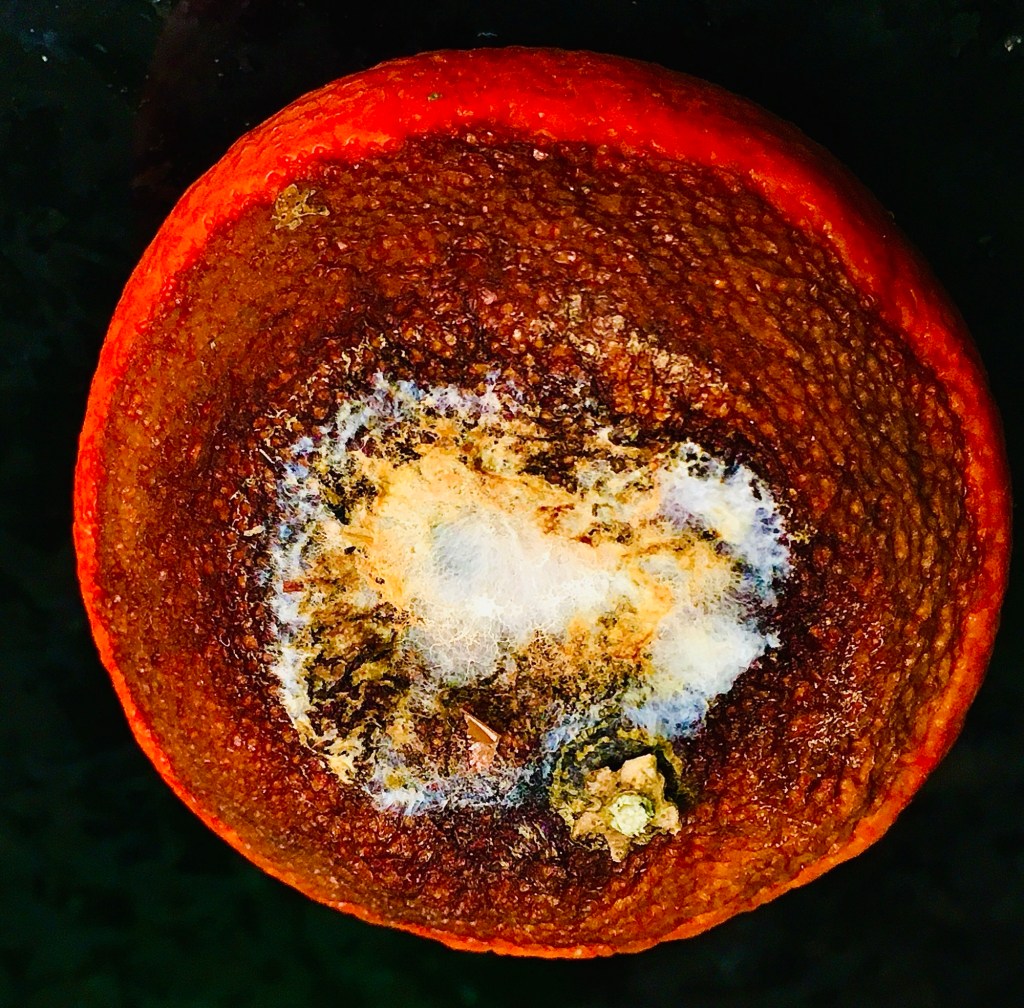
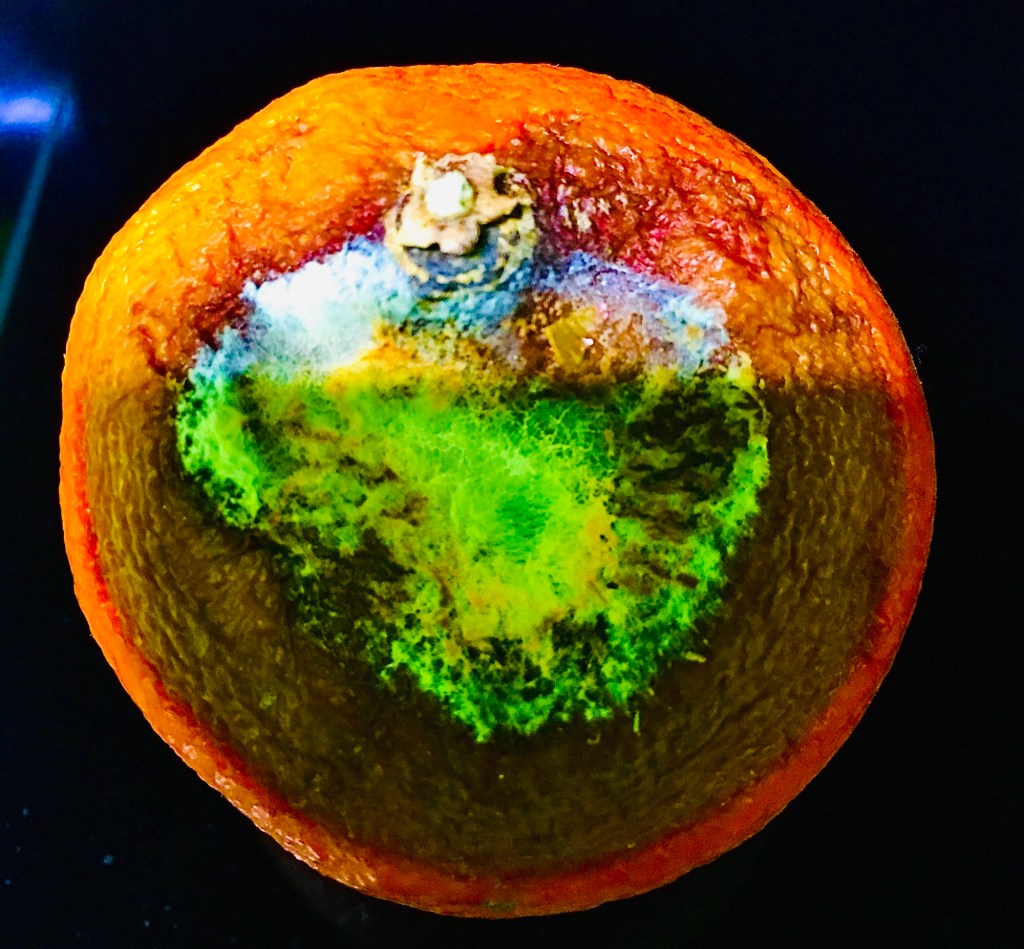
This grim tangerine bruised by daylight. This grim brinkmanship masking in its own eyeteeth. You rock adrift. A lover wrapped in muslin, caught in the sleeper sofa’s hush. Lichtenberg figures fillet your back, branching like bright frost.
Shadowplay.
Despite the pessimism, the taxing of thornbacks and other small griefs, the malnourished drag king eats beneath the hovering axe that never falls but threatens. In the dim ’30s and war-lit ’40s, fleas circled your wrists. They found their register in the upheaval lived in the shadows.
Nightmare thrum.
I tender you my seven firearms for review — for the workshop dreams dashed in Franciscan corridors. You find: A Guest in the Hatchway, Flash Hardwood Stab, the chill of my touch sealing, then the searing world shut. I’m the sergeant-major of nightmares driving my vision into your plastering light.
A grim tangerine indeed.
What I’m Reading:
I’m going to make a poem out of nothing. You and I will be the protagonists. Our emptiness, our loneliness, the deadly boredom, the daily defeats . . .
— Luis Alberto de Cuenca / “William of Aquitaine Returns”
I’m in a groove with Barry White’s Greatest Hits when I get a preprogrammed hit from SM-N900V. So as the Love Unlimited Orchestra swells to Barry’s “I love you, baby!” the Heliotrope unit beeps and a shot of SM-N900V’s love tincture hits my bloodstream.
I don’t care that it’s only the essence of Clementine coming through my cryoscreen, but Clemmie, as the artificial intelligence known as SM-N900V is referred to, is all I need of my life partner to see me through the next three hours on this sterile dying planet.
As her essence reticulates through my nervous system, I see her inside my retinas; smell her in my temporal lobe; feel her on my fingertips — her chest against mine…
The overseer counts: “one minute to go!” And it’s out the nearest exit in case of emergency—break glass in case . . .
II. Full of Goat Flakes
I’ve met the señora with charming daughters. I’m a mustachioed superhero bandido of fritos and fries—a speedy gonzalez typic-stereo imbiber of fire.
Desire.
I’ve got nothing but blues in my jumping bean boxes. Pouring 100 words out of my clenched sphincters—pores clogged and chugging. I’ve got the drudgery groove (mustache optional).
I’ve got the jangly, janky, guitar strum preceding me no matter the room I enter. I’ve got a glitter chain sunk on my sternum tuft. I drift with the dust—on the high plains, with the snaking bassline.
Low—full of goat flakes.
(What could go wrong?)
What I’m Reading:
Well, it’s the way the empire falls, imperceptibly, then shockingly. We have been declining gradually and then suddenly. I wrote The Unwinding in 2013 and now people say, you really saw all this coming, didn’t you? No, I saw social disarray, the social contract shredding, but I didn’t see a demagogue, I didn’t see authoritarianism. I’ve been writing about decline for quite a long time, but I felt like it was all happening at a certain register that can’t get to the deepest feelings.
— George Packer, to Andy Hunter / “When Empire Falls: Talking to George Packer About His New Novel, The Emergency” / Lithub
Since thee Chump’s ketches run low, mizzen-masted abominations, out of the thick, cloudy dregs at a barrel’s wake chucked overboard, you should stand at attention. Stay attached to your “telescreen!”
Havoc ensues if thee goat’s thrash goes unslaked.
Dada-daddy sometimes looks like Big Brother—no eascape—he’s always watching you.
Are you a recidivist? A lemon exiting a household on fire, occasionally writing on wallpapers graffitied by cherubim?
Are you gaffe-gobbler bragging of decathlons you fixed—the outcome certain to pay-off big in your favor?
If so, you are a randy gobbler! A paperweight sorbet raider whose neighbors have elided to the Ministry of Love.
As disincentives go, the best I can offer is The Wicker Mandible and a general lack of cohesion and sense. Choose!
All is:
A. aleatory and atonal
B. detritus and straightjacketed
C. eggheaded and folkloric
(you must choose one pair from the above)
There isn’t a trace of a muse within 63 leagues of the epicenter.
Fend for yourself. Forget. Endure.
For I am (probably) naughty.
What I’m Reading:
All I care about is holding a story in my hands. The square, the smell, the movement.
so cold i’m like a frozen iguana falling from a palm tree trunk
i almost look like a branch a sign of weather whiplash?
What I’m Reading:
You are placed in landscape, you are placed in time. But, within that, there’s a bit of room for manoeuvre. To some extent, you can be author of your own fate.
I am nothing but decay. A vessel for soft and hard drinking. A Celsius. An Ascent. Grain alcohol. The descent of man — an ascendancy of brimstone and vitriol. This is the time of peak pique — so let’s picket the piquant pissants. I’m embroiled in ecstatic ego. My right hand is frozen, and I’m going away for the last time. It’s like something from another world — and I lost myself out there.
Monochromatic. Color drained. Gray. Damp. Drizzly.
I’m going away for the last time.
And you say: there’s more opportunity for death — it’s insatiable.
I’m waiting for a foot of snow. There’s a big dip in the jet stream. A bowling ball of cold air on the way. At our doorstep. We could get into the car and drive west into the void. We could stay and open the door to oblivion. We’ll never dry out again.
You say: will it ever be the same?
I: I’m going away for the last time.
Vignetting at the peripheries of vision now. I’ll make glue from this horse. I’ll make dog food. I promise.
I: Do you ever get the feeling you’re in a linear narrative version of Last Year at Marienbad?
You say nothing this time. Only the sound of wind pressing its forehead against the window. It’s all static and soft rupture, like a station losing signal, like language attenuating and refusing to carry weight.
My mouth tastes of mist and metal. This mettle. The lights outside have bled into one another — sodium halos — vapors smeared across the wet pavement. Movement. This moment I want to speak but I am a ruin, a half-erased inscription in the fogged glass. A shard of knife edge in deep grass.
The world narrows, tunnels. Everything pulls toward its center — the eye of the storm, the stream of a singular point where thought collapses into weather. Whether you like it or not.
You riddle my shoulder. It’s already cold.
“Then I’ll go for the last time,” you whisper, though it sounds more like mercy than dismissal. Abysmal and dismal at once. Filled with inert gas.
So I do. Decide. To do nothing further than the necessary.
And as I step out, the snow begins — not in flakes but in the fine, endless, ash of a nuclear winter — each particle a quiet ending. Each ending a half-life too long. The sky folds itself shut behind me. A pin prick. More a kick than a prick.
The horizon erases its own name. “You mean, you’ll render my fear? You hydrolitic cur.” Again, you say nothing.
“This is more like an episode of Bewitched projected backwards. And I wonder…”
«¡Ahora tu!»
What I’m Reading:
Being asked to explain a poem is like being asked to explain an explanation.
— Carrie Hunter / “…and so History Constantly Dwindles”




















 thee istsfor manity reader